Overview of the Bahrain Stock Exchange (Bahrain Bourse)
A comprehensive overview of the Bahrain Stock Exchange (Bahrain Bourse), analyzing its market structure, regulation, liquidity characteristi...
Brokerage fees rarely feel dangerous in the moment they are paid. They arrive quietly, often fragmented across small charges that barely register emotionally. A commission here, a spread there, an FX conversion rate that looks close enough to fair. None of these events feel like a loss in the way a drawdown does. There is no red number, no sharp break in the equity curve, no moment that demands attention. And yet, over long horizons, brokerage fees are one of the most reliable destroyers of capital compounding.
The reason investors underestimate brokerage fees is not ignorance, but framing. Fees are presented as operational necessities rather than economic decisions. Platforms describe them as the price of access, the cost of convenience, or the unavoidable friction of modern markets. Investors internalize this narrative and move on, focusing their analytical energy on asset selection, timing, and macro views. The mistake is subtle but consequential: long-term returns are not determined by what you earn in gross terms, but by what remains after all frictions have taken their share.
For investors operating from the GCC, this issue is structurally amplified. Equity exposure is often global, routed through international brokers, settled in foreign markets, and mediated by FX conversion even when currencies are pegged to the US dollar. Each layer introduces cost. Each cost compounds negatively. Over years and decades, these frictions can dominate the difference between theoretical returns and realized wealth. The investor may believe the strategy is underperforming when, in reality, the strategy is being taxed continuously by its own infrastructure.
This article examines how brokerage fees affect long-term returns not as a budgeting problem, but as a structural feature of portfolio outcomes. The goal is not to warn against trading or to promote minimalism for its own sake. It is to show, rigorously and uncomfortably, how small, recurring costs reshape compounding mathematics, distort behavior, and quietly determine who actually benefits from market growth. For serious investors, especially those in the GCC with long horizons and global exposure, brokerage fees are not a detail. They are destiny.
Market volatility attracts attention because it is visible and emotional. Brokerage fees operate in the opposite way. They are steady, predictable, and emotionally muted. This combination makes them far more dangerous over long horizons. Volatility can harm returns, but it can also reverse. Fees never reverse. Once paid, they are gone forever.
From a compounding perspective, this distinction is critical. Volatility affects the path of returns; fees affect the rate of return itself. A portfolio that experiences volatility but maintains a high net growth rate can still compound meaningfully over decades. A portfolio with low volatility but persistent fee drag may never reach its potential, even if markets are favorable.
Consider two investors with identical gross returns. One pays 0.5% per year in total brokerage costs. The other pays 2%. Over a single year, the difference feels trivial. Over twenty or thirty years, it becomes decisive. The investor with higher costs does not just earn slightly less; they compound at a meaningfully lower rate. The end result is not a small gap, but a structural divergence in wealth.
For GCC investors managing capital with long-term objectives, this is not an abstract problem. Many portfolios are built around the assumption that global equity markets will deliver acceptable real returns over time. That assumption may be correct in gross terms. Whether it holds in net terms depends heavily on how much of that return is surrendered to brokerage fees year after year.
Compounding is often explained as a positive force, but it is neutral by nature. It amplifies whatever rate you feed into it. If your net return is reduced by fees, compounding faithfully magnifies that reduction over time.
A recurring annual fee acts like a permanent reduction in expected return. Unlike a one-time cost, it compounds negatively. Each year, the fee reduces the capital base, which then produces lower returns in subsequent years, which then face the same fee again. The effect is multiplicative, not additive.
This dynamic is frequently misunderstood because investors focus on nominal percentages rather than on compounding trajectories. A 1% annual fee sounds modest. Over a 30-year horizon, it can consume a significant portion of total potential wealth. The exact magnitude depends on market returns, but the direction is unavoidable: higher fees compress the ceiling of what compounding can achieve.
In the GCC context, where many investors think in terms of legacy capital, family wealth, or long-duration portfolios, this compounding decay is especially relevant. A cost structure that feels acceptable over five years may be catastrophic over thirty. Brokerage fees are not neutral over time; they are cumulative constraints on financial outcomes.
Explicit brokerage fees are the easiest to identify and the least dangerous precisely because they are visible. Commissions per trade, custody charges, and platform subscription fees appear clearly on statements. Investors can see them, question them, and compare them across brokers.
This visibility creates a false sense of control. Investors believe that by minimizing explicit fees, they have solved the cost problem. Modern brokerage economics have adapted to this behavior. As explicit fees have declined, especially for US equities, other forms of monetization have expanded.
The result is a shift rather than an elimination of costs. Execution quality, spreads, FX conversion, and internal pricing mechanisms now carry much of the economic burden. Investors see fewer line items but experience similar or higher total cost.
For GCC investors using international platforms, this shift is particularly pronounced. Brokers competing on headline pricing may still extract value through currency handling, order routing, or settlement mechanics that are opaque to the end user. Transparency at the surface does not guarantee fairness in aggregate.
The bid-ask spread is the most persistent and underestimated brokerage cost. Every trade that crosses the spread pays it implicitly. In liquid markets, this cost may appear negligible. In volatile or less liquid environments, it expands dramatically.
Execution quality determines how much of the spread and additional slippage the investor actually pays. Platforms that advertise low fees may route orders in ways that maximize their own revenue rather than the investor’s price improvement. The cost shows up not as a charge, but as a slightly worse fill.
Over time, these micro-costs aggregate into a meaningful performance drag. Active investors, frequent rebalancers, and those who trade around macro events are particularly exposed. The more often you trade, the more often you pay spreads and slippage.
In the GCC, where many investors trade global equities during overlapping or off-hours sessions, spreads can widen significantly. Trading during periods of reduced liquidity turns implicit costs into a dominant factor in net returns.
Currency-related brokerage fees are among the most misunderstood costs for GCC investors. Currency pegs create a perception of stability, but they do not eliminate FX spreads, markups, or timing effects applied by brokers.
When an investor buys or sells international equities, currency conversion often occurs behind the scenes. The broker may apply a spread that is wider than interbank rates. This spread is effectively a fee, even if it is never labeled as such.
Frequent trading amplifies this cost. Each conversion reduces capital slightly, and those reductions compound over time. Investors who rebalance often or trade tactically across markets may pay FX costs repeatedly without realizing it.
For long-term GCC investors with globally diversified portfolios, FX-related brokerage fees can rival or exceed explicit commissions in cumulative impact. Ignoring them leads to systematic overestimation of net returns.
Brokerage fees do not only affect returns directly; they also shape behavior. When fees feel low, investors trade more. When fees feel high, investors avoid necessary adjustments. Both extremes are harmful.
Low-friction platforms encourage activity. Investors interpret ease of trading as efficiency, even when increased turnover reduces net performance through spreads and slippage. The platform benefits from engagement; the investor absorbs the cost.
Conversely, high explicit fees can discourage prudent risk management. Investors delay rebalancing, hesitate to reduce exposure, or tolerate concentration because selling feels expensive. The cost avoidance behavior introduces new risks that are rarely acknowledged.
In the GCC, where many portfolios are influenced by global macro cycles and energy-driven sentiment, disciplined adjustment is essential. Brokerage fee structures that distort behavior undermine that discipline and indirectly affect long-term outcomes.
Brokerage fees are not static across market regimes. During periods of stress, volatility rises, liquidity falls, and spreads widen. Execution becomes less forgiving. The effective cost of trading increases even if nominal fees remain unchanged.
This regime sensitivity matters because investors tend to trade more during volatile periods. Fear, opportunity, and portfolio adjustments coincide with the moments when brokerage friction is highest.
For GCC investors, global regime shifts driven by US monetary policy or energy shocks often arrive abruptly. Brokerage costs rise precisely when decisive action is required. Portfolios that rely on frequent trading to manage risk survive these periods poorly.
Long-term investors who internalize this dynamic design strategies that minimize the need for reactive trading under stress, thereby reducing exposure to regime-amplified fees.
Serious investors evaluate brokerage fees not in isolation, but relative to strategy, horizon, and behavior. A low-turnover portfolio can tolerate certain fixed costs. A high-turnover strategy cannot survive without ruthlessly efficient execution.
For GCC investors, evaluation must include international access, FX handling, execution quality, and platform incentives. The cheapest broker on paper may not be the cheapest in practice for a given strategy.
Total cost of ownership is the relevant metric. It includes explicit fees, implicit execution costs, FX spreads, and behavioral effects. Anything less is incomplete.
Brokerage fees should be treated as a design constraint, not an afterthought. Strategies that ignore cost structure are fragile by default.
Brokerage fees affect long-term returns in a way that is both relentless and underestimated. They do not shock the portfolio; they drain it. Over time, this drain can matter more than market volatility, asset allocation, or tactical decisions.
For GCC investors, the impact is amplified by global exposure, cross-border execution, and currency mechanics. Fees accumulate quietly across years and decades, shaping outcomes long after individual trades are forgotten.
The most dangerous aspect of brokerage fees is not their size, but their invisibility. Investors who focus on gross performance while ignoring structural cost inevitably misjudge both skill and progress.
Long-term success in investing is not about eliminating costs entirely. It is about understanding them, controlling them, and aligning them with strategy. Brokerage fees are not noise. They are a permanent participant in the compounding process. Investors who respect that reality give themselves a structural advantage that no market prediction can replace.
Over long horizons, persistent fees can erode more wealth than occasional timing errors because they reduce the compounding rate every year.
Because they compound negatively, reducing both the capital base and future returns repeatedly over time.
No. They often shift costs into execution quality, spreads, or FX conversion, which still reduce net returns.
By evaluating total cost of ownership across commissions, execution, FX handling, platform fees, and how those costs interact with their trading behavior and horizon.
Disclaimer: This content is for education only and is not investment advice.

A comprehensive overview of the Bahrain Stock Exchange (Bahrain Bourse), analyzing its market structure, regulation, liquidity characteristi...

An in-depth analysis of the Kuwait Stock Exchange (Boursa Kuwait), explaining its structure, regulation, market behavior, and strategic rele...
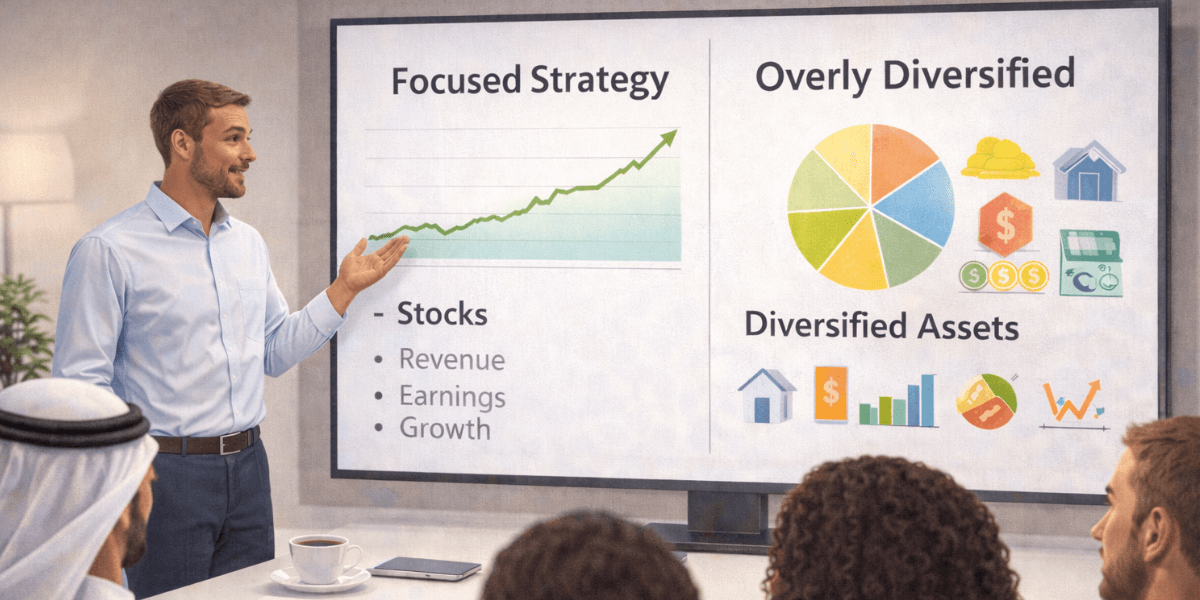
A senior-level analysis explaining when stocks make more sense than diversified asset trading, focusing on correlation risk, time horizons, ...
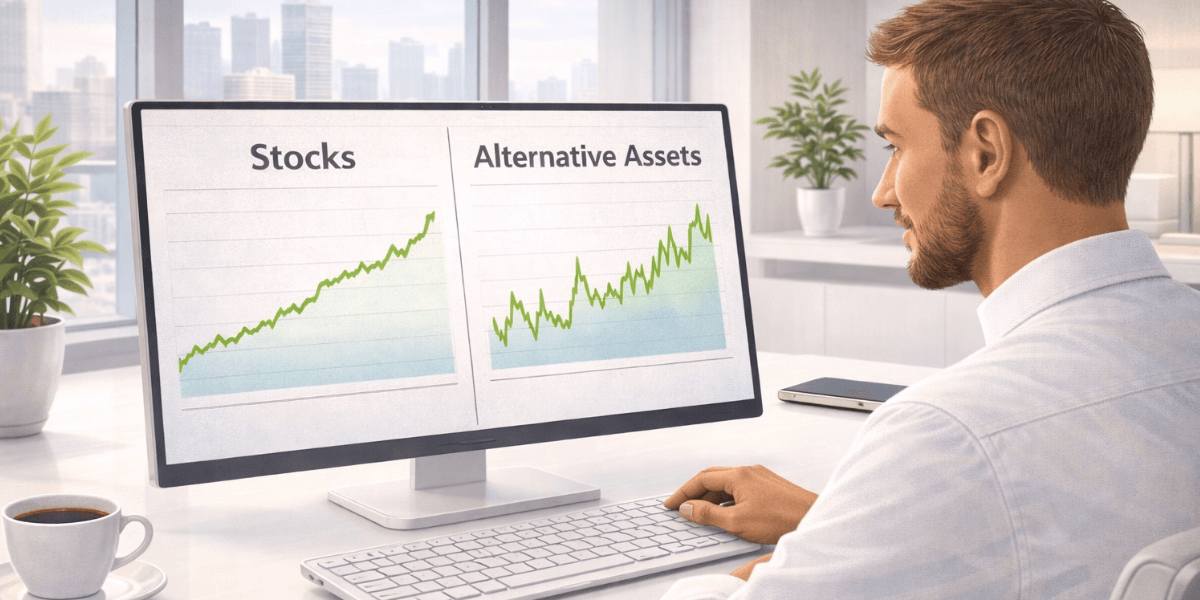
A senior-level analysis comparing stocks and alternative assets from a conservative investing perspective, explaining capital durability, tr...

A senior-level analysis explaining why stocks are fundamentally easier to analyze than other assets, focusing on cash flows, accounting stru...

A senior-level risk analysis comparing stocks and speculative assets, explaining how permanent capital risk, time horizons, and recovery dyn...