Overview of the Bahrain Stock Exchange (Bahrain Bourse)
A comprehensive overview of the Bahrain Stock Exchange (Bahrain Bourse), analyzing its market structure, regulation, liquidity characteristi...
Drawdowns are the part of investing everyone acknowledges in theory and systematically underestimates in practice. They are discussed as temporary setbacks, framed as uncomfortable but necessary steps on the path to long-term returns. Yet when drawdowns actually occur, they dominate behavior, distort decision-making, and permanently alter portfolios. This gap between intellectual acceptance and practical tolerance is where most investment strategies quietly fail.
The core misunderstanding lies in how drawdowns are conceptualized. Many investors treat them as symmetrical to gains, assuming that losses can be recovered with time and patience. This assumption ignores the asymmetry embedded in capital mathematics. A portfolio that loses 30% does not need a 30% gain to recover; it needs more than 42%. At 50%, recovery requires a 100% gain. Drawdowns are not linear inconveniences. They are structural events that reshape the future trajectory of capital.
For investors operating from the GCC, drawdowns carry additional weight. Portfolios are often constructed with implicit confidence in global liquidity, energy-linked growth, and monetary stability imported through currency pegs. These conditions foster long-term optimism, but they also encourage exposure to common global drivers. When drawdowns arrive, they are rarely isolated incidents. They tend to be synchronized across assets, markets, and regions, making recovery more complex than historical averages suggest.
This article approaches drawdowns not as emotional challenges or temporary volatility, but as the central risk variable in equity investing. The objective is not to explain what a drawdown is, but to analyze how drawdowns emerge, why they persist, and how they interact with portfolio structure, correlations, and investor behavior. For GCC investors managing real capital with long horizons, understanding drawdowns is not about comfort. It is about survival.
Drawdowns are often framed as unlucky outcomes of adverse market movements. This framing implies randomness and inevitability, suggesting that drawdowns simply happen to portfolios from time to time. In reality, drawdowns are structural consequences of portfolio design. They reflect how capital is allocated across risk factors, how leverage is embedded, and how correlations behave under stress.
A portfolio does not experience a severe drawdown because markets declined. It experiences a severe drawdown because it was exposed to the specific drivers that declined simultaneously. These drivers are rarely obscure. Interest rates, liquidity conditions, global growth expectations, and dominant sector exposures shape most equity portfolios. When these drivers turn unfavorable, drawdowns emerge as the natural outcome.
For GCC investors, this structural dimension is reinforced by macro alignment. Currency pegs tie local financial conditions to US monetary policy. Energy revenues influence fiscal stability, equity performance, and investor sentiment. When global tightening cycles or energy shocks occur, drawdowns propagate across portfolios regardless of geographic diversification.
Understanding drawdowns as structural forces shifts responsibility back to portfolio construction. It eliminates the comfort of blaming markets and forces a more honest evaluation of exposure. Drawdowns are not accidents. They are signals that a portfolio’s risk architecture has been tested.
Volatility captures movement. Drawdowns capture damage. This distinction is often lost in risk discussions that prioritize standard deviation, daily swings, or short-term fluctuations. Volatility can be uncomfortable without being destructive. Drawdowns, by contrast, permanently alter the capital base from which future returns must be generated.
An investor can tolerate high volatility if drawdowns are contained. Large daily swings that reverse quickly may test discipline but leave long-term outcomes intact. Deep drawdowns, even if infrequent, impose compounding penalties that shape portfolio outcomes for years.
From a practical standpoint, drawdowns define the limits of strategy viability. A portfolio that theoretically delivers attractive long-term returns but suffers periodic 50% drawdowns may be mathematically sound yet behaviorally impossible to maintain. Capital is not invested by equations alone. It is managed by humans, institutions, and governance structures with finite tolerance.
For GCC investors managing family wealth, sovereign-linked capital, or institutional mandates, drawdowns introduce reputational, liquidity, and policy constraints. Recovering from a drawdown is not only a mathematical challenge; it is an organizational one. Volatility may test patience. Drawdowns test legitimacy.
One of the most dangerous misconceptions in investing is the belief that time alone heals losses. This belief ignores the asymmetrical nature of returns. Losses reduce the capital base, increasing the return required to recover. As drawdowns deepen, recovery becomes exponentially harder.
This asymmetry creates what can be called the recovery trap. After a significant drawdown, investors are tempted to increase risk in pursuit of faster recovery. This often leads to higher volatility, greater leverage, or concentration in high-beta assets. While this approach may accelerate recovery in favorable conditions, it increases the probability of further drawdowns if markets remain unstable.
For GCC portfolios exposed to global equities and energy-sensitive sectors, this trap is particularly dangerous. Post-drawdown environments often coincide with tighter liquidity and higher correlations. Risk-taking becomes less rewarded precisely when investors feel pressure to recover.
Drawdown-aware strategies prioritize avoiding the trap altogether. They focus on limiting drawdown depth rather than maximizing rebound speed. This approach may appear conservative during bull markets, but it preserves the one resource that matters most after a drawdown: optionality.
Drawdowns rarely occur in isolation. They are compounded by correlation. Assets that appear diversified during stable periods often converge during stress, transforming moderate losses into systemic drawdowns. This effect is not accidental; it reflects shared exposure to dominant risk drivers.
As markets enter stress regimes, liquidity becomes the primary force. Assets respond less to fundamentals and more to risk aversion, funding constraints, and forced selling. Correlations rise, and portfolios behave as single exposures regardless of the number of positions held.
For GCC investors, correlation-driven drawdowns are intensified by global alignment. US equities, regional markets, and energy-linked assets often react simultaneously to changes in rates or growth expectations. Currency pegs reinforce this synchronization, accelerating capital flows and price adjustments.
Ignoring correlation in drawdown analysis leads to false confidence. Portfolios that look diversified on paper may experience drawdowns similar to concentrated bets. Understanding how correlation behaves under stress is essential for realistic drawdown expectations.
Drawdowns do not only affect portfolios; they affect investors. Even well-designed strategies can fail if drawdowns exceed behavioral tolerance. This dimension is often underestimated, yet it determines whether strategies are implemented consistently or abandoned at the worst possible time.
As drawdowns deepen, decision-making deteriorates. Loss aversion intensifies, time horizons shrink, and risk assessment becomes reactive. Investors may exit positions near lows, abandon diversification, or chase short-term relief through speculative bets.
For institutional and family investors in the GCC, behavioral pressure is amplified by visibility. Drawdowns invite scrutiny from stakeholders, boards, and beneficiaries. Maintaining conviction becomes harder when losses are public and explanations are required.
Effective portfolio design aligns drawdown expectations with behavioral capacity. The goal is not to eliminate drawdowns, but to ensure they remain within tolerable bounds. Strategies that exceed this threshold are unstable, regardless of their theoretical merit.
GCC investors operate within a distinct macro framework. Currency pegs reduce exchange rate volatility but import monetary policy. Energy revenues shape fiscal capacity, equity markets, and investor sentiment. Global capital flows influence local asset pricing more than domestic fundamentals alone.
This structure creates drawdown dynamics that differ from those faced by investors in fully independent economies. Drawdowns often arrive as external shocks rather than local crises. Global tightening cycles, shifts in energy demand, or changes in risk appetite propagate rapidly through GCC portfolios.
As a result, drawdowns can be deeper and more synchronized than expected. Local diversification offers limited protection when global drivers dominate. This reality requires a broader conception of risk that extends beyond geography or sector labels.
GCC-focused portfolios must be evaluated based on how they perform during global stress, not just regional stability. Drawdown resilience depends on exposure to structural drivers, not proximity to local markets.
Managing drawdowns does not mean avoiding risk. It means allocating risk intentionally. Drawdown-aware portfolios are constructed with explicit limits on acceptable loss, informed by both mathematical and behavioral considerations.
This approach emphasizes balance over optimization. It accepts that some upside may be sacrificed to prevent catastrophic losses. It prioritizes capital preservation during adverse regimes over maximum participation during favorable ones.
For GCC investors, drawdown control often involves confronting uncomfortable trade-offs. High-growth assets, energy-linked equities, and globally popular sectors may need to be balanced with exposures that stabilize portfolios during stress, even if they underperform in bull markets.
Ultimately, portfolios designed around drawdown control are not designed to impress during rallies. They are designed to endure across cycles. This endurance is what allows compounding to function over decades rather than years.
Drawdowns are the defining risk of stock investing. They shape long-term outcomes more decisively than volatility, asset selection, or short-term performance. Investors who underestimate drawdowns do not merely experience discomfort; they compromise the future potential of their capital.
For GCC investors, drawdowns must be understood within a global framework. Monetary alignment, energy dependence, and interconnected capital flows amplify both the speed and depth of losses during stress. Pretending otherwise does not reduce risk. It obscures it.
The central lesson is not that drawdowns can be eliminated, but that they can be designed around. Portfolios can be structured to absorb losses without losing coherence. Strategies can be aligned with behavioral tolerance rather than theoretical maxima.
In the long run, investment success is not defined by the absence of drawdowns, but by the ability to survive them without abandoning discipline. Drawdowns reveal the truth of portfolio construction. Investors who respect that truth preserve not only capital, but the capacity to compound it over time.
Yes. Drawdowns are inherent to equity investing. The objective is not to avoid them, but to control their depth and duration.
Because losses reduce the capital base, increasing the return required to recover. This asymmetry makes deep drawdowns exponentially more damaging.
No. Diversification can reduce drawdown severity, but correlations tend to rise during stress, limiting its effectiveness.
They should view drawdowns as globally transmitted events shaped by monetary policy, energy cycles, and capital flows rather than purely local market movements.
Disclaimer: This content is for education only and is not investment advice.

A comprehensive overview of the Bahrain Stock Exchange (Bahrain Bourse), analyzing its market structure, regulation, liquidity characteristi...

An in-depth analysis of the Kuwait Stock Exchange (Boursa Kuwait), explaining its structure, regulation, market behavior, and strategic rele...
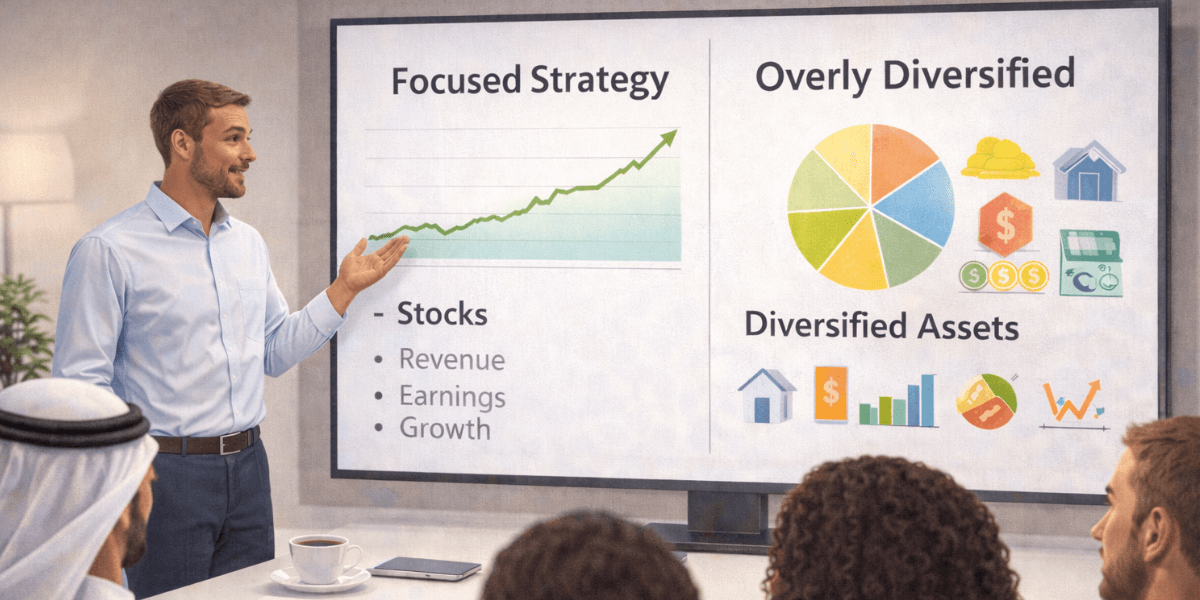
A senior-level analysis explaining when stocks make more sense than diversified asset trading, focusing on correlation risk, time horizons, ...
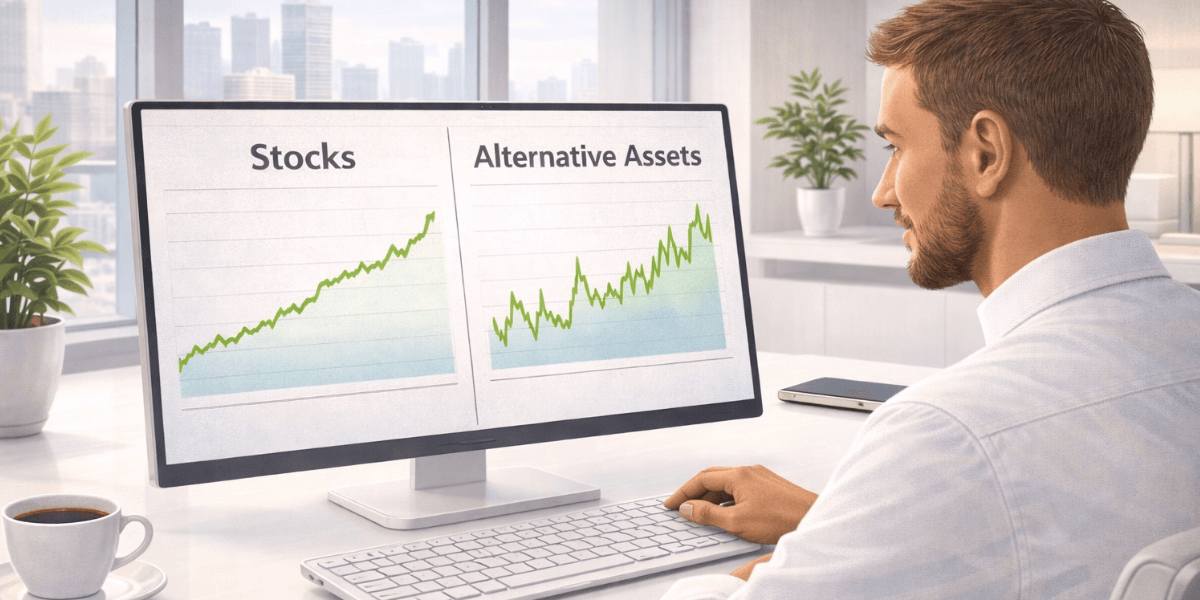
A senior-level analysis comparing stocks and alternative assets from a conservative investing perspective, explaining capital durability, tr...

A senior-level analysis explaining why stocks are fundamentally easier to analyze than other assets, focusing on cash flows, accounting stru...

A senior-level risk analysis comparing stocks and speculative assets, explaining how permanent capital risk, time horizons, and recovery dyn...