Overview of the Bahrain Stock Exchange (Bahrain Bourse)
A comprehensive overview of the Bahrain Stock Exchange (Bahrain Bourse), analyzing its market structure, regulation, liquidity characteristi...
Long-term investors do not approach stocks as fluctuating prices to be reacted to, but as components of a broader system designed to build capital over time. This difference in mindset is subtle but decisive. While short-term participants tend to focus on what a stock is doing today or this week, long-term investors focus on what a business is becoming over years and decades. Their thinking is shaped less by immediacy and more by structure.
This perspective is not accidental. It emerges from an understanding of how wealth is actually built in equity markets. Long-term investors recognize that price movements are the visible surface of deeper forces: business economics, competitive positioning, capital allocation, and time. Instead of asking whether a stock will go up tomorrow, they ask whether the business is likely to be more valuable in five or ten years and whether today’s price reasonably reflects that future.
For investors operating from countries in the Gulf region, this way of thinking is particularly relevant. Most global equity markets operate outside local working hours, making constant monitoring impractical. Attempting to think like a trader in this environment introduces unnecessary stress and structural disadvantage. Long-term investors adapt their thinking to these constraints by emphasizing preparation, patience, and periodic review rather than constant action.
This article explains how long-term investors think about stocks. It focuses strictly on equities and on the mental frameworks used by investors allocating capital from Arab countries into global markets. The goal is not to describe tactics, but to clarify the underlying logic that guides decisions before, during, and after investments are made.
The foundational principle of long-term investing is the treatment of stocks as businesses rather than tradable objects. Long-term investors begin their analysis by understanding what a company does, how it makes money, and how durable its business model is. Price comes later, not first.
This approach shifts attention away from charts and toward fundamentals. Revenue sources, cost structure, margins, reinvestment strategy, and competitive advantages become central. Long-term investors want to know whether a business has the ability to grow, defend its position, and generate cash through different economic cycles.
Thinking this way changes the emotional relationship with price movements. When prices fall, the question is not “why is the stock down?” but “has something changed in the business?” If the answer is no, price declines are contextualized rather than feared.
Short-term participants often experience time as pressure. Positions must work quickly, and delays are seen as failure. Long-term investors invert this relationship. Time is viewed as an asset that amplifies correct decisions and neutralizes temporary setbacks.
This mindset recognizes that most meaningful business outcomes take years to materialize. New products, market expansion, operational improvements, and brand development unfold slowly. Long-term investors align their expectations with these timelines rather than forcing results prematurely.
For investors in the Gulf region, this perspective also aligns with practical reality. Market hours, professional commitments, and lifestyle considerations make constant engagement inefficient. Long-term thinking allows investors to operate on their own schedule while remaining aligned with market outcomes.
Long-term investors do not equate volatility with risk. They understand that volatility represents price variability, not permanent loss. Risk, in their framework, is the probability of long-term impairment of capital due to business failure or structural decline.
When prices fluctuate, long-term investors assess whether volatility reflects new information about fundamentals or merely changes in sentiment and liquidity. This distinction prevents overreaction and reinforces discipline.
By separating noise from signal, long-term investors reduce emotional fatigue and avoid decisions driven by fear or urgency.
Long-term investors care deeply about valuation, but they do not obsess over precision. They understand that valuation is an estimate, not a calculation. The goal is not to buy at the exact bottom, but to avoid paying prices that assume unrealistic outcomes.
This thinking emphasizes margin of safety rather than timing perfection. If a business is strong and priced reasonably relative to long-term prospects, long-term investors are willing to act even if short-term uncertainty exists.
This approach contrasts sharply with short-term thinking, where small price differences can dominate decision-making.
Long-term investors think probabilistically. They do not seek certainty, because they understand it does not exist in markets. Instead, they assess ranges of outcomes and focus on whether favorable outcomes are more likely than unfavorable ones.
This probabilistic mindset reduces the need for constant confirmation. Temporary underperformance does not invalidate a thesis if the underlying probability distribution remains intact.
By accepting uncertainty, long-term investors avoid overconfidence and remain adaptable.
Long-term investors rarely evaluate stocks in isolation. They consider how each position fits within a broader portfolio. Diversification, correlation, and concentration are part of the decision-making process.
This portfolio-level thinking reduces the emotional weight of individual positions. No single stock is expected to determine overall success.
For investors allocating capital across global markets, this perspective supports resilience against regional and sector-specific shocks.
One of the clearest differences between long-term investors and traders is the relationship with activity. Long-term investors do not equate frequent action with effectiveness. In many cases, inaction is a deliberate and rational choice.
This mindset recognizes that overtrading introduces friction, taxes, and emotional stress without guaranteeing better outcomes. Long-term investors are selective about when they act.
Patience is not passive; it is intentional.
Contrary to common belief, long-term investors do think about selling. They simply frame exits differently. Selling decisions are based on changes in fundamentals, valuation extremes, or portfolio balance, not on short-term price movements.
By defining exit criteria in advance, long-term investors reduce emotional decision-making during volatile periods.
This foresight reinforces discipline and consistency.
Investors in Arab financial hubs operate in globally integrated markets while balancing local responsibilities and schedules. Long-term thinking accommodates these realities by reducing dependence on real-time engagement.
Capital preservation, steady growth, and intergenerational planning are common priorities in the region. Long-term investing aligns naturally with these objectives.
By thinking in years rather than days, investors can participate meaningfully in global equity markets without structural disadvantage.
Long-term investing is not static. As investors gain experience, their thinking becomes more nuanced. They refine their understanding of risk, improve their judgment of businesses, and develop patience rooted in evidence rather than belief.
This evolution reinforces confidence without encouraging complacency.
Learning is continuous, but reaction is controlled.
Long-term investors think about stocks as claims on future economic activity rather than as short-term opportunities. Their mindset is shaped by ownership, time, probability, and discipline.
For investors operating from the Gulf region, this way of thinking is not only effective, but practical. It aligns with market structure, lifestyle constraints, and long-term financial objectives.
Success in equity markets is rarely the result of constant action or perfect timing. It is more often the result of thinking correctly about what stocks represent and allowing time to work in favor of those decisions. Long-term investors understand this, and their thinking reflects it.
No. They contextualize them within business fundamentals and long-term objectives.
Yes. When fundamentals or probabilities change, decisions are reassessed.
It suits most investors, particularly those with limited time for active trading.
It shifts risk toward fundamentals and away from short-term volatility.
Disclaimer: This content is for education only and is not investment advice.

A comprehensive overview of the Bahrain Stock Exchange (Bahrain Bourse), analyzing its market structure, regulation, liquidity characteristi...

An in-depth analysis of the Kuwait Stock Exchange (Boursa Kuwait), explaining its structure, regulation, market behavior, and strategic rele...
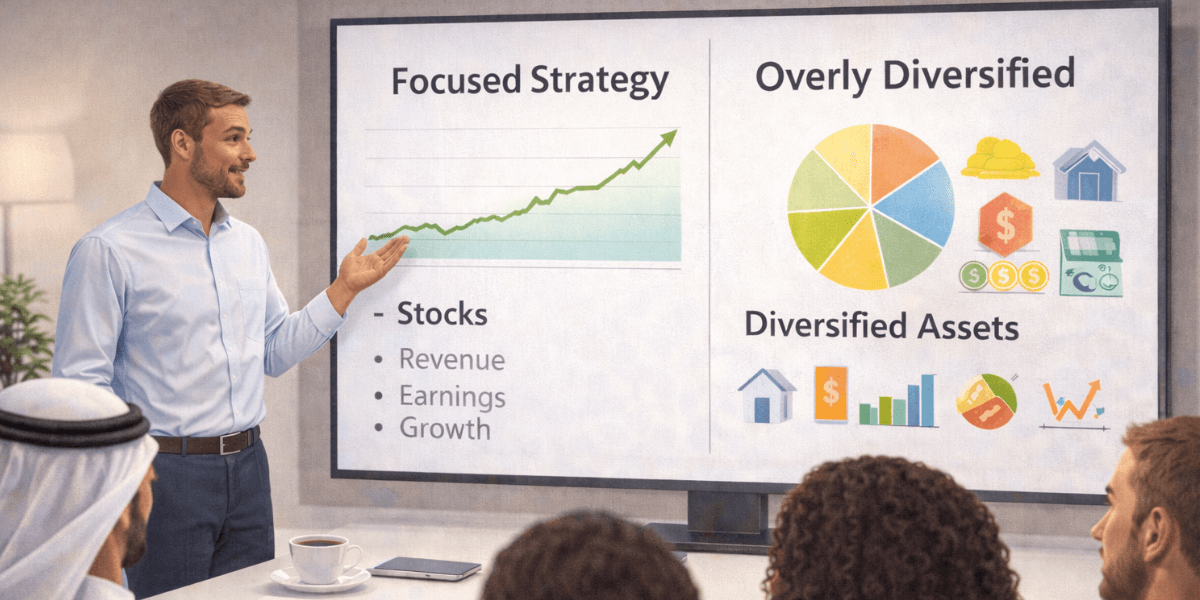
A senior-level analysis explaining when stocks make more sense than diversified asset trading, focusing on correlation risk, time horizons, ...
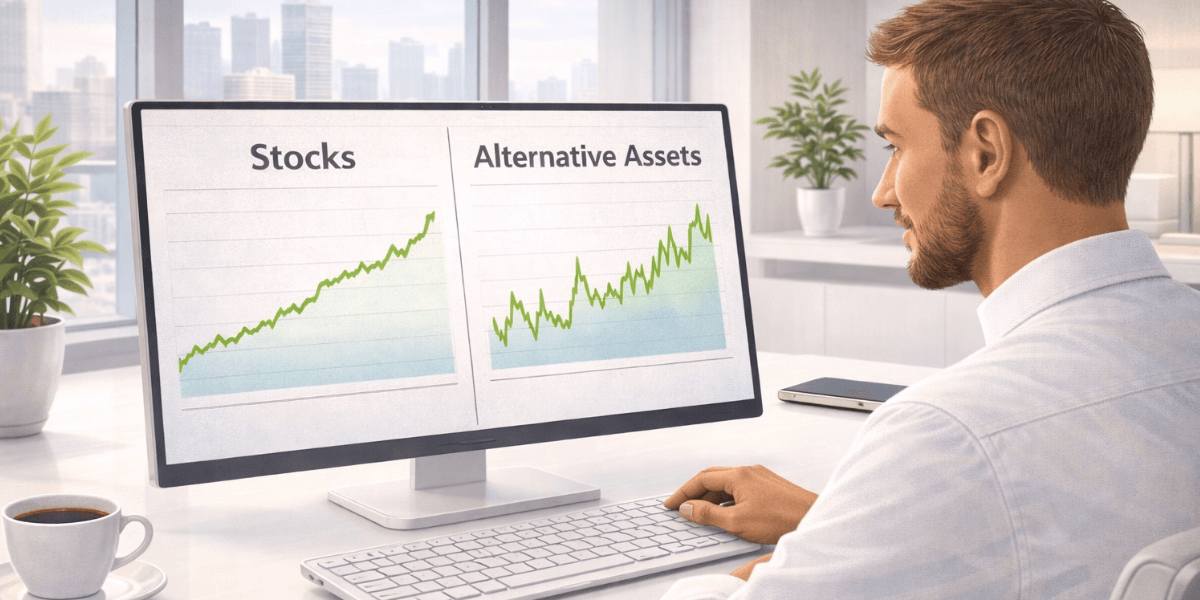
A senior-level analysis comparing stocks and alternative assets from a conservative investing perspective, explaining capital durability, tr...

A senior-level analysis explaining why stocks are fundamentally easier to analyze than other assets, focusing on cash flows, accounting stru...

A senior-level risk analysis comparing stocks and speculative assets, explaining how permanent capital risk, time horizons, and recovery dyn...