Overview of the Bahrain Stock Exchange (Bahrain Bourse)
A comprehensive overview of the Bahrain Stock Exchange (Bahrain Bourse), analyzing its market structure, regulation, liquidity characteristi...
Most investors interact with financial markets through a stock trading platform, yet very few stop to consider what that platform actually represents. To the casual observer, it looks like a simple interface: prices move, charts update, buttons allow buying and selling. In reality, a trading platform is not just software. It is the operational infrastructure that connects an investor to global capital markets. Every decision an investor makes is filtered, executed, recorded, and constrained by the platform they use.
A trading platform determines how prices are displayed, how orders are transmitted, how risk controls are enforced, and how information is prioritized. These design and technical choices shape execution quality, transparency, and ultimately investor behavior. Two investors using different platforms can experience the same market very differently, even when trading the same stock.
For investors based in the GCC, the importance of understanding trading platforms is even greater. Most GCC investors operate across borders, accessing U.S. and international equities from a different time zone and regulatory environment. This introduces operational risks that go beyond stock selection: overnight price gaps, reduced reaction time, platform reliability during foreign market hours, and dependency on digital infrastructure.
Understanding how stock trading platforms work is therefore not a technical curiosity. It is a core component of risk management. Platforms are the bridge between strategy and execution. If that bridge is poorly understood, even well-designed investment strategies can fail in practice.
A stock trading platform sits between the investor and the broader market ecosystem. It is not the market itself, and it is not the exchange. Instead, it acts as an interface layer that translates investor intent into executable instructions within a highly complex system.
When an investor interacts with a platform, they are communicating with multiple backend systems simultaneously. These include the broker’s order management system, market data providers, risk engines, clearing mechanisms, and ultimately the stock exchange or liquidity venue where trades are executed.
The platform’s job is to coordinate these interactions seamlessly. It must ensure that prices are accurate, orders are valid, risk limits are respected, and information flows in real time. Any breakdown in this coordination introduces operational risk that is invisible until it matters most.
For GCC investors trading global equities, this intermediary role is critical. Geographic distance means that investors rely entirely on the platform’s ability to bridge markets accurately and reliably without manual intervention.
Prices displayed on a trading platform do not originate from the platform itself. They are sourced from exchanges and market data providers through continuous data feeds. These feeds include bid and ask prices, last traded prices, volume, and in some cases depth-of-market information.
The platform receives, processes, and displays this data in near real time. Latency—the delay between a price update on the exchange and its appearance on the platform—is an unavoidable reality. However, the magnitude and consistency of that latency matter greatly during volatile conditions.
During fast markets, even small delays can lead to execution at prices different from what investors expect. This is not always a failure; it is often a reflection of market dynamics. Still, platforms with poor data handling amplify confusion and increase execution risk.
For GCC investors trading U.S. stocks, reliable price data is essential during earnings releases and market opens, which often occur late in the local day. A platform that cannot keep up with rapid price changes undermines informed decision-making.
When an investor places an order, the process begins long before the order reaches the exchange. The platform first validates the order, checking available funds, margin requirements, account permissions, and regulatory constraints.
Once validated, the order is transmitted to the broker’s order management system. From there, routing logic determines where the order is sent. This may be directly to an exchange, or to a liquidity provider depending on the broker’s structure and the market in question.
This process happens in milliseconds, but multiple systems are involved. The platform itself does not execute the trade; it initiates a chain of events that leads to execution elsewhere. Understanding this distinction helps investors appreciate why execution quality depends on both platform and broker infrastructure.
For GCC investors operating across time zones, clarity around order processing is especially important. Orders placed near market close or during high-volatility periods can behave differently than expected, not due to error, but due to market mechanics.
Execution refers to how an order is filled in the market. Factors such as liquidity, order size, and market conditions determine whether an order is filled immediately, partially, or with slippage.
Trading platforms influence execution indirectly through routing efficiency and order handling accuracy. Platforms that delay order transmission or mishandle order parameters expose investors to unintended price outcomes.
During volatile periods, execution quality becomes more important than price precision. Being filled at a slightly worse price is often preferable to not being filled at all when managing risk.
For GCC investors trading international markets, execution risk is heightened at market open and close, when volatility and volume peak. Platforms must be designed to handle these conditions without degradation.
The true test of a trading platform is not how it performs during calm markets, but how it behaves under stress. Market stress brings surging volume, rapid price changes, and widespread investor activity. Platforms must absorb these pressures without failing.
During stress events, outages, frozen screens, and delayed order execution are not technical inconveniences. They are risk events. When investors cannot access their accounts, verify exposure, or execute orders, they lose control at precisely the moment when control matters most.
For GCC investors, platform reliability is even more critical due to time-zone separation. Many market-moving events occur overnight. Investors may wake up to large portfolio changes driven by events they could not respond to in real time. In such situations, platform stability is essential for regaining control quickly.
A reliable platform is one that remains accessible, responsive, and transparent during volatility. From a risk perspective, platform reliability is as important as diversification or position sizing.
A trading platform’s interface actively shapes investor behavior. Design choices influence how information is perceived and how decisions are made, especially under stress.
Platforms that emphasize constant price movement, flashing alerts, and excessive notifications encourage short-term thinking. Investors become reactive, focusing on noise rather than strategy.
Well-designed platforms prioritize clarity. They present positions, exposure, and risk in a way that supports deliberate decision-making. This is particularly important for long-term investors who do not intend to trade frequently.
For GCC investors balancing portfolios alongside professional commitments, behavioral support is critical. Platforms that reduce cognitive load help investors stay disciplined when attention is limited.
Trading platforms handle sensitive financial and personal data. Security failures can lead to unauthorized access, financial loss, and long-term exposure.
Strong security architecture includes encryption, authentication controls, session monitoring, and incident response systems. These features are not optional. They are foundational.
For GCC investors operating globally, security is intertwined with jurisdictional complexity. Resolving breaches across borders is difficult and slow. Platform security therefore plays a direct role in risk management.
No trading platform eliminates market risk. Platforms facilitate access and execution, but they do not protect investors from adverse price movements or macroeconomic shocks.
Understanding platform limitations helps investors set realistic expectations. Delays during extreme volatility, partial fills, and widened spreads are reflections of market conditions, not necessarily platform failures.
For GCC investors, recognizing these limitations allows strategies to be designed with sufficient margin for uncertainty.
Stock trading platforms are not neutral tools. They shape how investors access markets, manage risk, and respond to uncertainty. While they do not determine investment success on their own, they can amplify both discipline and error.
For investors in the GCC operating across global markets, the platform is a critical component of portfolio infrastructure. Reliability, execution quality, security, and behavioral design all influence long-term outcomes.
Understanding how trading platforms work allows investors to align technology with strategy. It reduces operational surprises, supports disciplined behavior, and ensures that investment decisions are implemented as intended.
In the end, successful investing depends not only on what investors buy, but on how they interact with markets. The trading platform is the bridge between intent and reality. Knowing how that bridge works is essential for crossing volatile markets safely.
Yes. Even infrequent trades require reliable execution, transparency, and access during stress.
Execution depends on both. The platform initiates orders, while the broker and exchange execute them.
Because global markets operate across time zones, reducing real-time intervention ability.
No. It reduces operational and behavioral risk, not market risk.
Disclaimer: This content is for education only and is not investment advice.

A comprehensive overview of the Bahrain Stock Exchange (Bahrain Bourse), analyzing its market structure, regulation, liquidity characteristi...

An in-depth analysis of the Kuwait Stock Exchange (Boursa Kuwait), explaining its structure, regulation, market behavior, and strategic rele...

A senior-level analysis explaining when stocks make more sense than diversified asset trading, focusing on correlation risk, time horizons, ...
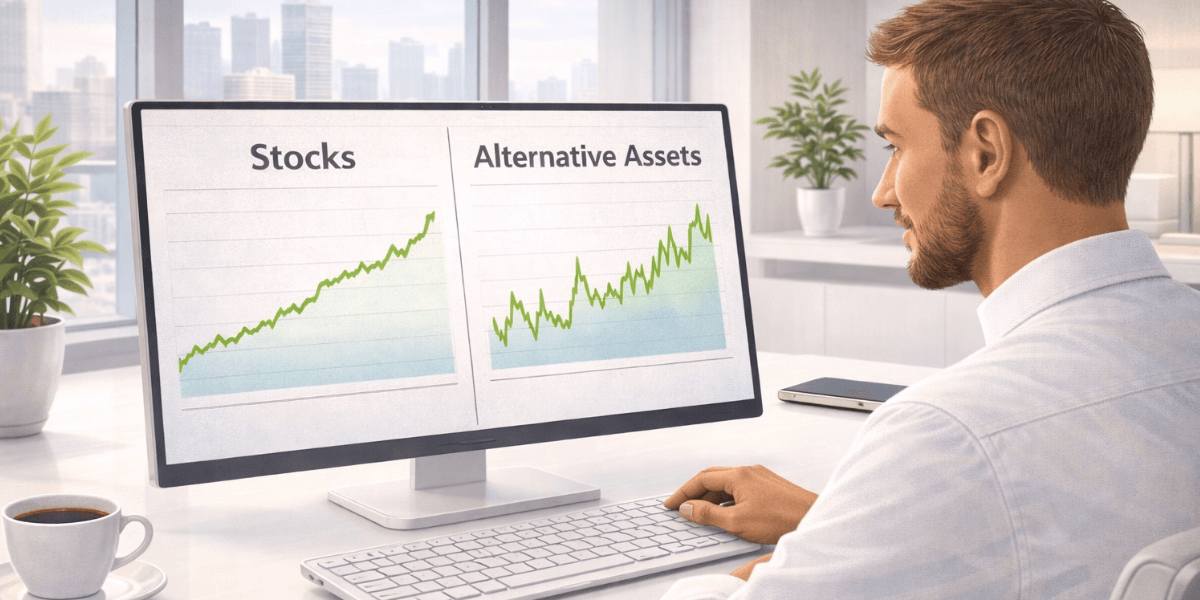
A senior-level analysis comparing stocks and alternative assets from a conservative investing perspective, explaining capital durability, tr...

A senior-level analysis explaining why stocks are fundamentally easier to analyze than other assets, focusing on cash flows, accounting stru...
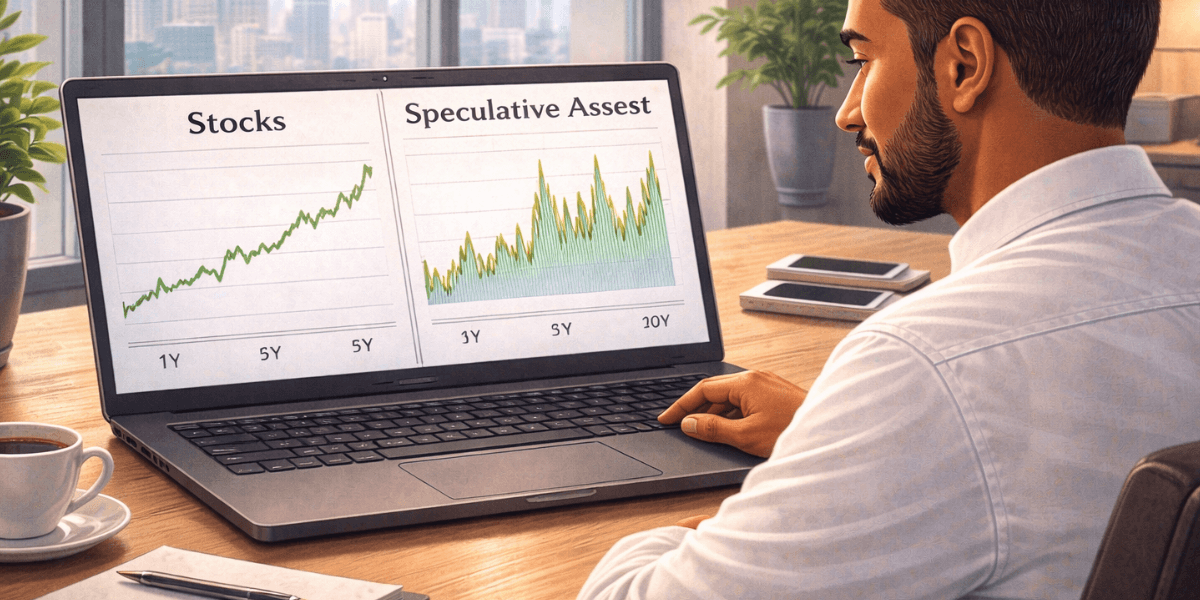
A senior-level risk analysis comparing stocks and speculative assets, explaining how permanent capital risk, time horizons, and recovery dyn...