Overview of the Bahrain Stock Exchange (Bahrain Bourse)
A comprehensive overview of the Bahrain Stock Exchange (Bahrain Bourse), analyzing its market structure, regulation, liquidity characteristi...
The balance sheet is often considered the most intimidating financial statement, yet it is also the most revealing when it comes to understanding risk. While the income statement shows performance over a period of time, the balance sheet is a snapshot of financial reality at a specific moment. It tells investors what a company owns, what it owes, and how those two sides are financed.
Many investors overlook the balance sheet because it does not appear to explain growth or profitability directly. This is a mistake. The balance sheet explains resilience. It shows whether a company can endure downturns, absorb shocks, and fund its operations without external rescue. In stock analysis, survival is a prerequisite for long-term returns.
For investors operating from GCC countries, balance sheet literacy is particularly important. Exposure to global equity markets introduces currency risk, interest rate sensitivity, and macroeconomic volatility that often materialize outside local market hours. When prices move quickly, investors who understand balance sheet strength are far less likely to panic or misjudge risk.
This article explains how to read a balance sheet for stock analysis step by step. The focus is strictly on equities and on GCC-based investors analyzing global companies. The objective is not to memorize accounting terms, but to understand what the balance sheet reveals about financial strength, flexibility, and long-term risk.
Every balance sheet follows the same fundamental equation: assets equal liabilities plus shareholders’ equity. This equation is not a formality; it reflects how businesses are financed.
Assets represent what the company controls. Liabilities represent what the company owes to others. Equity represents the residual claim belonging to shareholders after obligations are met.
Understanding this structure allows investors to interpret every line item in relation to the others rather than in isolation.
Assets are resources that a company uses to generate value. They are typically divided into current assets and non-current assets.
Current assets include cash, cash equivalents, accounts receivable, and inventory. These assets are expected to be converted into cash within one year. Their quality matters. Cash is immediate liquidity. Receivables depend on customer reliability. Inventory depends on demand and pricing power.
Non-current assets include property, equipment, long-term investments, and intangible assets such as patents or goodwill. These assets support long-term operations but are less liquid.
Cash is the most important asset on the balance sheet. It determines whether a company can meet obligations without external financing.
Investors should assess not only how much cash a company holds, but how it compares to short-term liabilities. Strong liquidity reduces bankruptcy risk and provides flexibility during downturns.
For global investors, cash location and currency also matter. Cash held in foreign subsidiaries may not be immediately accessible.
Accounts receivable represent sales that have been recorded but not yet paid. Rising receivables can signal growth, but they can also indicate collection problems.
Investors should compare receivables growth to revenue growth. If receivables grow faster than revenue, cash conversion may be weakening.
This analysis helps distinguish between accounting performance and economic reality.
Inventory represents products waiting to be sold. It ties up capital and is vulnerable to obsolescence.
Rising inventory relative to sales can signal demand weakness or overproduction. Declining inventory may indicate strong demand or supply constraints.
Inventory dynamics vary by industry, so context is essential.
Liabilities represent claims against the company’s assets. Like assets, they are divided into current and non-current categories.
Current liabilities include short-term debt, accounts payable, and accrued expenses. These obligations must be met within one year and are critical for liquidity analysis.
Non-current liabilities include long-term debt and pension obligations. These shape long-term risk and interest sensitivity.
Debt can accelerate growth, but it also amplifies risk. Balance sheet analysis evaluates how much debt a company carries relative to cash flow and equity.
Key considerations include debt maturity schedules, interest rates, and covenants. High leverage limits flexibility and increases vulnerability during economic stress.
For GCC-based investors exposed to global rate cycles, understanding leverage is essential.
Equity represents what remains after liabilities are subtracted from assets. It includes paid-in capital, retained earnings, and other comprehensive income.
Growing equity over time often reflects retained profitability. Declining equity may signal losses, excessive leverage, or shareholder dilution.
Equity analysis helps investors understand whether value is being built or eroded.
Many modern companies carry significant intangible assets and goodwill from acquisitions. These assets may not have tangible resale value.
Large goodwill balances increase the risk of write-downs if acquisitions underperform. Investors should evaluate whether intangible assets are supported by strong cash flow.
This is especially relevant in global markets where acquisition-driven growth is common.
Several ratios help interpret balance sheet data. Current ratio and quick ratio assess liquidity. Debt-to-equity and net debt-to-EBITDA assess leverage.
Ratios should be compared over time and against industry peers. Absolute values matter less than trends and context.
Balance sheet ratios complement income and cash flow analysis rather than replacing them.
A single balance sheet snapshot is limited. Investors should analyze changes over multiple periods.
Is debt increasing faster than assets? Is cash declining? Is equity growing consistently? Trends reveal strategic direction and financial discipline.
For long-term investors, stability often matters more than aggressive expansion.
Common errors include focusing only on total assets, ignoring off-balance-sheet obligations, and overlooking liquidity risk.
Another mistake is assuming that asset size equals safety. Asset quality and financing structure matter far more.
Balance sheets must be interpreted holistically.
Investors in the GCC often build globally diversified portfolios with limited ability to intervene during market stress.
Balance sheet strength reduces the risk of permanent capital loss and improves confidence during volatility.
Understanding balance sheets allows investors to differentiate between companies that can endure shocks and those that cannot.
Reading a balance sheet correctly reframes stock analysis around resilience rather than aspiration. While growth stories and earnings headlines often dominate attention, the balance sheet quietly determines whether those stories can survive stress. It reveals how a company is financed, how exposed it is to shocks, and how much room it has to maneuver when conditions deteriorate. In practice, long-term outcomes are shaped less by how fast a company grows in good times and more by how well it endures bad ones.
For investors operating from GCC countries, this perspective is critical. Participation in global equity markets brings unavoidable exposure to foreign interest rate cycles, currency movements, and macro events that may unfold outside local hours. When volatility strikes, investors who understand balance sheet strength are less likely to react emotionally or misjudge risk based on price alone. Liquidity, leverage, and maturity profiles provide clarity when narratives fail.
Balance sheet analysis also sharpens judgment about management quality. Conservative financing, disciplined leverage, and prudent liquidity management signal long-term thinking. Aggressive debt structures, reliance on refinancing, or inflated intangible assets may enhance short-term returns but increase fragility. Over time, these choices compound—for better or worse—into materially different outcomes for shareholders.
Importantly, the balance sheet does not operate in isolation. It complements the income statement and cash flow statement by answering a different question: not how profitable the company is today, but how exposed it is to uncertainty tomorrow. When analyzed together, these statements provide a three-dimensional view of performance, execution, and endurance.
Ultimately, balance sheet literacy is a form of risk control. It does not guarantee success, but it meaningfully reduces the probability of permanent capital loss. For GCC-based investors seeking durable participation in global equity markets, understanding the balance sheet is not optional. It is the foundation that allows patience, conviction, and discipline to survive across market cycles.
Not always, but weak balance sheets increase risk significantly.
Both matter. The income statement shows performance, the balance sheet shows risk.
Yes, especially during acquisitions, downturns, or financing events.
No. Asset quality and leverage matter more than size.
Disclaimer: This content is for education only and is not investment advice.

A comprehensive overview of the Bahrain Stock Exchange (Bahrain Bourse), analyzing its market structure, regulation, liquidity characteristi...

An in-depth analysis of the Kuwait Stock Exchange (Boursa Kuwait), explaining its structure, regulation, market behavior, and strategic rele...

A senior-level analysis explaining when stocks make more sense than diversified asset trading, focusing on correlation risk, time horizons, ...
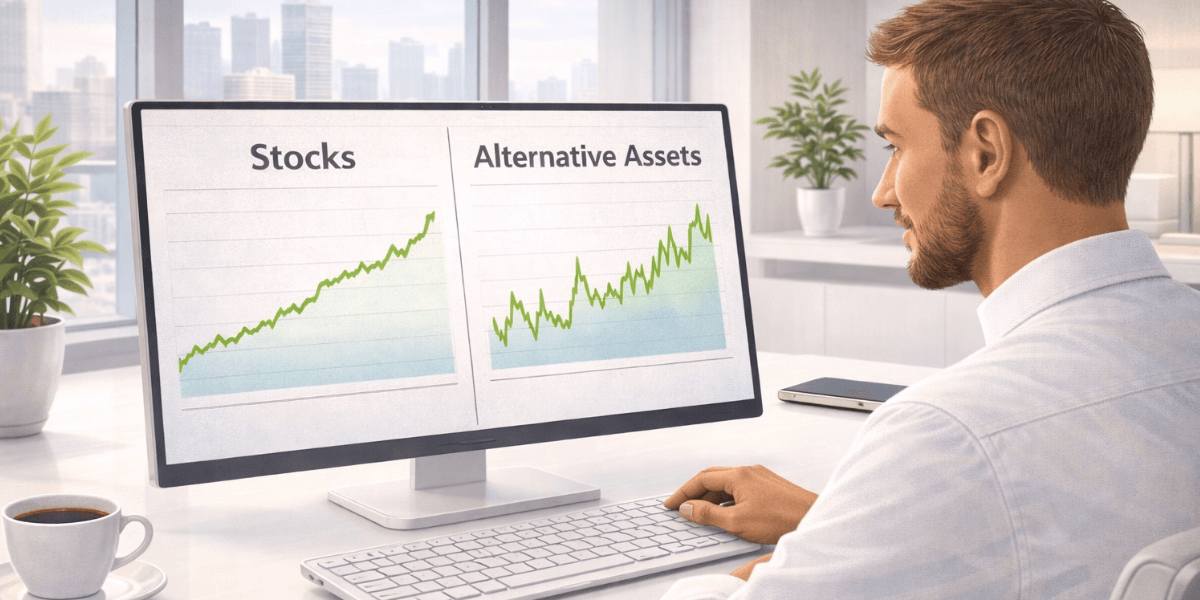
A senior-level analysis comparing stocks and alternative assets from a conservative investing perspective, explaining capital durability, tr...

A senior-level analysis explaining why stocks are fundamentally easier to analyze than other assets, focusing on cash flows, accounting stru...
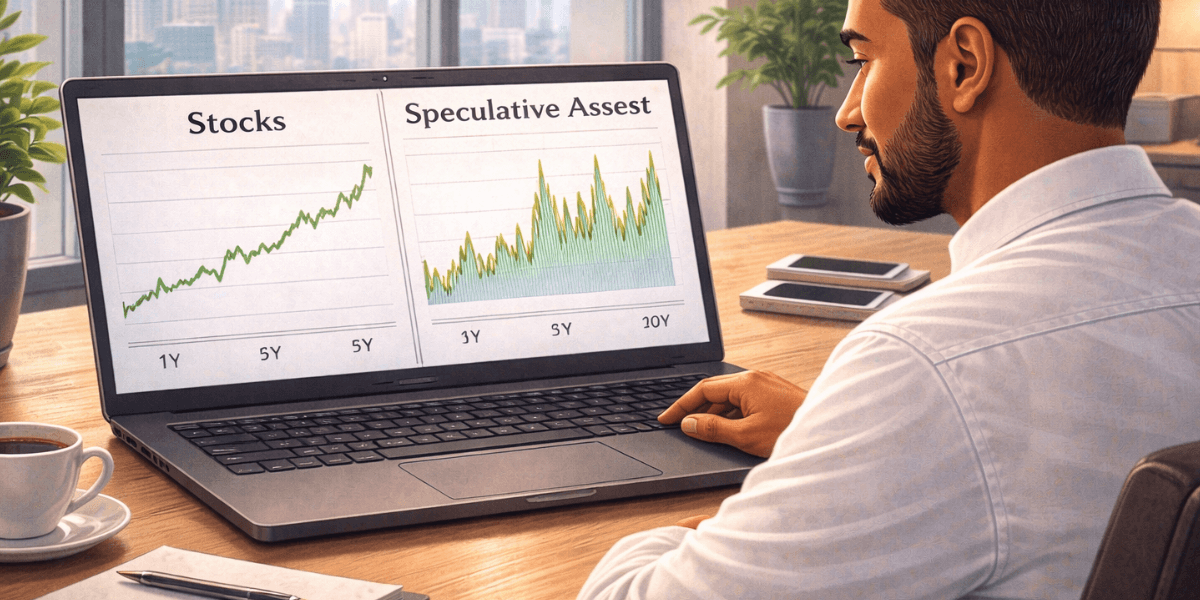
A senior-level risk analysis comparing stocks and speculative assets, explaining how permanent capital risk, time horizons, and recovery dyn...