Overview of the Bahrain Stock Exchange (Bahrain Bourse)
A comprehensive overview of the Bahrain Stock Exchange (Bahrain Bourse), analyzing its market structure, regulation, liquidity characteristi...
The New York Stock Exchange is often referenced as a symbol of global finance rather than understood as a functioning market system. For many investors, “the NYSE” simply represents Wall Street, U.S. capitalism, or the stock market as a whole. While the exchange does carry historical and symbolic weight, its real importance lies in how it operates as a structured marketplace for equity ownership.
The NYSE is not just a place where stocks trade. It is a regulated environment designed to facilitate large-scale buying and selling of shares under defined rules. These rules influence how prices are formed, how liquidity behaves, and how efficiently ownership can change hands. For investors, especially those operating internationally, understanding these mechanics is essential to avoid treating the market as a black box.
This article focuses on explaining how the New York Stock Exchange works from an investor’s perspective. The objective is not to promote trading activity or highlight famous listings, but to clarify how the exchange functions, why it exists, and what role it plays within the broader equity market. By understanding the NYSE as a system rather than a symbol, investors can make more informed decisions and develop more realistic expectations about price behavior and execution.
The New York Stock Exchange is one of the world’s largest and most influential stock exchanges by market capitalization of listed companies. It serves as a primary trading venue for hundreds of publicly listed corporations, many of which operate at a global scale across industries such as finance, energy, healthcare, industrials, and consumer goods.
The NYSE operates under U.S. securities regulation and functions as a centralized, regulated marketplace for equity trading. Companies listed on the exchange must meet specific initial listing requirements and comply with ongoing disclosure and governance standards. These requirements are intended to ensure transparency and consistency in the information available to investors, not to guarantee investment quality or performance.
From an equity investor’s standpoint, the NYSE should be understood as an infrastructure layer. It does not create value, choose winning companies, or protect investors from losses. Instead, it provides the framework through which ownership stakes in companies are priced and exchanged. The exchange’s role is to make this process orderly, visible, and scalable.
The U.S. equity market is not centralized in a single exchange. It is a network of exchanges and trading venues that together facilitate the buying and selling of shares. Within this ecosystem, the NYSE plays a distinct and historically important role.
The exchange has traditionally been associated with large-cap, established companies that have long operating histories. Many corporations choose the NYSE as their primary listing venue because of its reputation, institutional investor base, and depth of liquidity. Over time, this has shaped the trading profile of many NYSE-listed stocks, which often attract long-term ownership from pension funds, asset managers, and other institutional participants.
For investors, this positioning matters. Stocks listed on the NYSE often exhibit different liquidity patterns and volatility characteristics compared to those listed on other venues. While exceptions exist, the NYSE remains closely linked to traditional corporate sectors and long-term capital allocation rather than purely speculative activity.
One of the defining characteristics of the New York Stock Exchange is its hybrid trading model. Unlike fully electronic exchanges, the NYSE combines automated trading systems with human oversight. This structure is intentional and reflects a specific philosophy about how equity markets should function, particularly during periods of high volume or market stress.
Most orders on the NYSE are processed electronically through sophisticated matching engines that operate at high speed. These systems handle the vast majority of daily trading activity and ensure that orders are executed according to price and time priority. In normal market conditions, this electronic layer provides efficiency, consistency, and transparency.
However, the NYSE also maintains a human element within its trading model. Each listed stock is assigned a designated market participant whose role is to oversee trading conditions and help manage order imbalances. This hybrid approach is designed to reduce disorderly trading, particularly during moments when liquidity becomes uneven or when significant news causes sudden shifts in supply and demand.
For investors, the practical implication is that the NYSE prioritizes market stability alongside speed. While no structure can eliminate volatility or risk, the hybrid model aims to prevent extreme price dislocations that can occur in purely electronic environments during periods of stress.
Designated market makers play a central operational role within the NYSE trading framework. Their responsibility is not to predict prices or influence long-term valuation, but to help maintain orderly trading conditions in the stocks assigned to them.
When buy and sell interest becomes unbalanced, designated market makers may step in to provide liquidity or facilitate smoother price transitions. This can involve temporarily committing capital or coordinating order flow to prevent abrupt gaps between bids and offers. Their presence is especially relevant during the opening and closing of the trading session, when large volumes of orders enter the market simultaneously.
It is important to understand the limits of this role. Market makers do not guarantee liquidity under all circumstances, nor do they protect investors from losses. Their function is structural rather than protective. Liquidity can still decline sharply during periods of uncertainty, and spreads can widen when risk perception increases.
From an investor’s perspective, the benefit of this system is resilience. While market risk remains, NYSE liquidity is often more robust during volatile conditions than in venues that rely exclusively on automated matching without human oversight.
Order execution on the New York Stock Exchange follows a structured set of priority rules designed to ensure fairness and transparency. When an investor places an order through a broker, that order enters the NYSE trading system and competes with other buy and sell orders already in the market.
The NYSE applies price-time priority as the core execution principle. Orders offering better prices are executed before those at worse prices. When multiple orders exist at the same price level, the order that arrived first receives execution priority. This framework rewards price improvement and patience rather than sheer speed, reinforcing orderly market behavior.
Execution quality is closely tied to liquidity. In highly active NYSE-listed stocks, large numbers of orders at multiple price levels allow trades to occur with minimal price impact. In less liquid stocks, execution may involve wider bid-ask spreads and partial fills, particularly during volatile periods or outside peak trading hours.
For investors, understanding execution mechanics matters even when trading infrequently. The price ultimately received is not only a reflection of valuation, but also of market structure, order type, and timing. A clear grasp of how execution priority works helps investors place orders more deliberately and manage expectations around fills and pricing.
The NYSE does not rely solely on continuous trading to establish prices. Instead, it uses auctions at the beginning and end of each trading session to concentrate liquidity and determine key reference prices.
The opening auction establishes the first official price of the trading day. During this process, buy and sell orders accumulate before the market opens and are matched at a single clearing price that reflects broad market interest. This mechanism incorporates overnight information and helps prevent erratic price movements at the start of the session.
The closing auction serves a similar purpose at the end of the day. It determines the final official price, which is widely used as a benchmark by institutional investors, index funds, and asset managers. Large volumes often flow through the closing auction as portfolios are rebalanced or adjusted.
For investors, these auctions explain why price behavior can differ significantly at the open and close compared to the middle of the session. They are structurally important moments where liquidity, information, and execution converge.
Liquidity is one of the defining characteristics of the New York Stock Exchange. Many NYSE-listed stocks benefit from deep and consistent trading activity, which allows investors to buy and sell shares with relatively low transaction friction. High liquidity generally translates into tighter bid-ask spreads and more predictable execution.
However, liquidity on the NYSE is not uniform across all stocks or all moments. Large, widely held companies tend to exhibit stable liquidity throughout the trading day, while smaller or less actively traded listings can experience thinner order books. During periods of market stress or heightened uncertainty, even highly liquid stocks may see spreads widen and volatility increase.
Volatility on the NYSE is shaped by both company-specific information and broader market forces. Earnings announcements, economic data releases, and shifts in investor sentiment can all drive sharp price movements. The exchange’s structure helps manage these movements, but it does not suppress them. Price changes remain a core feature of equity markets.
For investors, understanding the interaction between liquidity and volatility is essential. It helps explain why execution quality can vary, why prices can move quickly during certain periods, and why disciplined order placement matters even for long-term strategies.
The New York Stock Exchange operates during U.S. market hours, which are based on U.S. Eastern Time. These hours shape when liquidity is highest, when volatility tends to increase, and when most institutional activity occurs.
Trading activity on the NYSE is often concentrated around the opening and closing of the session. These periods coincide with the release of important information, portfolio adjustments by institutional investors, and index-related flows. As a result, price movements can be more pronounced at these times.
For investors operating outside the United States, NYSE trading hours often fall in the afternoon or evening local time. This can be advantageous, allowing participation during the most liquid parts of the session. However, it also requires awareness of timing when placing orders or reacting to news.
Even long-term investors benefit from understanding trading hours. Execution quality, liquidity, and price behavior are all influenced by when trades are placed, making timing an operational consideration rather than a speculative one.
The NYSE plays a central role in global equity markets. Investors from around the world access NYSE-listed stocks through international brokerage platforms, making the exchange a global hub for capital allocation.
For international investors, the NYSE offers exposure to many of the world’s most established companies. These firms often generate revenue globally, meaning that ownership in NYSE-listed stocks can represent indirect exposure to multiple regions and economies.
However, global access does not eliminate the need for structural understanding. Currency considerations, settlement processes, and market timing all remain relevant. The exchange provides the venue, but the investor must still manage the broader context in which trades occur.
Understanding how the NYSE functions allows global investors to engage with U.S. equities more confidently and with clearer expectations about liquidity, volatility, and execution.
A common misconception is that the NYSE determines stock prices. In reality, prices emerge from the interaction of buyers and sellers. The exchange provides the framework, not the valuation.
Another misconception is that trading on the NYSE directly benefits the company financially. Most trading occurs in the secondary market, where shares change hands between investors. Companies raise capital primarily in the primary market, not through daily trading activity.
Some investors also assume that NYSE-listed stocks are inherently safer. While listing standards promote transparency, investment risk ultimately depends on business fundamentals, valuation, and broader market conditions.
Clarifying these misconceptions helps investors focus on what truly matters: understanding the business, the price, and the risks involved.
The New York Stock Exchange is a foundational institution in global equity markets, not because of its history or symbolism, but because of how it functions. It provides a structured, regulated environment that supports large-scale trading, price discovery, and liquidity in publicly listed companies.
For investors, understanding how the NYSE works demystifies the trading process. It explains why prices behave differently at certain times, why liquidity matters, and why execution quality depends on market structure as much as on individual decisions.
This knowledge does not replace company analysis or long-term strategy. Instead, it complements them by removing structural blind spots. When investors understand the exchange, they can focus more effectively on evaluating businesses and managing risk.
In that sense, the NYSE is not the investment itself, but the system that makes equity investing possible at scale. Knowing how that system works is a core part of becoming a more informed equity investor.
No. Stock prices are determined by supply and demand among market participants. The NYSE provides the rules and infrastructure that allow this process to occur transparently.
Trading on the NYSE means buying or selling shares from other investors in the secondary market. It does not usually involve direct transactions with the company itself.
Liquidity depends on factors such as company size, investor interest, and institutional participation. Larger, widely held companies tend to have more active trading and tighter spreads.
Yes. Trading hours influence liquidity and execution quality. Even long-term investors can experience different outcomes depending on when orders are placed.
Yes. While markets are increasingly electronic, the NYSE’s structure, liquidity, and regulatory framework continue to play a central role in global equity trading.
Disclaimer: This content is for education only and is not investment advice.

A comprehensive overview of the Bahrain Stock Exchange (Bahrain Bourse), analyzing its market structure, regulation, liquidity characteristi...

An in-depth analysis of the Kuwait Stock Exchange (Boursa Kuwait), explaining its structure, regulation, market behavior, and strategic rele...

A senior-level analysis explaining when stocks make more sense than diversified asset trading, focusing on correlation risk, time horizons, ...
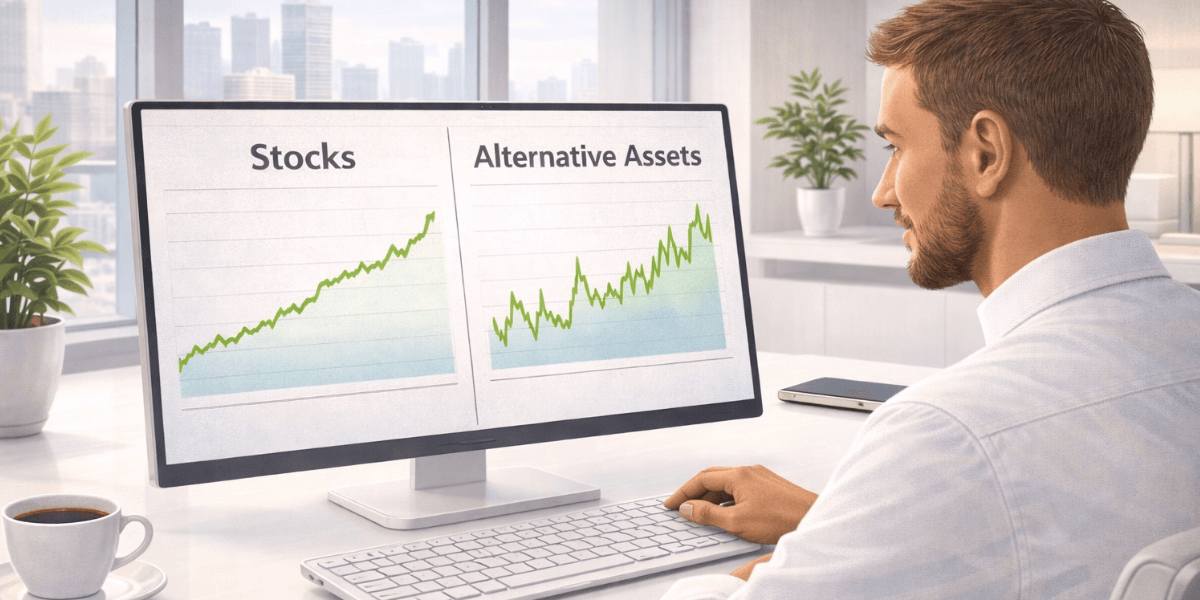
A senior-level analysis comparing stocks and alternative assets from a conservative investing perspective, explaining capital durability, tr...

A senior-level analysis explaining why stocks are fundamentally easier to analyze than other assets, focusing on cash flows, accounting stru...
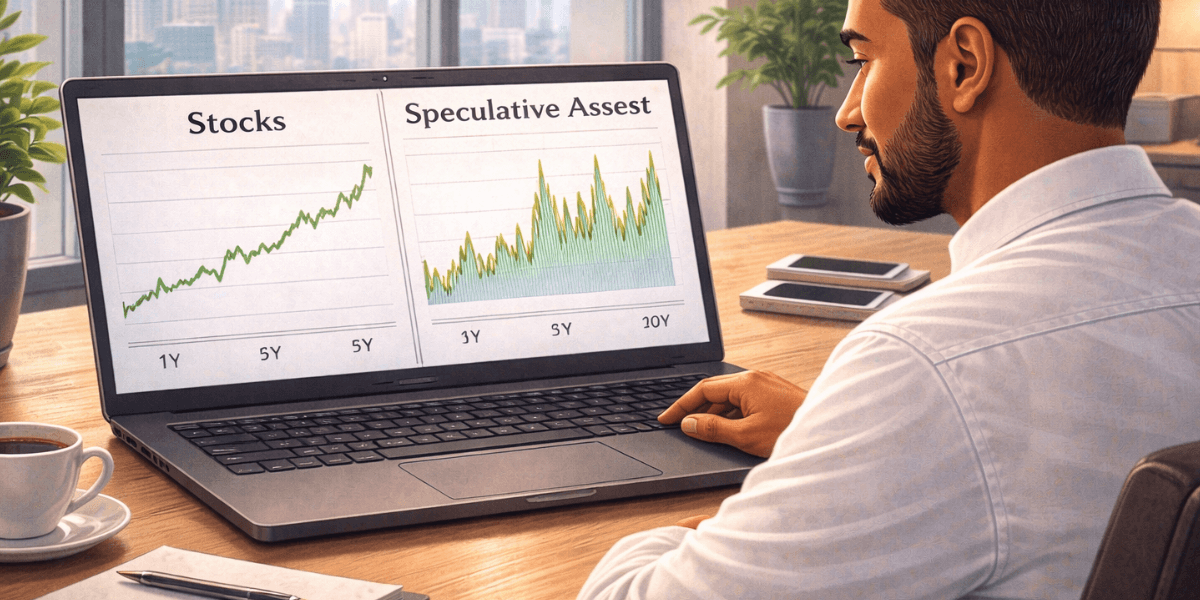
A senior-level risk analysis comparing stocks and speculative assets, explaining how permanent capital risk, time horizons, and recovery dyn...