Overview of the Bahrain Stock Exchange (Bahrain Bourse)
A comprehensive overview of the Bahrain Stock Exchange (Bahrain Bourse), analyzing its market structure, regulation, liquidity characteristi...
The comparison between stocks and exchange-traded funds is often framed as a choice between simplicity and sophistication, or between active conviction and passive exposure. Stocks are portrayed as the domain of hands-on investors, while ETFs are marketed as efficient, diversified, and modern instruments that remove complexity from investing. While there is some truth in these characterizations, they fail to address the deeper reality: stocks and ETFs are not competing versions of the same idea. They are structurally different tools designed to solve different investment problems.
This distinction is particularly important for investors based in GCC countries. Most long-term investors in the region access global markets rather than relying solely on local exchanges. They invest across time zones, currencies, and regulatory regimes, often alongside professional careers and family responsibilities. In this context, the choice between stocks and ETFs is not about convenience alone. It is about how much control, concentration, transparency, and responsibility an investor is willing to assume over time.
Stocks represent direct ownership in individual companies. When an investor buys a stock, they are making an explicit decision to allocate capital to a specific business, with all the opportunities and risks that decision entails. ETFs, by contrast, represent packaged exposure. They bundle multiple securities into a single instrument according to predefined rules, such as tracking an index, a sector, or a factor. This packaging changes the nature of decision-making, risk, and accountability.
For GCC investors, this difference matters because long-term wealth building often involves balancing global diversification with selective conviction. Some investors want exposure to broad markets without constant monitoring. Others want to concentrate capital in businesses they understand deeply. Stocks and ETFs serve these goals differently, and misunderstanding their structural differences can lead to portfolios that do not behave as expected during periods of stress or opportunity.
This article explains the real difference between stocks and ETFs beyond surface-level descriptions. It examines how ownership works, how risk is distributed, how transparency is delivered, and how each instrument behaves over long horizons. The goal is not to recommend one over the other universally, but to clarify what each actually does so that investors in the GCC can make deliberate, informed choices rather than defaulting to convenience or marketing narratives.
Owning individual stocks means owning individual outcomes. When an investor buys shares of a company, they are directly exposed to that company’s strategy, management quality, competitive position, and financial health. This concentration increases both risk and potential reward. A successful company can significantly outperform the market, while a poorly managed one can permanently destroy capital.
This concentration is not inherently good or bad. It is a feature that requires active responsibility. Stock investors must understand what they own, why they own it, and what could cause the investment thesis to break. Over long periods, stock returns are driven by business fundamentals rather than market averages. This creates the possibility of meaningful outperformance, but only for investors willing to engage deeply with analysis and monitoring.
For GCC investors with long-term horizons, stock ownership offers maximum control. It allows investors to align capital with specific industries, geographies, or business models that reflect their understanding of global trends. However, this control comes with the obligation to manage concentration risk deliberately.
ETFs operate on a different principle. Instead of owning a single business, investors own a basket of securities assembled according to predefined rules. This structure spreads risk across multiple companies, sectors, or markets. The failure of any single component has a limited impact on the overall ETF.
This diversification reduces the need for detailed company-level analysis. Investors can gain exposure to entire markets or themes with a single transaction. For long-term investors, this can be a powerful way to participate in global growth without assuming the risk of individual company failure.
However, diversification also dilutes accountability. When an ETF underperforms, it is often unclear which components are responsible or whether underperformance reflects structural issues with the index itself. This makes ETFs efficient but less precise instruments.
Risk in individual stocks is idiosyncratic. It is tied to company-specific factors such as management decisions, competitive dynamics, and financial structure. Over long periods, diversification across multiple stocks can reduce this risk, but it requires deliberate portfolio construction.
In ETFs, risk is systemic rather than idiosyncratic. While individual company risk is reduced, investors remain exposed to market-wide movements. During broad market downturns, ETFs often decline in line with their underlying index, regardless of the quality of individual components.
For GCC investors, this distinction matters because systemic risk is often global. ETFs provide efficient exposure, but they do not eliminate drawdowns during market-wide stress.
Stocks offer transparency at the company level. Investors can analyze financial statements, earnings calls, and disclosures to understand exactly what they own. This transparency supports active decision-making.
ETFs offer transparency at the structural level. Holdings are disclosed regularly, and index methodologies are published. However, the sheer number of holdings can make deep analysis impractical for individual investors.
Both instruments are transparent, but they require different approaches to interpretation.
ETFs are often more cost-efficient than actively managed stock portfolios, particularly for broad market exposure. Management fees are typically low, and turnover is minimal.
Stock investing can incur higher transaction costs and requires time investment. However, costs are not the only consideration. Concentrated portfolios may justify higher effort if they deliver superior long-term outcomes.
For GCC investors, cost efficiency matters, but it should be weighed against control and conviction.
Stock investing demands emotional discipline. Concentration amplifies both gains and losses, testing investor patience.
ETFs smooth individual outcomes but can encourage complacency. Investors may hold ETFs without understanding underlying exposures, leading to surprises during market shifts.
Behavioral sustainability is a key factor in long-term success, regardless of instrument choice.
The most effective long-term portfolios often combine stocks and ETFs. ETFs provide diversified core exposure, while stocks allow for targeted conviction.
For GCC investors, this hybrid approach balances efficiency with opportunity, reducing reliance on either extreme.
The discussion between stocks and ETFs is often framed as a binary choice, as if investors must commit fully to one approach and reject the other. This framing is misleading and, in many cases, counterproductive. Stocks and ETFs are not competing philosophies of investing; they are instruments designed to address different dimensions of long-term capital allocation. The real difference between them lies not in which one is “better,” but in how much control, concentration, and responsibility the investor chooses to assume.
Stocks represent the highest degree of intentionality in investing. Buying an individual company is an explicit statement of belief about its business model, management quality, competitive advantage, and long-term relevance. This form of ownership concentrates both risk and opportunity. When the thesis is correct, returns can meaningfully exceed market averages. When it is wrong, losses can be permanent. Over long horizons, stock investing rewards investors who are willing to engage deeply, reassess their assumptions, and accept responsibility for outcomes rather than outsourcing them to a structure.
ETFs, by contrast, are designed to reduce the burden of decision-making. They distribute exposure across many companies according to predefined rules, transforming individual business risk into market or factor exposure. This structure reduces the probability of catastrophic failure at the cost of diluting upside from exceptional performers. ETFs do not remove risk; they repackage it. Instead of being exposed to the fate of one company, investors are exposed to the collective behavior of a segment of the market.
For investors in GCC countries, this distinction is particularly important. Most long-term investors in the region are operating internationally, allocating capital to markets they do not physically inhabit and under regulatory systems they do not directly influence. In this context, instruments that reduce operational and analytical complexity have clear appeal. ETFs provide efficient, scalable access to global markets with minimal maintenance, making them well suited for building a diversified core portfolio.
However, efficiency should not be confused with neutrality. ETFs embed assumptions about market structure, index construction, and weighting methodologies. These assumptions shape outcomes over time. Investors who rely exclusively on ETFs may achieve broad market exposure, but they also relinquish the ability to express conviction or to avoid structural weaknesses embedded in certain indices. Understanding what an ETF owns is just as important as understanding what an individual stock represents.
ETFs reduce company-specific risk but remain exposed to market-wide downturns.
Yes, but doing so limits the ability to express individual conviction.
Some stocks outperform markets, but identifying them requires skill and discipline.
Often yes, as this balances diversification with selective exposure.
Disclaimer: This content is for education only and is not investment advice.

A comprehensive overview of the Bahrain Stock Exchange (Bahrain Bourse), analyzing its market structure, regulation, liquidity characteristi...

An in-depth analysis of the Kuwait Stock Exchange (Boursa Kuwait), explaining its structure, regulation, market behavior, and strategic rele...
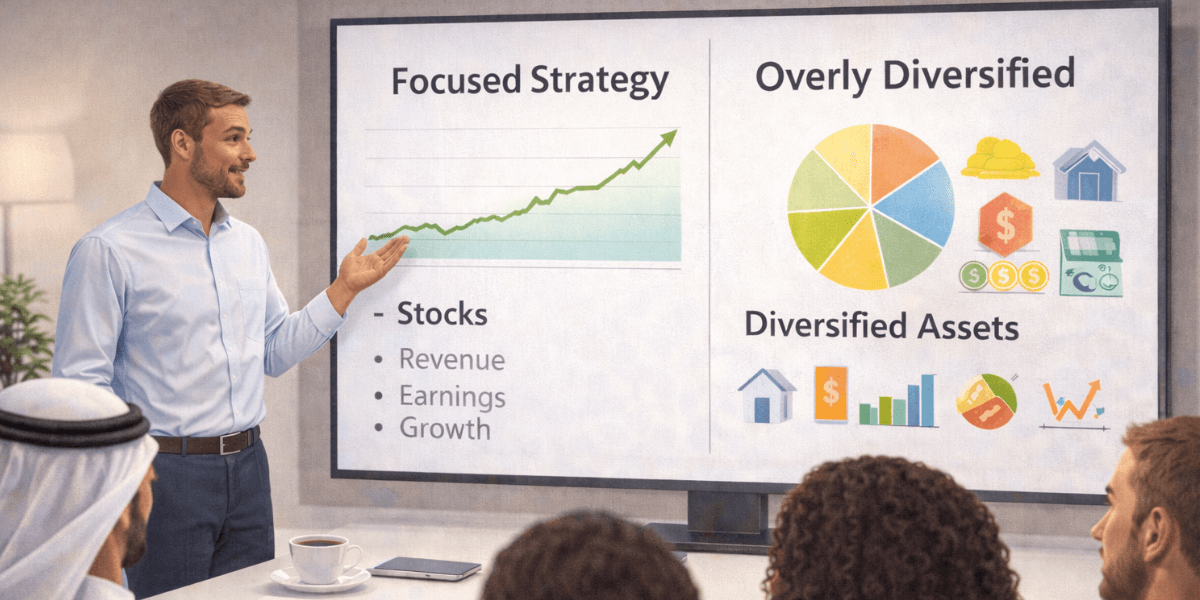
A senior-level analysis explaining when stocks make more sense than diversified asset trading, focusing on correlation risk, time horizons, ...
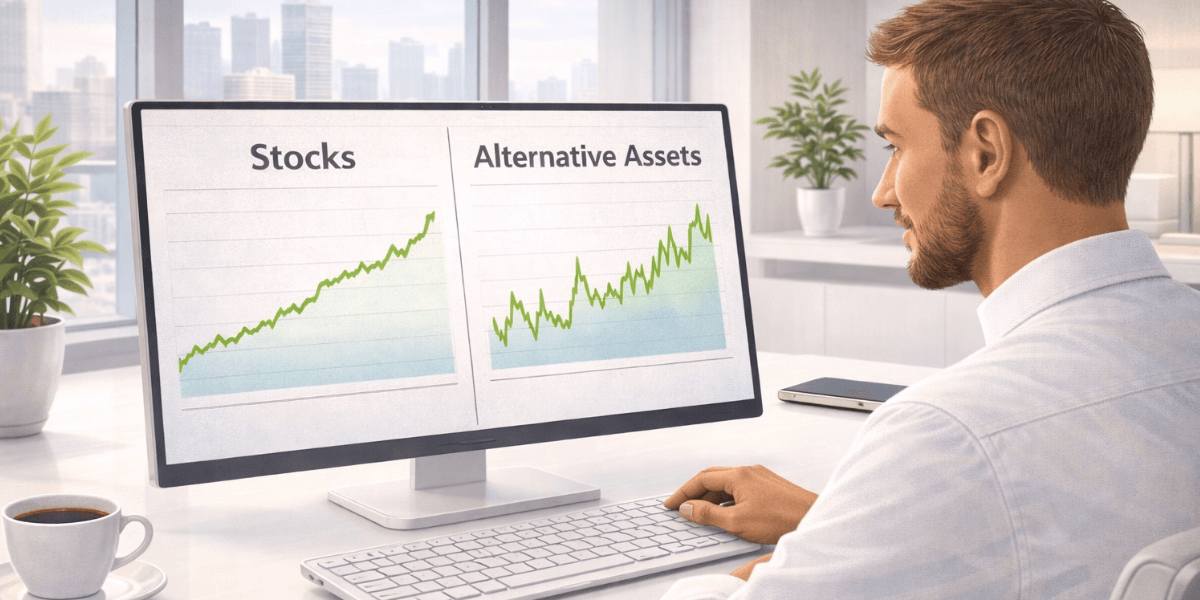
A senior-level analysis comparing stocks and alternative assets from a conservative investing perspective, explaining capital durability, tr...

A senior-level analysis explaining why stocks are fundamentally easier to analyze than other assets, focusing on cash flows, accounting stru...

A senior-level risk analysis comparing stocks and speculative assets, explaining how permanent capital risk, time horizons, and recovery dyn...