Overview of the Bahrain Stock Exchange (Bahrain Bourse)
A comprehensive overview of the Bahrain Stock Exchange (Bahrain Bourse), analyzing its market structure, regulation, liquidity characteristi...
A limit order is one of the most important tools available to stock market participants, yet it is often misunderstood or underutilized, especially by newer investors. While market orders prioritize speed and execution certainty, limit orders prioritize control. They allow investors to define the exact price at which they are willing to buy or sell a stock, placing price discipline at the center of the trading decision. This single difference fundamentally changes how risk, execution, and strategy interact.
Understanding limit orders is not just about learning another order type. It is about understanding how markets function at a structural level. Limit orders interact directly with liquidity, price discovery, and order book dynamics. They are the foundation upon which market prices are built. Every quoted price visible in the market exists because someone placed a limit order. Without limit orders, there would be no stable pricing mechanism.
This article provides a deep, dense, and practical explanation of what a limit order is, how it works inside the stock market, why it exists, how it differs from a market order, and what it means for investors operating in real-world conditions. The goal is not to present limit orders as superior or inferior, but to explain them clearly so they can be used intentionally, strategically, and correctly.
Every trade in the stock market exists because two opposing instructions meet. One investor wants to buy, another wants to sell. These intentions are expressed through orders. Orders are the language of the market, defining not only who trades, but under what conditions a trade is allowed to occur.
There are two fundamental dimensions to any order: price and time. Some orders specify price but are flexible on time. Others specify time but are flexible on price. Limit orders sit firmly in the first category. They express a clear price condition and are willing to wait until that condition is met.
Understanding this distinction is critical. Markets are not just places where transactions happen; they are systems where preferences compete. Limit orders represent patience and discipline, while market orders represent urgency. Both are necessary for markets to function.
A limit order is an instruction to buy or sell a stock at a specified price or better. When placing a limit buy order, the investor states the maximum price they are willing to pay. When placing a limit sell order, the investor states the minimum price they are willing to accept.
Unlike a market order, a limit order does not guarantee execution. Instead, it guarantees price. The order will only execute if the market reaches the specified price level. If the market never reaches that price, the order remains unfilled or expires, depending on its duration.
This characteristic makes limit orders fundamentally different in intent. They are not about immediate participation; they are about conditional participation. The investor is willing to trade, but only on their terms.
To understand limit orders properly, one must understand the order book. The order book is a real-time list of all outstanding buy and sell limit orders for a particular stock, organized by price. Buy orders are listed from highest to lowest price, and sell orders are listed from lowest to highest price.
The highest buy price and the lowest sell price form the best bid and best ask. The difference between them is the bid-ask spread. Limit orders are what create this structure. Every visible price level in the order book exists because a limit order is waiting to be executed.
When a limit order is placed, it joins the order book at its specified price level. If it is more competitive than existing orders, it moves closer to the top of the book. If it is less competitive, it waits deeper in the book. Execution occurs only when an opposing order matches its price.
Limit orders are the primary mechanism of price discovery. They reflect what market participants believe a stock is worth at a given moment. When many investors place limit buy orders at similar prices, they create demand support. When many investors place limit sell orders at similar prices, they create supply resistance.
This interaction between limit orders shapes how prices move over time. Prices do not move randomly. They move because new orders enter the book, existing orders are removed, or trades occur that consume available liquidity.
By placing a limit order, an investor is actively participating in price formation rather than passively accepting it. This is a crucial conceptual shift from market orders.
Investors use limit orders because they want control. They want to define the price at which they are willing to transact, rather than leaving that decision to the market at an unknown future moment.
Limit orders are especially valuable in volatile markets. When prices are moving rapidly, a market order can result in execution far from the expected price. A limit order prevents this by enforcing a strict price boundary.
They are also useful in less liquid stocks, where bid-ask spreads can be wide and order books shallow. In such environments, market orders often result in poor execution, while limit orders allow investors to manage entry and exit more precisely.
The defining trade-off of a limit order is price control versus execution certainty. By choosing a limit order, the investor accepts the possibility that the trade may not occur at all.
This trade-off is not a disadvantage; it is a design feature. Limit orders are for investors who value discipline over immediacy. They are willing to miss trades rather than overpay or undersell.
Understanding this trade-off helps investors align order choice with strategy. A long-term investor accumulating shares gradually may prefer limit orders, while a risk manager exiting a position urgently may accept the trade-offs of a market order.
Market conditions significantly affect how limit orders behave. In stable, liquid markets, limit orders near the current price often execute quickly. In volatile markets, prices may move away from limit levels before execution occurs.
During periods of high volatility, limit orders can protect investors from sudden price spikes or drops. However, they can also result in missed opportunities if the market reverses before reaching the specified price.
In illiquid markets, limit orders are often essential. They help investors avoid being forced to trade at unfavorable prices due to thin order books.
For long-term investors, limit orders are a powerful tool for disciplined accumulation and risk management. They allow investors to define valuation thresholds rather than reacting emotionally to price movements.
Over time, using limit orders can reduce trading costs associated with slippage and wide spreads. While individual executions may seem insignificant, these savings compound across years of investing.
Limit orders also encourage patience. They require investors to think in advance about what price represents value, rather than making decisions in the heat of the moment.
Limit orders can act as a behavioral safeguard. By deciding on price conditions in advance, investors reduce the influence of fear and greed.
Market orders are often placed during moments of emotional intensity, such as panic selling or fear of missing out. Limit orders shift decision-making to calmer moments, improving discipline.
This behavioral benefit is often overlooked but is one of the most valuable aspects of using limit orders consistently.
The difference between limit orders and market orders is not about sophistication, but about intention. Market orders say, “execute now.” Limit orders say, “execute only if the price is right.”
Neither is inherently better. Each serves a purpose. However, treating market orders as the default and limit orders as an exception often leads to unnecessary trading costs.
Understanding both order types allows investors to choose deliberately rather than habitually.
A common misconception is that limit orders are safer in all situations. While they control price, they introduce execution risk. A missed trade can be just as costly as a poorly executed one.
Another misconception is that limit orders are only for professional traders. In reality, they are often more suitable for individual investors who value discipline and price awareness.
Some investors also believe limit orders guarantee better prices. This is not always true. They guarantee price boundaries, not favorable outcomes.
Modern stock markets rely heavily on limit orders. Market makers, institutional investors, and algorithmic traders all use limit orders to provide liquidity and manage risk.
When retail investors place limit orders, they are participating in the same structural mechanisms that shape market prices globally. This reinforces the idea that limit orders are not passive tools, but active contributors to market function.
Understanding this role helps investors appreciate the significance of their order choices.
Limit orders are particularly appropriate when trading less liquid stocks, when markets are volatile, or when precise price control matters.
They are also effective for long-term investors building positions gradually, as they allow accumulation at predefined valuation levels.
The key is alignment between order type and objective. Limit orders are best used intentionally, not automatically.
Limit orders can be problematic when immediate execution is required. In fast-moving markets, waiting for a specific price may result in missed exits or entries.
They can also lead to overconfidence in price precision. Markets do not owe investors execution at their preferred levels.
Recognizing these limitations prevents misuse and frustration.
A limit order is not simply an alternative to a market order. It is a fundamentally different expression of intent. It prioritizes price discipline over speed, patience over urgency, and strategy over reaction.
For investors who understand how markets work, limit orders are indispensable tools. They enable control, reduce unnecessary costs, and support disciplined decision-making. When used thoughtfully, they enhance both performance and process. When misunderstood, they can lead to missed opportunities or false expectations.
Mastering limit orders is not about becoming more technical. It is about becoming more intentional. And intentionality is one of the defining traits of successful long-term investors.
No. A limit order guarantees price conditions, not execution.
Yes. If the market is already offering a price that meets the limit condition, execution can be immediate.
They offer price protection but introduce execution risk. Safety depends on context and objective.
Yes. They are often better suited for beginners who want to avoid emotional trading and price surprises.
Disclaimer: This content is for education only and is not investment advice.

A comprehensive overview of the Bahrain Stock Exchange (Bahrain Bourse), analyzing its market structure, regulation, liquidity characteristi...

An in-depth analysis of the Kuwait Stock Exchange (Boursa Kuwait), explaining its structure, regulation, market behavior, and strategic rele...

A senior-level analysis explaining when stocks make more sense than diversified asset trading, focusing on correlation risk, time horizons, ...
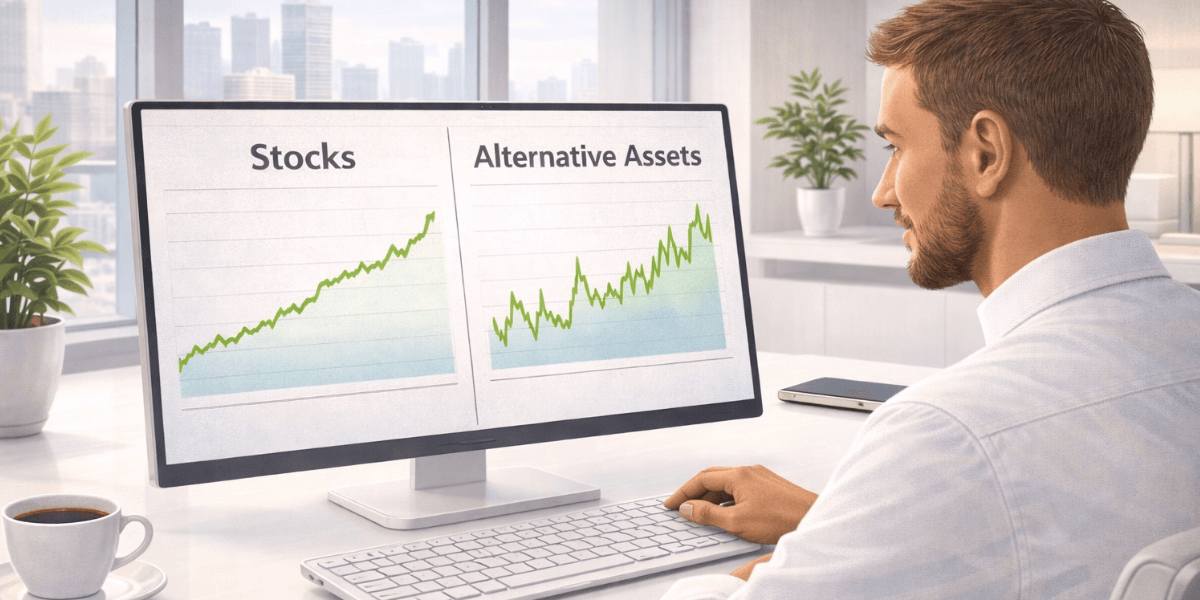
A senior-level analysis comparing stocks and alternative assets from a conservative investing perspective, explaining capital durability, tr...

A senior-level analysis explaining why stocks are fundamentally easier to analyze than other assets, focusing on cash flows, accounting stru...
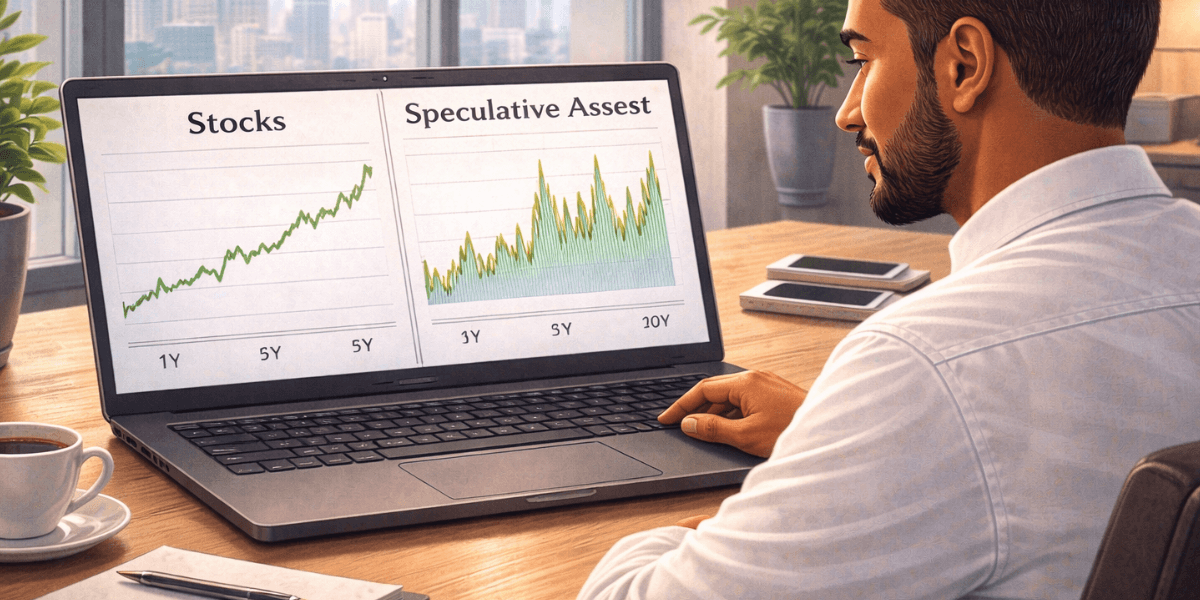
A senior-level risk analysis comparing stocks and speculative assets, explaining how permanent capital risk, time horizons, and recovery dyn...