Overview of the Bahrain Stock Exchange (Bahrain Bourse)
A comprehensive overview of the Bahrain Stock Exchange (Bahrain Bourse), analyzing its market structure, regulation, liquidity characteristi...
A stock broker is often misunderstood as a simple app or platform that enables buying and selling shares. This view reduces a complex institutional role to a user interface and obscures where many of the most important risks in equity investing actually originate. A stock broker is not just a facilitator of transactions; it is the legal, operational, and regulatory framework through which an investor accesses markets, holds assets, and resolves disputes. In practice, the broker defines how markets are experienced far more than most investors realize.
Every stock trade involves multiple layers beyond the visible order ticket. Orders must be routed, matched, cleared, settled, and custodized under specific legal rules. Capital must be segregated, currencies converted, corporate actions processed, and regulatory obligations enforced. The broker sits at the center of this process, coordinating between exchanges, clearing houses, custodians, regulators, and the investor. When this system functions well, it is invisible. When it fails, consequences can be severe.
For investors and traders based in GCC countries, the broker’s role is amplified by distance. Participation in global equity markets—particularly U.S. exchanges—depends almost entirely on intermediaries operating in foreign jurisdictions. This introduces layers of counterparty, regulatory, and operational risk that do not exist for domestic investors in those markets. Time zone differences further reduce the ability to react quickly when issues arise, increasing reliance on the broker’s integrity and infrastructure.
Understanding what a stock broker does is therefore not a matter of curiosity, but of risk awareness. Many problems attributed to market volatility or poor timing originate at the intermediary level: weak regulation, fragile custody structures, poor execution quality, or opaque fee models. Investors who fail to understand the broker’s role often underestimate these risks and overestimate the protection provided by the platform’s appearance or marketing.
This article examines what a stock broker is and what they actually do, with a focus on how these functions affect equity investors operating from the GCC. By understanding the broker as an institutional partner rather than a simple service provider, investors can make more informed decisions about access, safety, and long-term participation in global stock markets.
At its core, a stock broker is a licensed financial intermediary authorized to execute transactions on behalf of clients in regulated stock markets. Brokers maintain relationships with exchanges, clearing houses, custodians, and liquidity providers, allowing individual investors to participate in markets they cannot access directly.
Importantly, a broker does not own the market and does not set prices. Its role is to route orders, ensure settlement, and hold assets or facilitate custody under specific legal structures. The broker is the bridge between an investor’s intent and the market’s execution.
For GCC investors, this intermediary role is magnified by distance. Without a local presence on exchanges like the NYSE or NASDAQ, access is entirely dependent on the broker’s infrastructure and regulatory permissions.
When an investor places a stock order, the broker is responsible for transmitting that order to the market or to an execution venue that can fulfill it. This process involves routing decisions, timing considerations, and compliance with best execution obligations.
Professional brokers invest heavily in execution quality, as small differences in routing, latency, and liquidity access can materially affect outcomes. Poor execution increases slippage, widens effective spreads, and degrades strategy performance over time.
For investors in the GCC, execution quality is critical because many trades occur during U.S. market hours that overlap only partially with local schedules. Missed or poorly executed orders cannot always be corrected in real time.
Beyond execution, brokers are responsible for clearing and settlement—the process by which trades are finalized and ownership is legally transferred. This includes coordinating with clearing houses, ensuring funds and securities are exchanged correctly, and maintaining accurate records.
Custody determines where and how stocks are held after purchase. Depending on the broker’s structure, assets may be held directly, through omnibus accounts, or via third-party custodians. Each structure carries different implications for investor protection.
For GCC-based investors, custody arrangements are especially important. Assets are typically held under foreign legal frameworks, making broker solvency, segregation of funds, and regulatory oversight critical risk factors.
A stock broker’s regulatory status determines the level of investor protection, transparency, and recourse available in the event of disputes or insolvency. Not all brokers operate under equally robust regulatory regimes.
For investors in the GCC, brokers may be regulated locally, offshore, or in major financial centers such as the U.S. or Europe. Each framework carries different standards for capital adequacy, reporting, and client fund segregation.
Understanding regulation is not about branding or reputation; it is about knowing which laws apply when something goes wrong.
A broker determines which markets, exchanges, and instruments an investor can access. Some brokers offer direct access to global stock exchanges, while others limit exposure through derivatives or synthetic products.
For equity-focused investors, this distinction is crucial. Access to real shares, voting rights, and long-term ownership differs fundamentally from exposure via CFDs or other derivatives.
GCC investors must be particularly careful to distinguish between brokers that provide genuine equity ownership and those that offer only derivative exposure marketed as stock trading.
Brokers charge for their services through commissions, spreads, custody fees, currency conversion, and other charges. While individual fees may appear small, their cumulative impact over time can materially reduce returns.
Professional investors evaluate brokers not by headline pricing, but by total cost of ownership, including execution quality and hidden fees.
For GCC investors operating in USD-dominated markets while funding accounts in AED or SAR, currency conversion costs are an additional consideration that brokers directly influence.
The trading platform provided by a broker is not merely a convenience feature. It affects order placement accuracy, visibility into positions, risk management, and execution control.
Professional-grade platforms offer transparency, reliability, and tools that support disciplined decision-making. Poorly designed platforms increase operational risk and encourage reactive behavior.
Given time zone constraints faced by GCC investors, platform stability and order reliability are particularly important.
Investors in GCC countries face unique structural constraints: reliance on foreign brokers, exposure to international regulation, time zone differences, and cross-border fund transfers.
A broker’s operational quality, regulatory framework, and custody arrangements directly affect these investors’ ability to participate safely and effectively in global equity markets.
Choosing a broker is therefore not a technical decision, but a strategic one that defines the risk and efficiency of the entire investment process.
A stock broker is not a neutral utility that simply transmits orders to the market. It is the institutional layer that defines how efficiently trades are executed, how safely assets are held, what legal protections apply, and how costs accumulate over time. Every decision an investor makes—no matter how sound the analysis—passes through the broker’s infrastructure, rules, and incentives. As a result, broker quality does not just influence outcomes at the margin; it structurally conditions them.
This reality becomes even more pronounced for investors based in the GCC. Access to global equity markets is mediated almost entirely by foreign intermediaries, often operating under regulatory regimes that differ significantly in strength and scope. Time zone gaps reduce the ability to correct errors in real time, while cross-border custody and settlement introduce layers of counterparty and operational risk that are invisible to many retail participants. In this context, the broker effectively becomes the investor’s on-the-ground presence in distant markets.
Understanding what a broker does—order routing, clearing, custody, regulatory compliance, currency conversion, and platform design—allows investors to evaluate risk where it actually originates. Many portfolio failures attributed to “market volatility” or “bad timing” are, in practice, the result of poor execution, weak regulation, hidden costs, or fragile custody arrangements. These are broker-level issues, not market inevitabilities.
For equity-focused investors seeking durable participation rather than short-term speculation, broker selection is therefore a strategic decision. It determines whether long-term ownership is supported by reliable infrastructure or undermined by hidden frictions. Strong brokers reduce noise and friction, allowing analysis and discipline to matter. Weak brokers amplify risk precisely when markets are under stress.
Ultimately, returns are earned in the market, but safety, efficiency, and consistency are delivered by the intermediary. For GCC-based investors accessing global stocks, treating the broker as a core component of the investment thesis—rather than an afterthought—is essential. A well-chosen broker does not guarantee success, but it ensures that success, when achieved, is not compromised by avoidable structural risk.
No. A stock exchange is the marketplace where securities are traded, while a stock broker is the intermediary that allows investors to access that marketplace.
No. Prices are determined by supply and demand in the market. Brokers facilitate execution but do not set prices.
If a broker is poorly regulated or mismanages custody, investor assets may be at risk. This is why regulation and segregation of funds are critical.
Because most investments are held under foreign jurisdictions, making regulatory protection the primary line of defense if problems arise.
Disclaimer: This content is for education only and is not investment advice.

A comprehensive overview of the Bahrain Stock Exchange (Bahrain Bourse), analyzing its market structure, regulation, liquidity characteristi...

An in-depth analysis of the Kuwait Stock Exchange (Boursa Kuwait), explaining its structure, regulation, market behavior, and strategic rele...
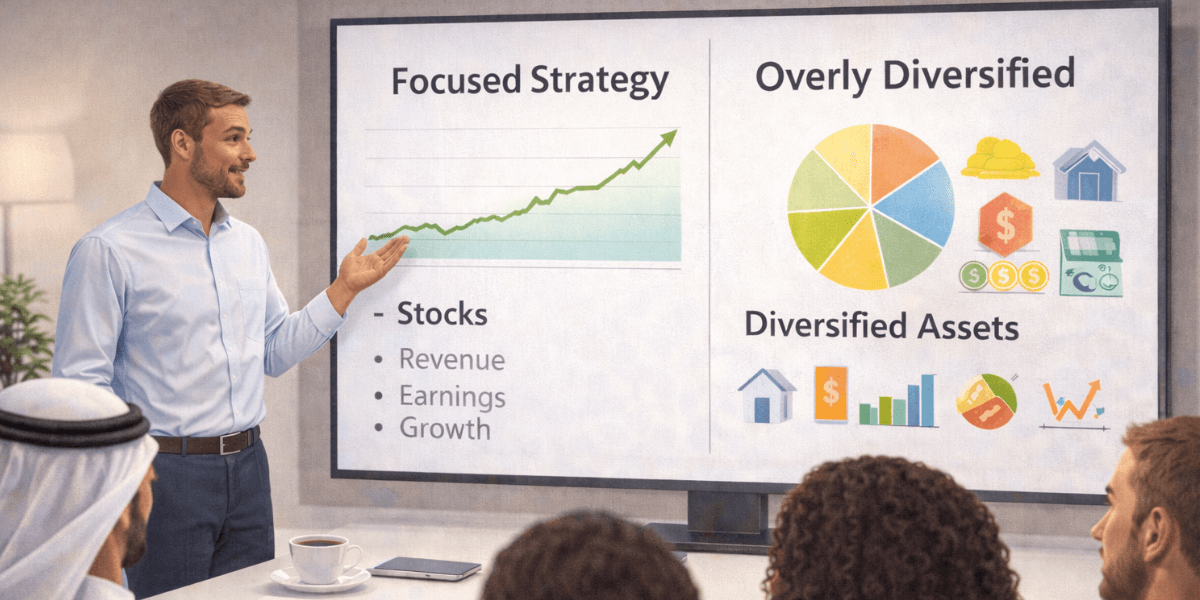
A senior-level analysis explaining when stocks make more sense than diversified asset trading, focusing on correlation risk, time horizons, ...
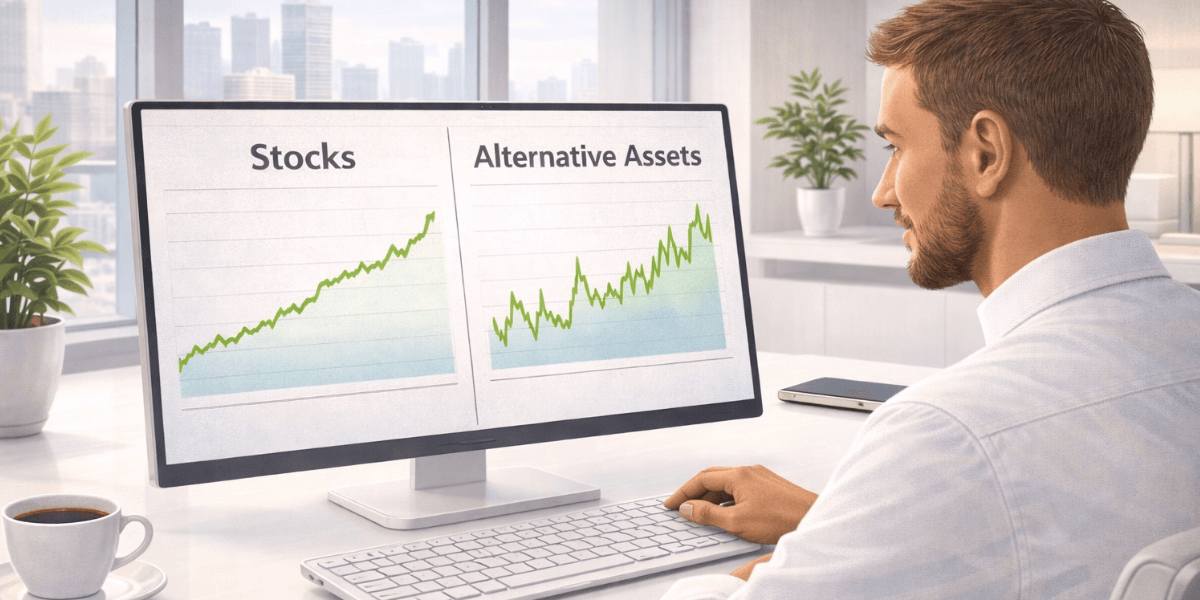
A senior-level analysis comparing stocks and alternative assets from a conservative investing perspective, explaining capital durability, tr...

A senior-level analysis explaining why stocks are fundamentally easier to analyze than other assets, focusing on cash flows, accounting stru...
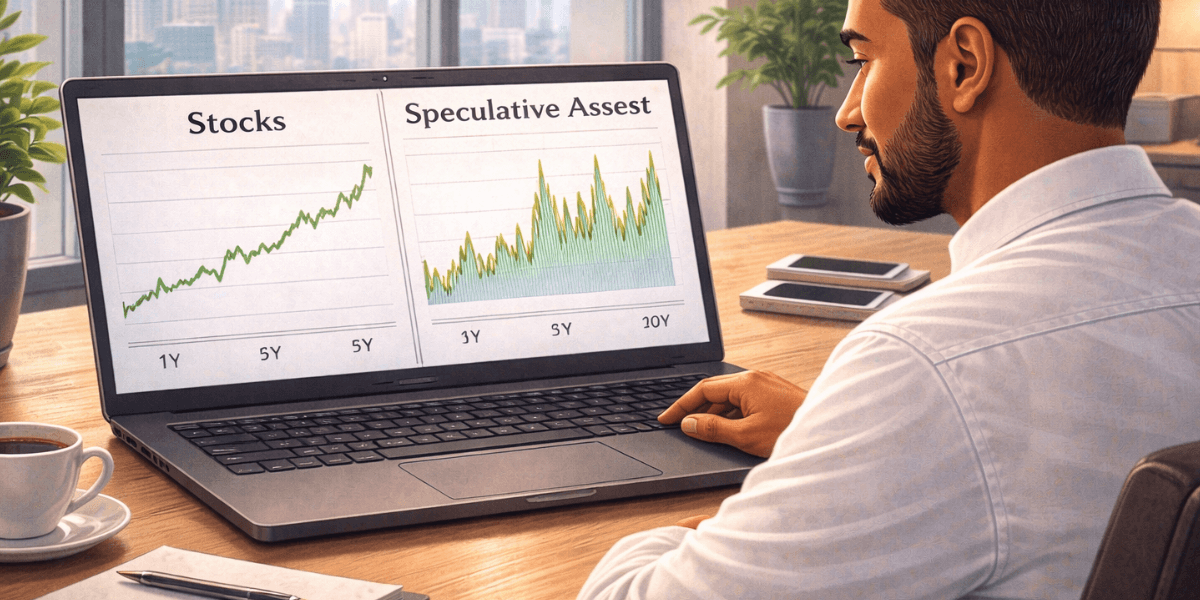
A senior-level risk analysis comparing stocks and speculative assets, explaining how permanent capital risk, time horizons, and recovery dyn...