Overview of the Bahrain Stock Exchange (Bahrain Bourse)
A comprehensive overview of the Bahrain Stock Exchange (Bahrain Bourse), analyzing its market structure, regulation, liquidity characteristi...
When people hear “stock exchange,” they often picture a physical place where traders shout and wave papers. That image is outdated. Modern stock exchanges are mostly electronic, and what matters is not the location but the system. A stock exchange is a regulated marketplace where shares of publicly listed companies are traded under transparent rules.
This article explains what a stock exchange is in simple terms, what it does behind the scenes, and why it matters for investors who want to focus strictly on equities. The goal is clarity. Once you understand what an exchange does, the stock market becomes less mysterious and your investing decisions become more deliberate.
A stock exchange is a regulated venue that brings together buyers and sellers of stocks and provides the rules and infrastructure for trading. It standardizes how orders are submitted, how trades are matched, and how prices are published. This standardization is what makes it possible for millions of people and institutions to trade shares in an orderly way.
One important point: the exchange does not “set” prices. Prices emerge from supply and demand as market participants place buy and sell orders. The exchange’s job is to make that interaction efficient, transparent, and consistent.
In simple terms, an exchange is the organized mechanism that allows equity markets to function at scale.
Exchanges exist to solve practical problems that appear when a lot of people want to trade the same instrument. Without a centralized, rule-based venue, trading becomes fragmented, opaque, and harder to trust. Investors would struggle to know whether quoted prices are reliable, whether trades will execute fairly, or whether the company behind the stock meets basic disclosure standards.
Exchanges create structure. They make trading visible, standardize processes, and support market integrity. They cannot eliminate investment risk, but they significantly reduce operational uncertainty and improve confidence in the system.
This is why exchanges are foundational in equities. They are the framework that allows ownership to change hands efficiently while keeping the process orderly.
A stock exchange performs several core functions that investors rarely see directly, but benefit from every time they trade.
First, exchanges provide a listing framework. Companies that want their shares traded on an exchange must meet listing standards and agree to ongoing disclosure requirements. The specifics vary by exchange, but the principle is consistent: public listing comes with obligations. That discipline supports transparency, which is one of the reasons investors prefer exchange-listed equities.
Second, exchanges provide trading infrastructure. They maintain the systems that accept orders, organize them, and match buyers and sellers according to defined rules. In most markets, this revolves around an order book that shows bids and asks at multiple prices. The exchange’s matching engine applies priority rules to determine which orders execute first.
Third, exchanges support price discovery. By bringing many market participants into the same trading environment, exchanges help produce a visible market price that reflects the collective expectations of buyers and sellers. This price is not “perfect,” but it is the most transparent and continuously updated reference available.
Finally, exchanges coordinate with clearing and settlement systems to help ensure that trades are completed properly. Investors often think the trade is finished when they see “filled,” but the behind-the-scenes machinery still needs to confirm obligations and transfer shares and cash through the financial system.
A stock exchange is not a guarantee of profits. It does not protect investors from market losses, and it does not decide which stocks are good investments. It provides the trading framework, but your returns depend on the company’s business performance, the price you pay, and the risks you accept.
Exchanges also do not run the companies listed on them. Being listed does not mean the exchange endorses management quality or future growth. It means the company meets listing requirements and follows disclosure rules. That improves transparency, but it does not remove business risk.
The exchange is the playing field, not the scoreboard.
Investors often mix up two related but different concepts: issuing shares and trading shares. A company issues shares in the primary market, typically to raise capital. This can happen through an initial public offering or through later share offerings. In the primary market, capital flows to the company.
Most everyday trading happens in the secondary market, where investors buy and sell shares with each other. This is where exchanges are most visible to the public. In the secondary market, trading activity usually does not send money to the company directly. Instead, it transfers ownership between investors at a market-determined price.
This distinction matters because it clarifies what your trade does. Buying shares on an exchange typically means you are buying from another investor, not funding the company in real time.
Exchanges support fairer trading primarily through transparency and rules. Prices are publicly quoted, trades are reported, and order handling follows defined priorities. This makes it harder for the market to become purely private or arbitrary.
Transparency does not mean there is no volatility or no uncertainty. It means market participants can observe prices and liquidity rather than guessing. For investors, that matters because it improves decision quality. You can place more disciplined orders, you can understand spreads, and you can judge liquidity conditions more accurately.
In equities, transparency is not a luxury. It is a core feature that supports market confidence.
For an investor, an exchange matters because it influences execution and liquidity. Highly active stocks on major exchanges often have tighter bid-ask spreads and smoother order fills. Less active stocks may have wider spreads and more price slippage. Even if you invest long term, these mechanics matter because they affect the price you pay when you enter and exit positions.
Exchanges also matter because they shape the information environment. Exchange-listed companies typically face reporting requirements and continuous disclosure expectations. That does not eliminate fraud or poor governance, but it increases the baseline level of information available for analysis.
In short, exchanges make equity investing more operationally reliable. They make it easier to trade, easier to observe prices, and easier to analyze companies using consistent public information.
Investors increasingly build portfolios across multiple markets. That makes it important to separate the asset from the venue. A stock represents ownership in a company. The exchange is the venue where that ownership trades.
Understanding this separation helps investors avoid confusion when comparing opportunities across markets. You may be evaluating companies listed on different exchanges, trading in different time zones, and following different calendars, but the core instrument remains the same: equity ownership.
A stock exchange is a regulated marketplace that enables the trading of shares through transparent rules and standardized infrastructure. It supports price discovery, provides a structured environment for liquidity, and helps maintain market integrity through listing and trading standards.
For investors, the key idea is simple: the exchange is not the investment. It is the framework that makes equity investing practical at scale. Once you understand what an exchange does, you can focus on what truly drives long-term outcomes in equities: the quality of the business, the price you pay, and the risks you accept.
Not exactly. The stock market is the broader system of equity trading, while a stock exchange is a specific regulated venue within that system where shares can be listed and traded.
No. Prices emerge from supply and demand as buyers and sellers place orders. The exchange provides the rules and infrastructure that allow those orders to interact transparently.
Usually, no. Most trading occurs in the secondary market, where you buy from or sell to other investors. The company directly raises money when it issues shares in the primary market.
Listing requirements aim to ensure a baseline level of disclosure and operational standards for companies whose shares trade publicly. This supports transparency and investor confidence, even though it does not eliminate investment risk.
Because exchange structure affects liquidity, spreads, and execution quality. Over time, the costs and efficiency of entering and exiting positions can influence real investment outcomes.
Disclaimer: This content is for education only and is not investment advice.

A comprehensive overview of the Bahrain Stock Exchange (Bahrain Bourse), analyzing its market structure, regulation, liquidity characteristi...

An in-depth analysis of the Kuwait Stock Exchange (Boursa Kuwait), explaining its structure, regulation, market behavior, and strategic rele...

A senior-level analysis explaining when stocks make more sense than diversified asset trading, focusing on correlation risk, time horizons, ...
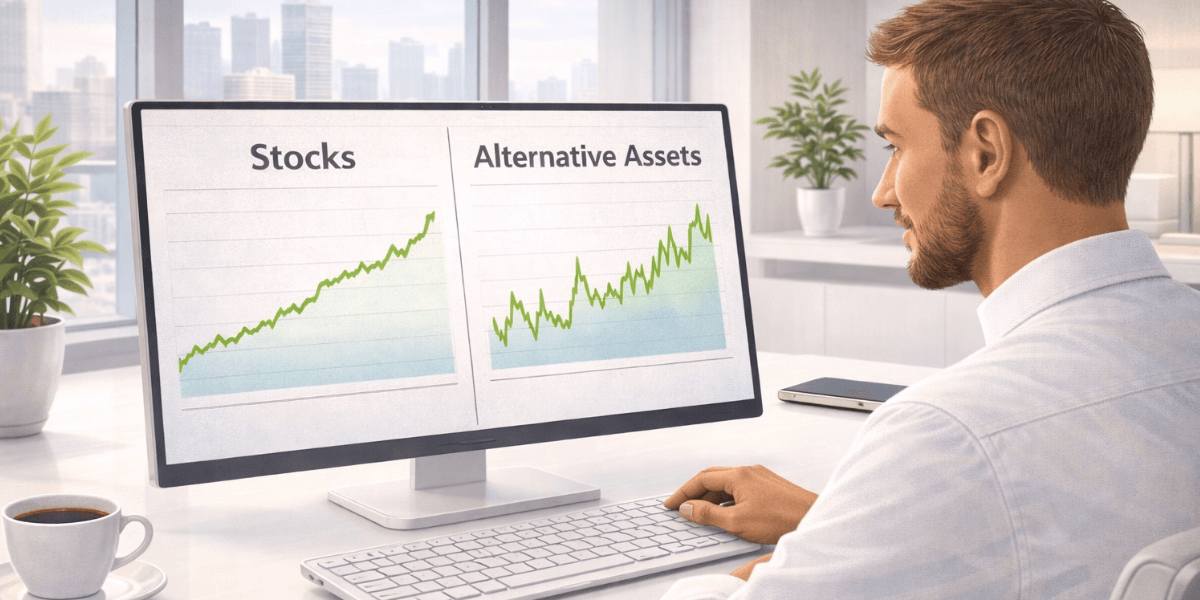
A senior-level analysis comparing stocks and alternative assets from a conservative investing perspective, explaining capital durability, tr...

A senior-level analysis explaining why stocks are fundamentally easier to analyze than other assets, focusing on cash flows, accounting stru...
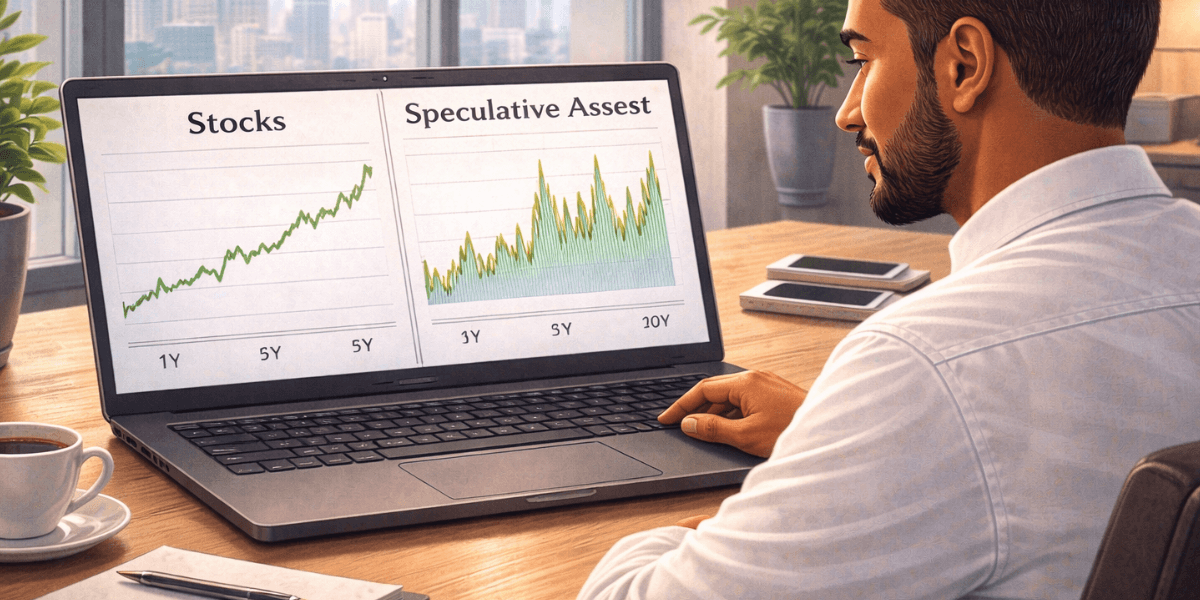
A senior-level risk analysis comparing stocks and speculative assets, explaining how permanent capital risk, time horizons, and recovery dyn...