Overview of the Bahrain Stock Exchange (Bahrain Bourse)
A comprehensive overview of the Bahrain Stock Exchange (Bahrain Bourse), analyzing its market structure, regulation, liquidity characteristi...
For most investors, the stock market does not exist as a physical place or a distant institution. It exists as a screen. Prices move, charts update, positions appear and disappear, and decisions are executed through a digital interface. That interface is the stock trading platform. Despite its central role, many investors treat it as a neutral utility rather than as a structural component of their investment process.
A stock trading platform is not just a tool for placing buy and sell orders. It is the operational environment in which every investment decision is interpreted, processed, constrained, and ultimately executed. The platform determines how information is presented, how quickly actions are transmitted, what types of orders are possible, and how risk controls are enforced. These elements shape outcomes in ways that are often invisible until something goes wrong.
For investors based in the GCC, understanding what a stock trading platform really is becomes even more important. Most GCC investors participate in global equity markets, particularly U.S. stocks, from a different time zone and regulatory framework. This means that the platform is not merely a convenience; it is the only point of contact with markets that move while the investor is asleep, working, or otherwise unavailable.
To invest intelligently, it is not enough to understand stocks, valuation, or macroeconomic forces. Investors must also understand the infrastructure through which they interact with markets. A stock trading platform is that infrastructure. Treating it as an afterthought introduces risks that no stock selection skill can fully offset.
At a basic level, a stock trading platform is a software system that allows investors to view prices, analyze securities, place orders, and monitor their portfolios. This definition, while technically correct, is incomplete. It focuses on what the investor sees, not on what the platform actually does.
In reality, a trading platform is a coordination layer between the investor, the broker, market data providers, clearing systems, and stock exchanges. Every action taken on the platform triggers a sequence of validations, risk checks, and communications across multiple systems. The platform translates human intent into machine-readable instructions that the financial system can process.
This translation role is critical. A platform must ensure that orders comply with account constraints, regulatory requirements, and market rules before they are even eligible for execution. It must also handle real-time updates from exchanges and reflect them accurately to the investor.
For GCC investors trading international equities, the platform acts as a bridge across geography, regulation, and time. It is the mechanism that allows participation in distant markets as if they were local, even though the underlying complexity remains.
A common misunderstanding among investors is the belief that the trading platform and the broker are the same thing. While closely connected, they perform distinct roles within the investment process.
The broker is the regulated entity that holds the investor’s account, safeguards funds, provides access to markets, and assumes legal responsibility for execution and settlement. The trading platform is the technological interface through which the investor interacts with that broker.
Some brokers develop their own proprietary platforms, while others offer access through third-party platforms. In both cases, the platform serves as the operational layer that connects the investor to the broker’s infrastructure.
For GCC investors, this distinction matters because the quality of the platform does not automatically reflect the strength of the broker’s regulation, and vice versa. A sophisticated interface does not guarantee strong investor protection, just as a well-regulated broker does not always offer a robust trading experience.
Every price displayed on a trading platform originates from external sources. Stock exchanges generate raw price data as trades occur, bids and offers change, and volumes fluctuate. This data is distributed through market data feeds to brokers and platforms.
The trading platform receives these feeds, processes them, and displays them to the investor. This process involves filtering, aggregation, and formatting decisions that influence how information is perceived. Not all platforms present data in the same way, and not all provide the same level of detail.
Latency, the delay between an event occurring on the exchange and appearing on the platform, is an unavoidable reality. What matters is how consistent and transparent that latency is, especially during periods of high volatility.
For GCC investors trading U.S. stocks, market data reliability is particularly important during earnings releases and market opens, which often occur late in the local day. Platforms that struggle to keep pace during these moments impair decision-making at critical times.
When an investor places an order through a trading platform, the action initiates a series of internal checks before the order ever reaches the market. These checks are designed to ensure that the order is valid, permissible, and executable.
The platform verifies available funds or margin, confirms that the security is tradable, and checks order parameters such as size and price limits. It may also apply internal risk controls defined by the broker or regulator.
This validation process protects both the investor and the broker from errors that could result in unintended exposure. However, it also means that platforms impose constraints that investors must understand. An order rejected by the platform is not necessarily a technical failure; it is often a safeguard.
For GCC investors operating across time zones, understanding these validations helps avoid confusion when orders behave differently than expected, particularly during volatile market conditions.
Once validated, an order is transmitted from the platform to the broker’s order management system. From there, it is routed to a stock exchange or liquidity venue for execution.
The trading platform itself does not execute trades. It initiates and monitors the execution process. The quality of execution depends on routing efficiency, market liquidity, and prevailing conditions.
Execution outcomes such as partial fills, slippage, or delayed fills are not necessarily platform failures. They are reflections of how markets function, particularly during periods of rapid price movement.
For GCC investors trading international stocks, execution quality becomes especially important at market open and close, when volatility and volume peak. A platform that communicates execution status clearly helps investors manage expectations and risk.
Platform reliability is often taken for granted until it fails. During calm markets, even fragile systems can appear adequate. During stress, weaknesses become visible.
High volatility places enormous strain on trading platforms. Surges in order volume, rapid price updates, and simultaneous user activity test system limits. Platforms that fail under these conditions expose investors to operational risk.
An inability to access accounts, verify positions, or place orders during stress events removes agency at precisely the wrong moment. These failures can turn manageable market risk into permanent capital damage.
For GCC investors, reliability is especially critical because many market-moving events occur overnight. When investors regain access hours later, platform stability determines how quickly control can be restored.
The design of a trading platform influences how investors think and act. Interfaces that emphasize constant price changes, alerts, and short-term metrics encourage reactive behavior.
Conversely, platforms that prioritize clarity, position-level visibility, and exposure summaries support long-term decision-making. This distinction matters because behavioral errors often outweigh analytical mistakes.
For GCC investors balancing investing with professional responsibilities, platforms that reduce noise help maintain discipline. Behavioral support is not a cosmetic feature; it is a structural component of risk control.
Trading platforms handle sensitive financial and personal data. Security breaches can result in direct financial loss, identity theft, and long-term exposure.
Robust security measures, including encryption and authentication controls, are essential. For investors operating internationally, the ability to resolve security incidents across jurisdictions is limited.
Platform security therefore plays a direct role in trust. Without trust in the platform, participation in global equity markets becomes untenable.
No trading platform eliminates market risk. Platforms facilitate access and execution, but they do not guarantee favorable outcomes.
Understanding limitations helps investors set realistic expectations. Delays, partial fills, and price gaps are inherent to markets, not flaws to be engineered away.
For GCC investors, acknowledging these constraints allows strategies to be designed with sufficient resilience.
A stock trading platform is not a neutral backdrop to investing. It shapes how investors receive information, execute decisions, and manage risk. While it does not determine market outcomes, it strongly influences how those outcomes are experienced.
For investors in the GCC participating in global equity markets, the platform is a critical component of portfolio infrastructure. Reliability, execution clarity, behavioral design, and security all contribute to long-term success.
Understanding what a stock trading platform truly is allows investors to align technology with strategy. It reduces operational surprises and supports disciplined participation in volatile markets.
In the end, investing is not only about choosing the right stocks. It is about ensuring that decisions are implemented accurately and consistently. The trading platform is the mechanism that makes that possible.
No. A trading platform is an interface that connects investors to brokers and exchanges. It does not set prices or execute trades directly.
Yes. Even infrequent trades require reliable execution, clear information, and access during market stress.
Because GCC investors often trade international markets across time zones, making platform reliability and transparency essential.
It cannot reduce market risk, but it can reduce operational and behavioral risk significantly.
Disclaimer: This content is for education only and is not investment advice.

A comprehensive overview of the Bahrain Stock Exchange (Bahrain Bourse), analyzing its market structure, regulation, liquidity characteristi...

An in-depth analysis of the Kuwait Stock Exchange (Boursa Kuwait), explaining its structure, regulation, market behavior, and strategic rele...

A senior-level analysis explaining when stocks make more sense than diversified asset trading, focusing on correlation risk, time horizons, ...
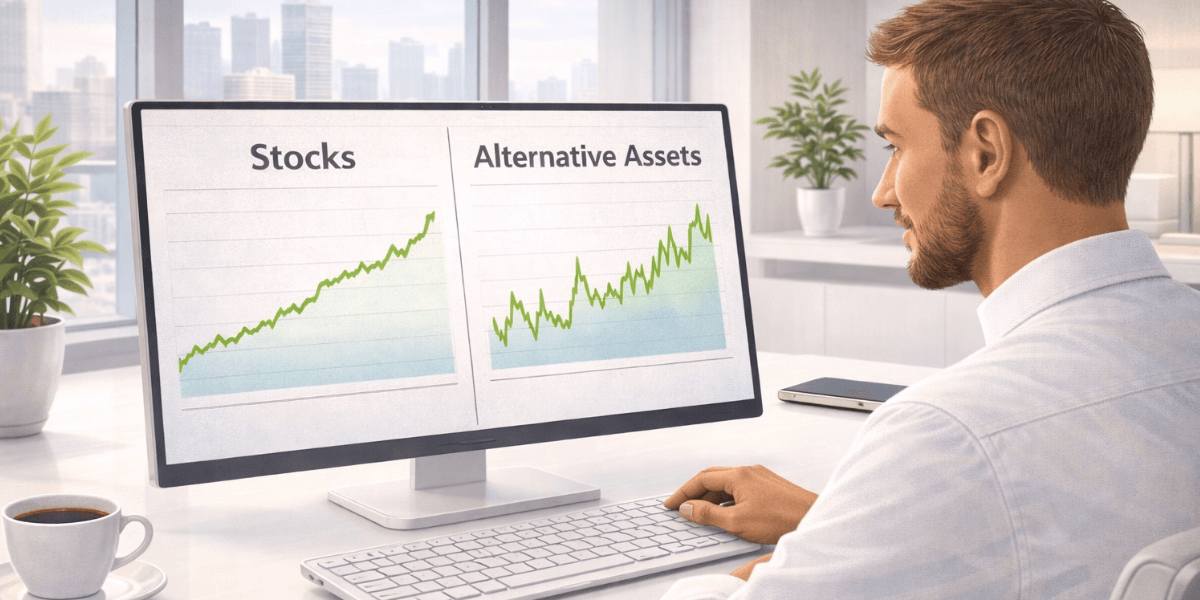
A senior-level analysis comparing stocks and alternative assets from a conservative investing perspective, explaining capital durability, tr...

A senior-level analysis explaining why stocks are fundamentally easier to analyze than other assets, focusing on cash flows, accounting stru...
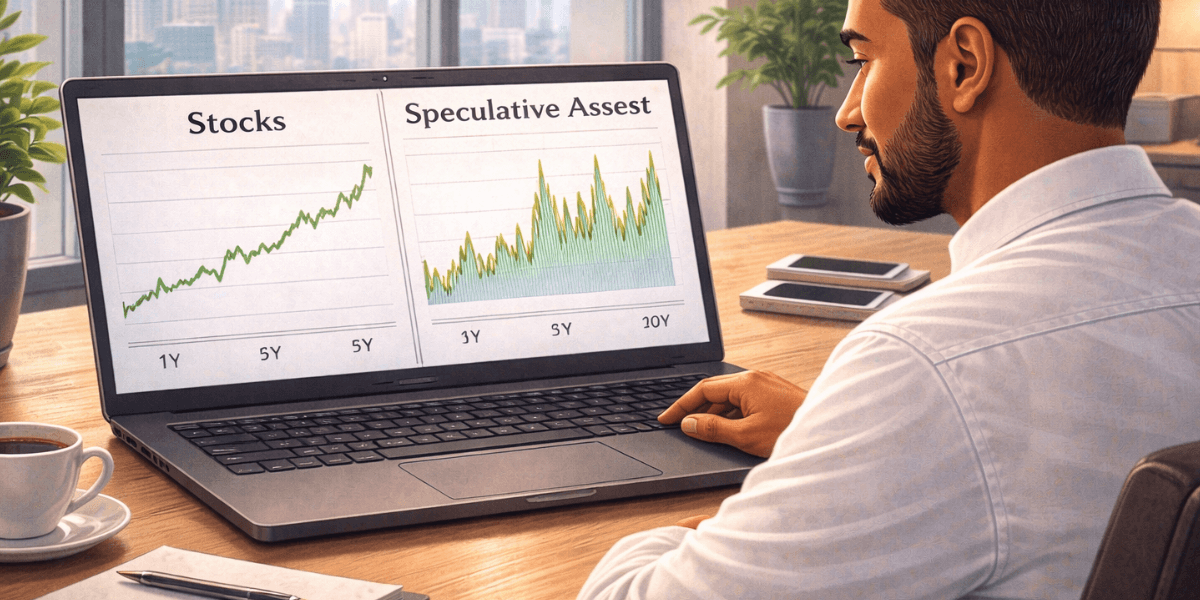
A senior-level risk analysis comparing stocks and speculative assets, explaining how permanent capital risk, time horizons, and recovery dyn...