Overview of the Bahrain Stock Exchange (Bahrain Bourse)
A comprehensive overview of the Bahrain Stock Exchange (Bahrain Bourse), analyzing its market structure, regulation, liquidity characteristi...
A stop order is one of the most misunderstood tools in stock trading, largely because it sits at the intersection of risk management, psychology, and market mechanics. On the surface, a stop order appears simple: it is an instruction designed to trigger a trade once a certain price level is reached. In practice, however, a stop order is not merely a technical feature of a trading platform. It is a behavioral commitment, a structural risk control, and a mechanism that interacts deeply with market liquidity and volatility.
For investors and traders operating in GCC markets, understanding stop orders is particularly important. Many regional markets are characterized by periods of uneven liquidity, strong retail participation, price limits, and event-driven volatility. In these conditions, stop orders can protect capital when used correctly, but they can also behave in unexpected ways when market structure is not fully understood. Treating stop orders as automatic safety nets without appreciating how they actually execute is one of the most common and costly mistakes among investors.
This article provides a deep, structural explanation of what a stop order is, how it works inside real stock markets, why it exists, how it differs from market and limit orders, and how it should be used within a disciplined risk management framework. The analysis is written with a GCC investor mindset in mind, focusing on real-world behavior rather than textbook definitions.
The primary purpose of a stop order is risk control. Unlike market or limit orders, which are primarily concerned with entering or exiting positions at certain prices, stop orders are designed to respond automatically to adverse or significant price movements. They exist to enforce discipline at moments when human decision-making is most vulnerable to emotion.
Markets move continuously, and price changes often accelerate during periods of stress or excitement. In these moments, investors may hesitate, rationalize losses, or act impulsively. A stop order removes discretion at a predefined level. It transforms a future decision into a rule established in advance, when emotions are calmer and judgment is clearer.
In GCC markets, where retail participation is high and news-driven price movements can be sharp, this function is particularly relevant. Stop orders help investors manage downside risk in environments where liquidity and sentiment can change rapidly.
A stop order is an instruction that becomes active only when a specified price level, known as the stop price, is reached. Until that moment, the order is dormant and invisible to the market. Once the stop price is triggered, the order converts into another type of order, usually a market order, and is then executed according to market conditions.
The most common form is a stop-loss order. This is typically placed below the current market price for a long position, or above the current market price for a short position. Its purpose is to limit losses by exiting the position once the price moves against the investor beyond a defined threshold.
It is crucial to understand that a stop order does not guarantee the execution price. It guarantees activation, not outcome. Once triggered, execution depends entirely on available liquidity and prevailing market conditions.
To understand stop orders properly, it is essential to understand that they are not part of the visible order book until they are triggered. Unlike limit orders, which sit openly in the order book and contribute to price discovery, stop orders remain hidden.
When the market price reaches the stop level, the stop order is activated and sent to the market as a live order. In the case of a stop-market order, it becomes a market order and consumes available liquidity from the order book. If liquidity is thin or volatility is high, execution may occur at prices significantly worse than the stop level.
This behavior explains why stop orders can sometimes result in unexpected execution prices. The stop price is not the execution price; it is the trigger that unleashes the order into the market.
Stop orders differ fundamentally from market and limit orders in intent and function. A market order is active immediately and prioritizes execution speed. A limit order is active immediately and prioritizes price control. A stop order, by contrast, is conditional. It is inactive until a specific price event occurs.
Once triggered, a stop order behaves like another order type. Most commonly, it becomes a market order, accepting any available price. This is why stop orders are often described as delayed market orders rather than price-controlled exits.
This distinction is critical. Many investors mistakenly believe a stop order protects them at a specific price. In reality, it protects them from unlimited loss by enforcing an exit, but not from unfavorable execution in fast-moving markets.
Stop orders are widely used because they solve a human problem rather than a market problem. They enforce discipline when emotions would otherwise interfere. They allow investors to define risk in advance and avoid the paralysis that often occurs when losses begin to accumulate.
In addition, stop orders allow investors to manage multiple positions simultaneously without constant monitoring. This is especially valuable for long-term investors or part-time traders who cannot watch markets continuously.
In GCC markets, where trading hours may overlap with global sessions and news can emerge outside local business hours, automated risk controls provide practical advantages.
Despite their usefulness, stop orders carry significant limitations. The most important is execution uncertainty. In volatile or illiquid conditions, a stop order can be triggered at one price and executed at a much worse one. This phenomenon is known as slippage.
Another limitation arises from price gaps. If a stock opens sharply lower due to overnight news, a stop order placed below the previous close will trigger at the open and execute at the first available price, which may be far below the stop level.
In markets with daily price limits, such as some GCC exchanges, stop orders may trigger but fail to execute immediately if trading is halted or liquidity is constrained. This can delay exits and undermine expectations.
Stop orders interact directly with volatility. During calm periods, they often execute smoothly. During stressed periods, they can amplify price movements by adding selling pressure as multiple stop levels are triggered simultaneously.
This cascading effect is particularly visible in markets dominated by retail investors, where similar stop levels are often used. When prices fall through these levels, a wave of stop orders can accelerate declines.
Understanding this dynamic helps investors avoid placing stops at obvious technical levels where crowd behavior may concentrate.
Stop orders are as much psychological tools as technical ones. They force investors to acknowledge risk explicitly. Setting a stop requires answering a difficult question: at what point is the original investment thesis invalid?
This discipline can prevent small losses from becoming catastrophic ones. However, poorly placed stops can also result in premature exits from fundamentally sound positions, particularly in volatile markets.
In GCC markets, where price swings may not always reflect changes in fundamentals, this distinction becomes critical. Stops should be aligned with strategy, not emotion.
Long-term investors often debate whether stop orders are appropriate. The answer depends on the investor’s philosophy and the nature of the asset. For highly volatile stocks or speculative positions, stops can protect capital. For long-term holdings based on fundamentals, frequent stop-outs can undermine compounding.
Some long-term investors use mental stops rather than automatic ones, while others use wider stop levels to avoid noise-driven exits. There is no universal rule, but there must be consistency.
The key is understanding that stop orders are not mandatory tools; they are optional instruments that must align with time horizon and risk tolerance.
GCC stock markets have specific characteristics that affect stop order behavior. These include varying liquidity across stocks, strong retail participation, periodic regulatory interventions, and price limits.
In less liquid stocks, stop orders are particularly risky due to thin order books. In highly liquid blue-chip stocks, they tend to behave more predictably. Investors must adjust their use of stops based on the specific market and security.
Understanding local market structure is therefore essential. A stop order that works well in a highly liquid US stock may behave very differently in a mid-cap GCC listing.
A common mistake is placing stops too close to the current price, leading to frequent stop-outs due to normal volatility. Another is placing stops at obvious round numbers or technical levels, where many other stops are clustered.
Some investors also assume stop orders eliminate risk entirely. In reality, they transform risk, replacing price uncertainty with execution uncertainty.
Misunderstanding these trade-offs leads to frustration and poor outcomes.
Stop orders should be viewed as one component of a broader risk management strategy. They work best when combined with position sizing, diversification, and realistic expectations.
No single stop order can compensate for excessive leverage or poor asset selection. Risk management begins with portfolio construction and ends with execution discipline.
When used thoughtfully, stop orders reinforce discipline rather than replace judgment.
A stop order is not a guarantee, a shield, or a substitute for understanding markets. It is a conditional instruction designed to enforce discipline in the face of uncertainty. It protects against unlimited losses but introduces its own risks related to execution and volatility.
For investors in the GCC and beyond, understanding how stop orders truly work is essential. Used intelligently, they can preserve capital and reduce emotional decision-making. Used carelessly, they can magnify losses and frustration. Mastery of stop orders comes not from using them automatically, but from understanding when, why, and how they should be applied.
No. A stop order guarantees activation at a trigger price, not execution at that price.
They can experience slippage or delayed execution in volatile or illiquid conditions.
They can be, but only if aligned with time horizon and strategy. Overuse can harm long-term performance.
They serve different purposes. Stop orders manage risk conditionally, while market orders manage immediacy.
Disclaimer: This content is for education only and is not investment advice.

A comprehensive overview of the Bahrain Stock Exchange (Bahrain Bourse), analyzing its market structure, regulation, liquidity characteristi...

An in-depth analysis of the Kuwait Stock Exchange (Boursa Kuwait), explaining its structure, regulation, market behavior, and strategic rele...

A senior-level analysis explaining when stocks make more sense than diversified asset trading, focusing on correlation risk, time horizons, ...
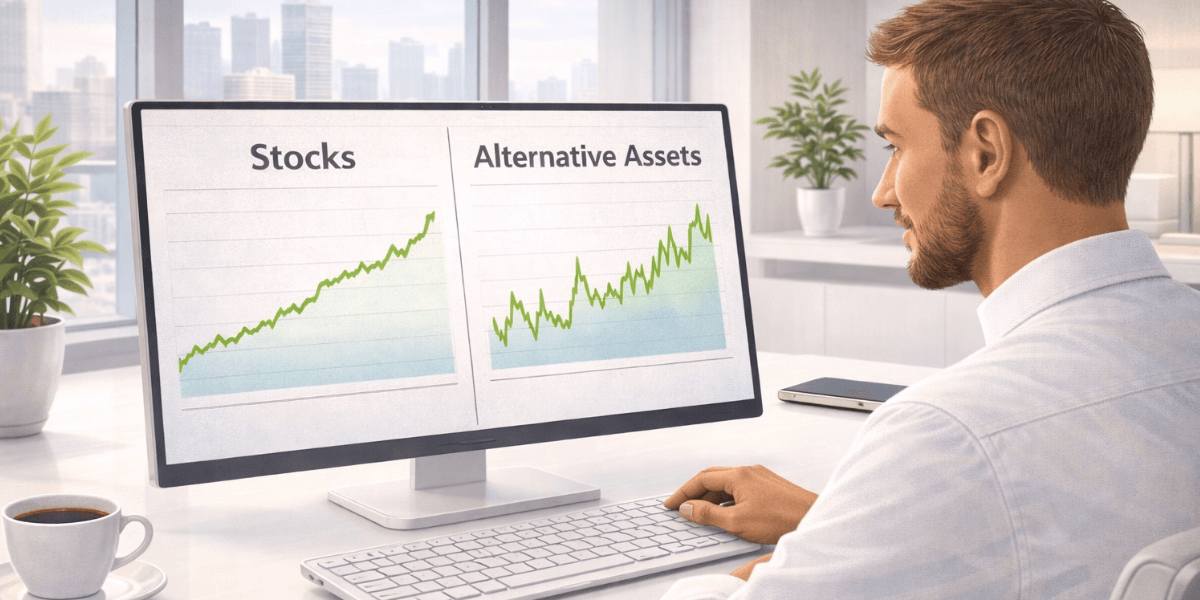
A senior-level analysis comparing stocks and alternative assets from a conservative investing perspective, explaining capital durability, tr...

A senior-level analysis explaining why stocks are fundamentally easier to analyze than other assets, focusing on cash flows, accounting stru...
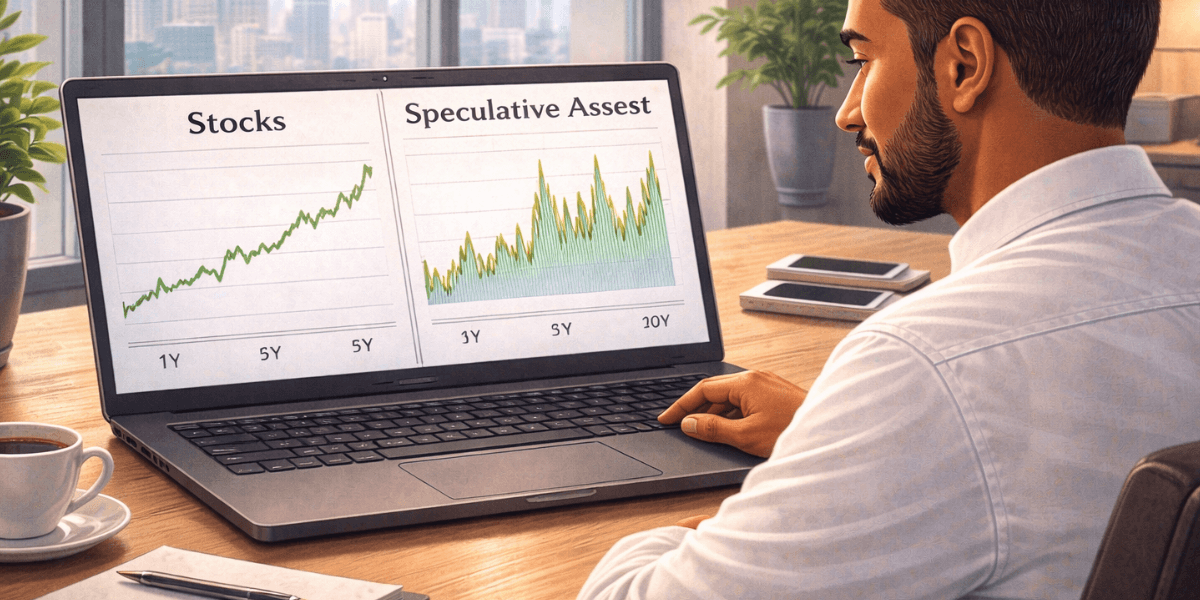
A senior-level risk analysis comparing stocks and speculative assets, explaining how permanent capital risk, time horizons, and recovery dyn...