Overview of the Bahrain Stock Exchange (Bahrain Bourse)
A comprehensive overview of the Bahrain Stock Exchange (Bahrain Bourse), analyzing its market structure, regulation, liquidity characteristi...
An Initial Public Offering, commonly referred to as an IPO, is one of the most significant structural events in the life of a company and one of the most misunderstood concepts among investors. While the term is often reduced to a simple definition—“when a company goes public”—this explanation fails to capture the depth, complexity, and long-term consequences of the IPO process. An IPO is not merely a fundraising exercise or a ceremonial market debut. It is a fundamental transformation in how a company is owned, governed, valued, and held accountable.
For investors in the GCC and globally, understanding what an IPO truly represents is essential for interpreting market behavior, evaluating risk, and avoiding common misconceptions. IPOs often attract outsized attention, media coverage, and retail enthusiasm, particularly in markets where public listings are tied to broader economic narratives. This attention can distort expectations, leading many investors to conflate short-term price movements with long-term value creation.
This article provides a deep and structural explanation of what an Initial Public Offering is, why companies pursue IPOs, how the process works from preparation to post-listing life, and how IPOs affect both companies and investors. The objective is not to promote IPO participation, but to explain the mechanics, incentives, and realities behind them so that investors can approach IPOs with clarity and discipline.
An Initial Public Offering is the process through which a private company offers its shares to the public for the first time and becomes a publicly traded entity on a stock exchange. Prior to an IPO, a company’s ownership is typically limited to founders, early investors, employees, and private institutions. After an IPO, ownership expands to include public shareholders, and the company’s shares trade freely in the secondary market.
This transition fundamentally changes the nature of the company. Private companies operate with limited disclosure, flexible governance structures, and valuation determined by private negotiations. Public companies, by contrast, are subject to continuous market valuation, regulatory oversight, and disclosure obligations. An IPO is therefore less about selling shares and more about entering a permanent public-market environment.
The “initial” aspect of an IPO is critical. It refers only to the first offering of shares to the public. Once completed, subsequent trading occurs between investors in the secondary market, not between investors and the company. This distinction is often misunderstood and leads to confusion about how IPO pricing and post-listing performance are related.
Companies pursue IPOs for a combination of financial, strategic, and structural reasons. Access to capital is a primary motivation. By selling shares to the public, companies can raise significant funds to finance expansion, reduce debt, invest in new projects, or strengthen their balance sheets.
Liquidity for existing shareholders is another key driver. Founders, early investors, and employees often hold significant equity that cannot be easily sold while the company remains private. An IPO creates a liquid market for these shares, allowing partial monetization over time, subject to regulatory lock-up periods.
Beyond capital and liquidity, going public enhances a company’s visibility, credibility, and market standing. Publicly traded companies often find it easier to attract talent, negotiate partnerships, and access debt markets. In some regions, IPOs are also aligned with national economic objectives, making public listing a strategic milestone rather than a purely commercial decision.
The IPO process begins long before shares are offered to the public. Preparation is often the longest and most resource-intensive phase. Companies must transform their internal structures to meet the standards of public ownership. This includes upgrading financial reporting systems, formalizing governance frameworks, and establishing compliance functions.
Financial preparation involves producing audited financial statements that accurately reflect historical performance. Any inconsistencies, related-party transactions, or governance weaknesses must be addressed. This process can reveal operational issues that require correction before listing is feasible.
Governance preparation is equally important. Public companies must have defined board structures, independent oversight, and clear decision-making processes. For companies in markets influenced by Sharia principles, financial structures may also be reviewed to ensure compliance, which can affect leverage and capital allocation.
Regulatory oversight is central to the IPO process. Securities regulators are responsible for ensuring that companies seeking to go public provide sufficient, accurate, and transparent information to investors. This oversight protects market integrity and investor confidence.
During the review process, regulators assess the company’s disclosures, risk factors, governance arrangements, and overall suitability for public ownership. The objective is not to evaluate the company’s business prospects, but to ensure that investors are equipped with the information needed to make informed decisions.
In markets that prioritize stability, regulatory review can be extensive and conservative. While this can extend IPO timelines, it reduces the likelihood of structurally weak companies entering the public market prematurely.
An IPO involves decisions about how many shares will be offered and how ownership will be distributed. Companies may issue new shares to raise capital, sell existing shares held by current owners, or combine both approaches. Each structure has implications for dilution, control, and investor perception.
The proportion of shares offered to the public affects liquidity. A higher free float generally supports more stable trading, while limited free float can lead to price volatility. Companies must balance fundraising objectives with the need to create a functional secondary market.
Allocation of shares determines who receives shares at the offering price. In some markets, institutional investors dominate allocations, while in others, retail participation is actively encouraged. Allocation structure plays a significant role in shaping post-listing trading behavior.
Pricing is one of the most complex aspects of an IPO. The offering price must balance company valuation, investor demand, and market conditions. Pricing that is too high risks weak aftermarket performance, while pricing that is too low may result in strong initial demand but leave value unrealized.
Valuation during an IPO is inherently uncertain. Unlike established public companies, IPO candidates lack a market trading history. Valuation relies on financial projections, peer comparisons, and investor appetite, all of which involve judgment rather than certainty.
For investors, it is important to understand that IPO pricing is not a guarantee of future performance. Strong first-day price movements reflect supply and demand dynamics, not necessarily long-term value.
The first day of trading marks the transition from primary to secondary market. From this point onward, the company’s shares trade freely among investors, and the market determines valuation continuously. This transition can be volatile, particularly in markets with high retail participation.
Early trading behavior is influenced by allocation mechanics, investor sentiment, and liquidity conditions. Limited allocations often lead to strong early demand, while lock-up restrictions on existing shareholders limit supply. These factors can create upward pressure on prices in the short term.
Over time, as lock-up periods expire and information accumulates, price behavior typically stabilizes. Long-term performance depends on execution, profitability, and strategic discipline rather than IPO-day momentum.
Completing an IPO does not mark the end of transformation; it marks the beginning of life as a public company. Listed companies are subject to continuous disclosure requirements, including periodic financial reporting and immediate disclosure of material events.
Management decisions are scrutinized by shareholders, analysts, and regulators. Investor relations become a permanent function, and corporate governance practices are tested in real time. Companies that fail to adapt to this environment often struggle, regardless of initial IPO success.
The public-market environment rewards consistency, transparency, and long-term planning. Short-term focus on share price can undermine trust and damage long-term value creation.
For investors, IPOs represent both opportunity and risk. They provide access to companies at an early stage of public-market life, but they also involve uncertainty due to limited trading history and evolving governance practices.
Retail investors are often drawn to IPOs by media coverage and the prospect of early gains. However, this enthusiasm can obscure valuation risks and lead to overexposure. Institutional investors typically approach IPOs with longer evaluation horizons and disciplined allocation strategies.
Understanding the IPO process helps investors interpret post-listing volatility and avoid conflating short-term price movements with long-term fundamentals.
From a long-term perspective, IPOs should be viewed as entry points, not conclusions. The success of an investment depends on how the company performs as a public entity, not on its initial market debut.
Some IPOs evolve into stable, dividend-paying companies that deliver consistent returns over decades. Others struggle to adapt to public-market pressures and underperform. Distinguishing between these outcomes requires patience, analysis, and a willingness to reassess assumptions.
For disciplined investors, IPOs can complement broader portfolio strategies when evaluated with the same rigor applied to established stocks.
An Initial Public Offering is far more than a company’s first day on a stock exchange. It is a structural transition that reshapes ownership, governance, and market accountability. IPOs are complex processes influenced by regulation, market structure, and investor behavior, not guaranteed pathways to profit.
For investors, understanding what an IPO truly is provides essential context for making informed decisions. Approached with realism and discipline, IPOs can offer meaningful opportunities. Approached with speculation and unrealistic expectations, they can just as easily lead to disappointment. Knowledge of the IPO process is therefore not optional for serious investors; it is foundational.
An IPO is the most common way companies list their shares, but listing can also occur through direct listings or other mechanisms depending on regulation.
No. IPO outcomes vary widely, and short-term price movements do not guarantee long-term returns.
Volatility arises from limited trading history, allocation imbalances, and evolving investor expectations.
IPOs can be suitable for long-term investors if evaluated carefully and integrated into diversified strategies.
Disclaimer: This content is for education only and is not investment advice.

A comprehensive overview of the Bahrain Stock Exchange (Bahrain Bourse), analyzing its market structure, regulation, liquidity characteristi...

An in-depth analysis of the Kuwait Stock Exchange (Boursa Kuwait), explaining its structure, regulation, market behavior, and strategic rele...
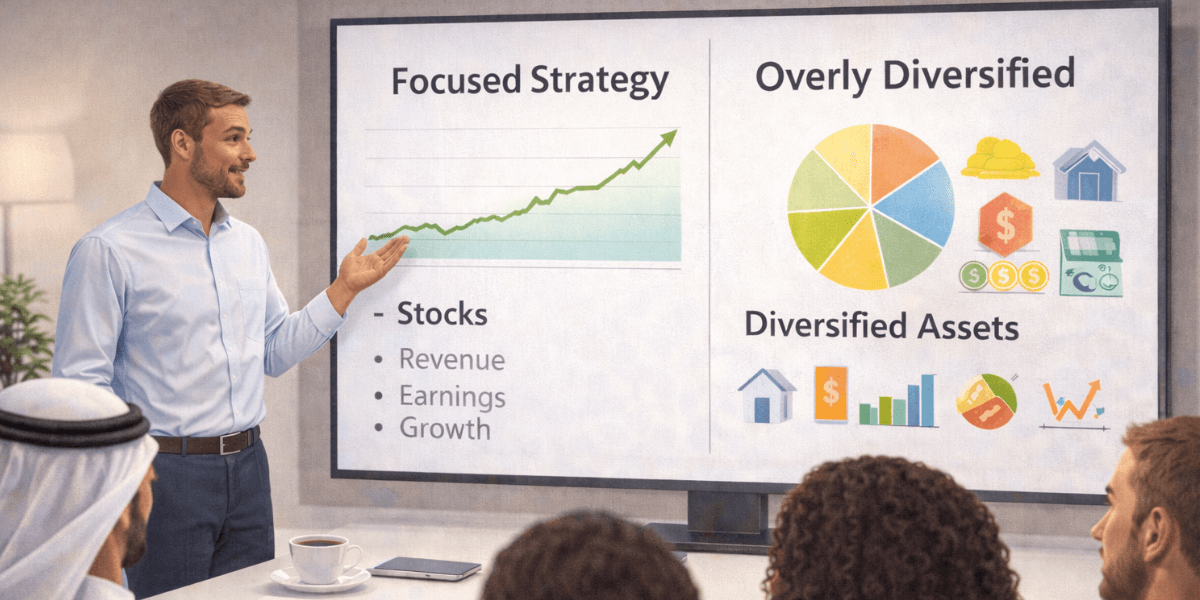
A senior-level analysis explaining when stocks make more sense than diversified asset trading, focusing on correlation risk, time horizons, ...
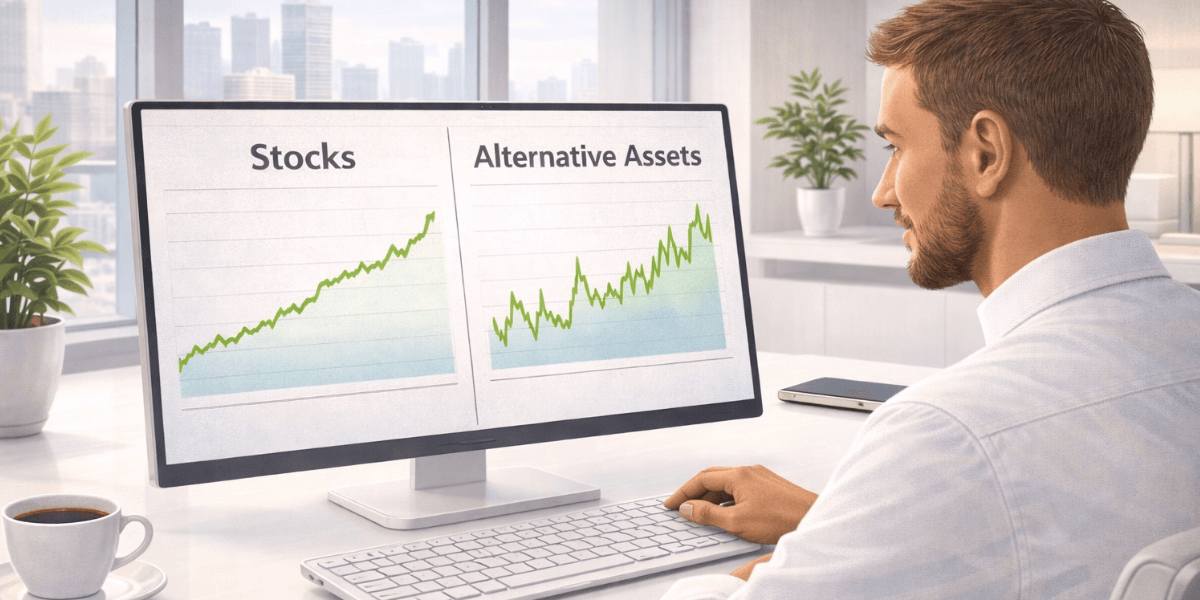
A senior-level analysis comparing stocks and alternative assets from a conservative investing perspective, explaining capital durability, tr...
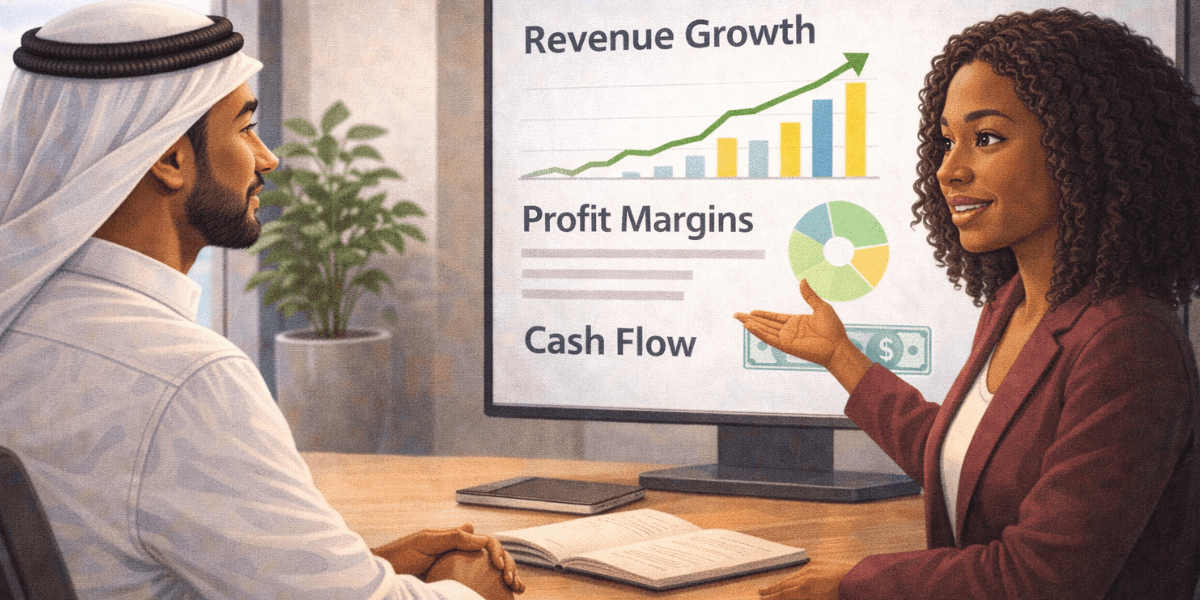
A senior-level analysis explaining why stocks are fundamentally easier to analyze than other assets, focusing on cash flows, accounting stru...
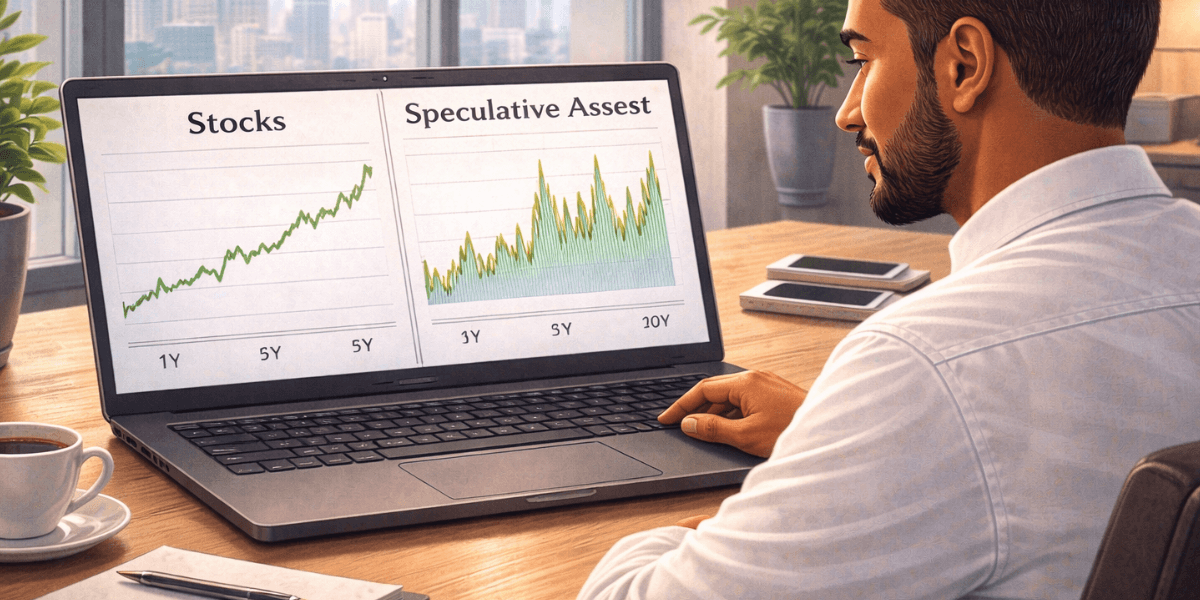
A senior-level risk analysis comparing stocks and speculative assets, explaining how permanent capital risk, time horizons, and recovery dyn...