Overview of the Bahrain Stock Exchange (Bahrain Bourse)
A comprehensive overview of the Bahrain Stock Exchange (Bahrain Bourse), analyzing its market structure, regulation, liquidity characteristi...
One of the most common sources of confusion in equity markets is the tendency to treat stock investing and trading as variations of the same activity. The two are often discussed using the same language, the same examples, and even the same tools, which creates the false impression that they differ only in speed or frequency. In reality, stock investing and trading are built on fundamentally different assumptions about time, risk, and decision-making.
This confusion becomes particularly problematic for individuals entering the market for the first time. Without a clear distinction, new participants often oscillate between long-term intentions and short-term reactions. They may describe themselves as investors while behaving like traders, or attempt to trade with the patience and risk tolerance required for investing. This mismatch between intention and behavior is one of the main reasons why many market participants experience inconsistent results.
For investors operating from internationally connected financial environments, the distinction carries additional importance. Access to global equity markets is immediate and efficient, but market structure does not adapt to the investor’s location. Trading hours, liquidity cycles, and volatility patterns are dictated by the exchanges themselves. Strategies that rely on constant monitoring, fast execution, or precise timing can become significantly more demanding when markets operate outside local business hours.
Stock investing is built around ownership. When an investor buys a stock with an investing mindset, they are allocating capital to a business with the expectation that value will be created over time through growth, profitability, and competitive strength. Price fluctuations are acknowledged, but they are not the primary focus. Time is an ally rather than an obstacle.
Trading, by contrast, is built around price behavior. Traders are less concerned with long-term business outcomes and more focused on how prices move within shorter windows. This approach requires constant attention, rapid decision-making, and a tolerance for frequent outcomes that may be small but emotionally taxing. Execution quality, timing precision, and risk containment become central.
This article explains what stock investing is and how it differs from trading, not to advocate for one approach universally, but to clarify the consequences of each. Understanding the distinction allows individuals to choose strategies that align with their objectives, availability, and psychological tolerance. In equity markets, clarity of approach is often more important than sophistication of technique.
Stock investing is the act of purchasing shares in a company with the intention of holding them over an extended period. When you invest in a stock, you are acquiring partial ownership in a real business that generates revenue, incurs costs, and competes within an industry.
The primary drivers of long-term investment returns are business fundamentals: earnings growth, cash flow generation, competitive advantages, and prudent management. Price fluctuations matter, but they are secondary to the company’s ability to create value over time.
Investing requires patience and a long-term perspective. Decisions are based on analysis rather than immediacy, and short-term volatility is accepted as part of the process rather than treated as a signal to act.
Trading is centered on price behavior rather than business ownership. Traders seek to profit from price movements that occur over short time frames, which may range from minutes to weeks.
In trading, the underlying company often plays a limited role. Price patterns, momentum, liquidity, and technical indicators tend to be more influential than fundamentals. Positions are opened and closed frequently, and exposure is actively managed.
Trading requires constant attention, fast decision-making, and strict risk control. While it can be profitable for skilled participants, it also exposes traders to higher transaction costs, emotional pressure, and execution risk.
The clearest distinction between investing and trading lies in time horizon. Investors think in years. Traders think in days, hours, or even minutes.
This difference affects every aspect of decision-making. Investors tolerate temporary price declines if the business remains strong. Traders typically exit positions quickly when price moves against them.
Time horizon also influences behavior. A longer horizon reduces the need for constant monitoring and minimizes the impact of short-term noise.
Both investing and trading involve risk, but the nature of that risk differs. Investors face business risk and market cycles, while traders face execution risk, timing risk, and emotional fatigue.
Frequent trading amplifies the impact of transaction costs and slippage. Long-term investing, by contrast, benefits from reduced turnover and compounding.
Understanding these differences helps individuals choose an approach that aligns with their tolerance for uncertainty and stress.
Investing emphasizes discipline through inactivity. Often, the best decision is to do nothing and allow time to work in favor of the investment thesis.
Trading emphasizes discipline through action. Decisions must be executed quickly and consistently, with predefined rules to manage risk.
Confusing these disciplines leads to problems. Trading like an investor can result in uncontrolled losses, while investing like a trader can lead to overreaction and poor long-term outcomes.
For investors with access to global markets, clarity between investing and trading is especially important. Time zone differences, market hours, and liquidity cycles can complicate short-term strategies.
Long-term investing tends to be more forgiving of these structural factors. Trading requires precise timing and execution, which can be more challenging across borders.
Understanding which approach you are taking helps avoid strategies that are incompatible with your environment and lifestyle.
Some individuals separate capital into distinct buckets, investing long-term in one portion and trading actively with another. This requires clear boundaries and discipline.
Problems arise when the distinction is blurred. Mixing short-term behavior into long-term positions often leads to inconsistent decisions.
Clarity of intent is more important than the strategy itself.
Stock investing and trading coexist within the same markets, but they operate under different principles. Confusing the two does not create flexibility; it creates inconsistency. Investors who lack clarity often change behavior in response to market conditions rather than adhering to a defined process. Over time, this reactive approach increases risk and erodes discipline.
For individuals with access to global equity markets, clarity becomes even more important. Trading strategies demand precision in timing and execution, which can be difficult when markets operate outside local business hours or when liquidity conditions shift unpredictably. Long-term investing, by contrast, is more tolerant of these structural constraints, allowing decisions to be made deliberately rather than under constant pressure.
Neither approach is inherently superior. Trading can be effective for those with the skill, time, and discipline to manage frequent decisions and execution risk. Investing, however, aligns more naturally with long-term wealth building for most individuals. It reduces transaction costs, minimizes emotional fatigue, and allows compounding to work over extended periods.
What ultimately matters is alignment. When an individual’s strategy matches their time horizon, risk tolerance, and lifestyle, discipline becomes easier to maintain. Problems arise when expectations are misaligned, such as expecting investor-like stability from trading strategies or trader-like responsiveness from long-term investments.
Understanding the difference between investing and trading also improves self-awareness. It encourages individuals to evaluate not only what returns they seek, but how they respond to uncertainty, volatility, and inactivity. These psychological factors often matter more than analytical ability.
In equity markets, sustainable success is rarely the result of choosing the most complex strategy. It is more often the result of choosing a strategy that can be executed consistently over time. Clear separation between stock investing and trading allows market participants to act with intention rather than impulse. In a globally connected market environment, this clarity is not optional. It is foundational.
Investing generally involves lower turnover and longer time horizons, which can reduce certain risks, but it does not eliminate market risk.
Beginners can trade, but trading typically requires more experience, discipline, and risk control than long-term investing.
Yes. Long-term investors sell when fundamentals change, valuations become excessive, or portfolios need rebalancing.
Trading demands constant attention and fast reaction, which may not suit all lifestyles or time zones.
Historically, disciplined long-term investing has been more accessible and sustainable for most individuals.
Disclaimer: This content is for education only and is not investment advice.

A comprehensive overview of the Bahrain Stock Exchange (Bahrain Bourse), analyzing its market structure, regulation, liquidity characteristi...

An in-depth analysis of the Kuwait Stock Exchange (Boursa Kuwait), explaining its structure, regulation, market behavior, and strategic rele...
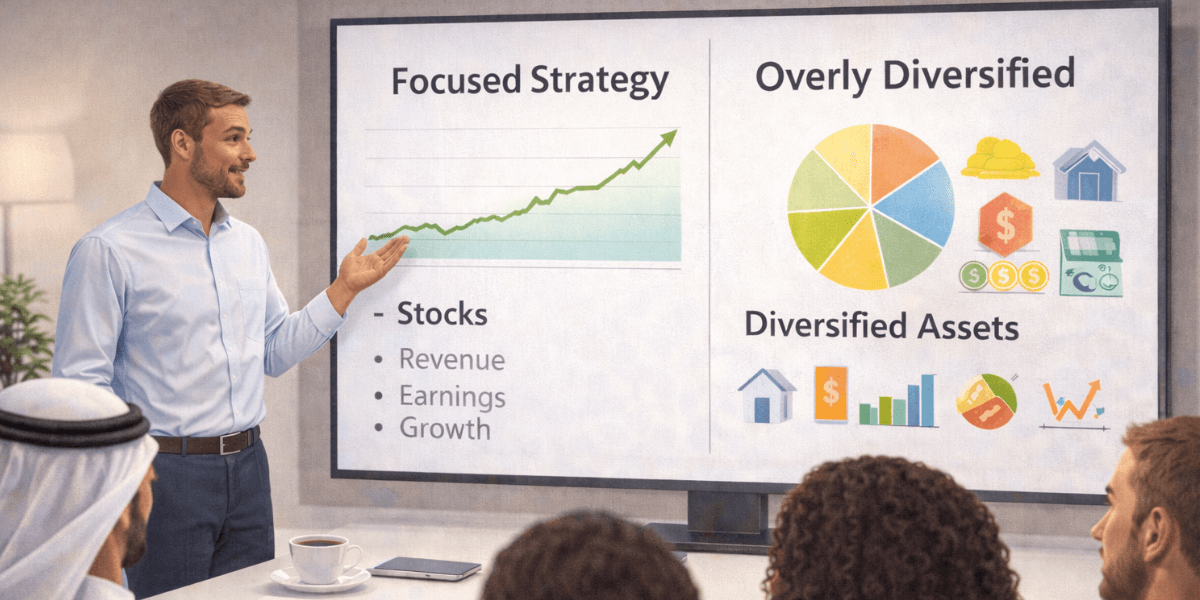
A senior-level analysis explaining when stocks make more sense than diversified asset trading, focusing on correlation risk, time horizons, ...
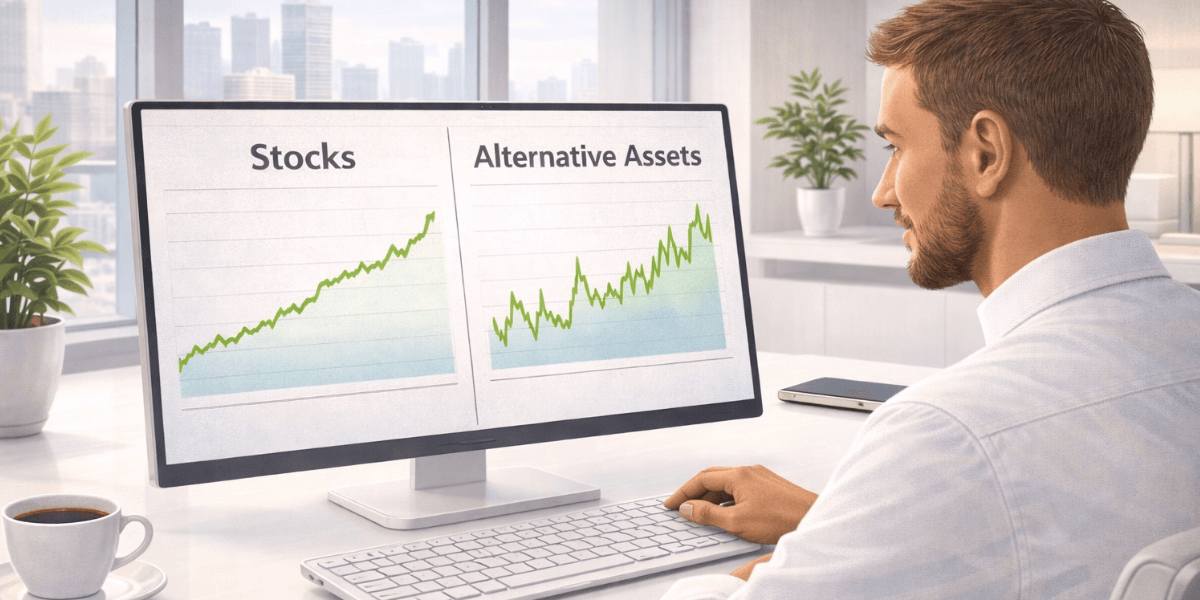
A senior-level analysis comparing stocks and alternative assets from a conservative investing perspective, explaining capital durability, tr...

A senior-level analysis explaining why stocks are fundamentally easier to analyze than other assets, focusing on cash flows, accounting stru...
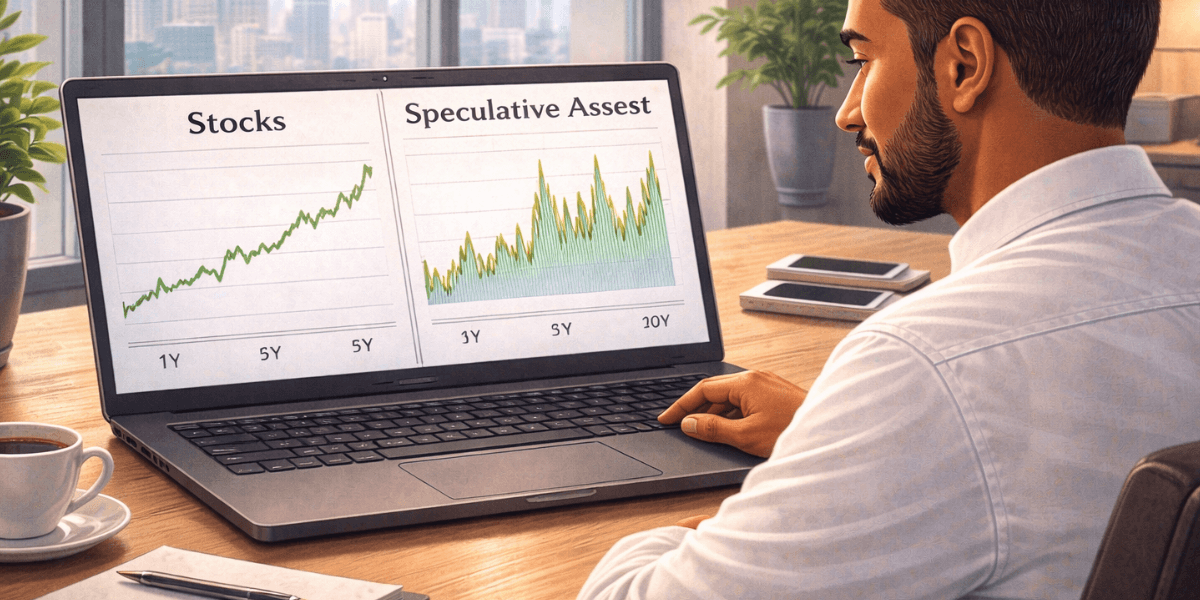
A senior-level risk analysis comparing stocks and speculative assets, explaining how permanent capital risk, time horizons, and recovery dyn...