Overview of the Bahrain Stock Exchange (Bahrain Bourse)
A comprehensive overview of the Bahrain Stock Exchange (Bahrain Bourse), analyzing its market structure, regulation, liquidity characteristi...
Not every stock is suitable for long-term investing. This statement may seem obvious, yet many investors treat all publicly traded companies as interchangeable opportunities, differing only in price or short-term performance. Long-term investing requires a fundamentally different lens. The goal is not to identify what may move next, but to determine which businesses are capable of creating durable value over extended periods of time.
A stock suitable for long-term investing must withstand far more than short-term volatility. It must survive economic cycles, competitive pressure, technological change, and shifts in consumer behavior. It must generate cash consistently, allocate capital intelligently, and maintain relevance in its market. These qualities are not captured by price charts or recent headlines, but by business fundamentals that unfold over years.
For investors based in Gulf countries, this distinction is especially important. Access to global equity markets is broad, but time zone differences, professional commitments, and lifestyle considerations limit the practicality of active trading. Long-term investing offers a way to participate meaningfully in global growth without requiring constant engagement. However, this approach only works when the underlying stocks are chosen with discipline and structure.
This article explains what makes a stock suitable for long-term investing. The focus is strictly on equities and on investors allocating capital from the GCC into global markets. The objective is to provide a clear framework for evaluating stocks as long-term ownership positions rather than short-term opportunities.
The foundation of any long-term investment is the business model. A stock cannot compound value over time if the underlying business lacks a clear and sustainable way to generate revenue. Long-term investors look for companies whose products or services solve real problems, meet persistent demand, and are not easily replaced.
Sustainability does not require rapid growth. It requires durability. Businesses that depend on temporary trends, regulatory loopholes, or speculative demand may experience periods of strong performance, but they struggle to maintain relevance over decades. Long-term investors favor companies embedded in essential economic activity, where demand is resilient even during downturns.
When evaluating sustainability, investors consider how the business earns money, who its customers are, and how sensitive revenues are to economic cycles. A durable business model provides the foundation upon which all other long-term characteristics are built.
Long-term investing is powered by cash flow. Companies that consistently generate cash have flexibility. They can reinvest in growth, strengthen their balance sheet, return capital to shareholders, or absorb economic shocks. Businesses that rely solely on external financing are far more fragile over long horizons.
Rapid expansion without cash generation often signals vulnerability rather than strength. While growth is important, long-term investors prioritize the quality of that growth. Revenue that translates into sustainable margins and free cash flow is far more valuable than expansion that requires constant capital injections.
Cash generation also provides transparency. It is harder to manipulate and easier to evaluate over time. For long-term investors, consistent cash flow is one of the strongest indicators of business health.
Long-term investing requires thinking beyond favorable scenarios. Even strong businesses encounter periods of stress. A solid balance sheet allows companies to survive downturns without diluting shareholders or compromising their competitive position.
Excessive leverage increases fragility. While debt can enhance returns in stable conditions, it magnifies risk during disruptions. Long-term investors favor companies with manageable debt levels, strong liquidity, and flexibility to adapt when conditions change.
A resilient balance sheet does not maximize short-term returns, but it preserves optionality. This resilience is critical for businesses expected to compound value over decades.
A stock suitable for long-term investing must represent a business with defensible competitive advantages. Without protection, profitability attracts competitors, eroding margins and returns over time.
Competitive advantages take many forms: brand strength, network effects, cost leadership, switching costs, regulatory barriers, or technological expertise. What matters is not the category, but the durability. Long-term investors ask whether these advantages are likely to persist as markets evolve.
Businesses with strong competitive positions can maintain pricing power, reinvest profitably, and defend market share. These characteristics are essential for long-term compounding.
Over long horizons, management decisions shape outcomes as much as business models. Capital allocation, strategic discipline, and risk management determine whether a company compounds value or destroys it.
Long-term investors evaluate how management has historically used cash. Reinvestment decisions, acquisitions, and shareholder returns reveal priorities. Consistency, transparency, and alignment with long-term value creation matter more than short-term performance targets.
Good management does not guarantee success, but poor management can undermine even strong businesses over time.
Markets evolve. Technologies change, consumer preferences shift, and new competitors emerge. Long-term investing requires assessing not just where a business stands today, but how capable it is of adapting.
Companies that invest in innovation, talent, and infrastructure are better positioned to remain relevant. Those that rely solely on past success often struggle as conditions change. Long-term investors favor adaptability over complacency.
This forward-looking perspective distinguishes long-term investing from backward-looking analysis.
A great business can be a poor long-term investment if purchased at an unrealistic price. Valuation matters because it sets expectations. When prices assume perfect execution and uninterrupted growth, future returns become constrained.
Long-term investors do not seek precision, but they avoid extremes. They assess whether current valuations allow room for business growth to translate into acceptable returns over time.
Paying a reasonable price does not eliminate risk, but it reduces the probability of long-term disappointment.
Highly volatile earnings complicate long-term investing. While variability is unavoidable, extreme unpredictability increases uncertainty and risk.
Stocks suitable for long-term investing tend to exhibit relatively stable earnings drivers. Predictability supports planning, valuation, and compounding. It also reduces emotional pressure during market fluctuations.
This does not mean avoiding cyclical businesses entirely, but it does require understanding how cycles affect long-term earnings power.
A stock may be fundamentally strong, yet unsuitable for long-term investors if it demands constant attention. Excessive volatility, complex business models, or opaque reporting increase the likelihood of emotional decision-making.
Long-term investors select stocks they can hold through uncertainty. Behavioral compatibility is often overlooked, but it is critical. A stock that an investor cannot tolerate during downturns is unlikely to be held long enough to realize its long-term potential.
This consideration is especially important for investors balancing markets with professional and family responsibilities.
Investors in GCC countries operate in globally connected markets while managing local constraints. Time zone differences reduce the feasibility of short-term strategies, while long planning horizons favor durable outcomes.
Stocks suitable for long-term investing align with these realities. They allow investors to focus on analysis, structure, and periodic review rather than constant execution. This approach supports sustainable participation in global equity markets.
Selecting the right stocks is not about activity. It is about alignment.
A stock suitable for long-term investing represents a business capable of surviving, adapting, and compounding value over time. Sustainability, cash generation, balance sheet strength, competitive advantages, and sound management form the foundation.
For investors allocating capital from the GCC into global markets, these characteristics are not optional. They determine whether long-term investing remains practical, disciplined, and effective.
Long-term success in equity markets does not come from reacting to price movements. It comes from owning the right businesses and allowing time to work in their favor. Choosing stocks built to endure is where that process begins.
Yes, if growth is supported by cash generation, competitive advantages, and realistic valuations.
No. Dividends are one form of return, but reinvestment can also drive long-term value.
They should avoid volatility they cannot tolerate or understand, not volatility itself.
Yes. Valuation influences long-term returns even for high-quality businesses.
Disclaimer: This content is for education only and is not investment advice.

A comprehensive overview of the Bahrain Stock Exchange (Bahrain Bourse), analyzing its market structure, regulation, liquidity characteristi...

An in-depth analysis of the Kuwait Stock Exchange (Boursa Kuwait), explaining its structure, regulation, market behavior, and strategic rele...

A senior-level analysis explaining when stocks make more sense than diversified asset trading, focusing on correlation risk, time horizons, ...
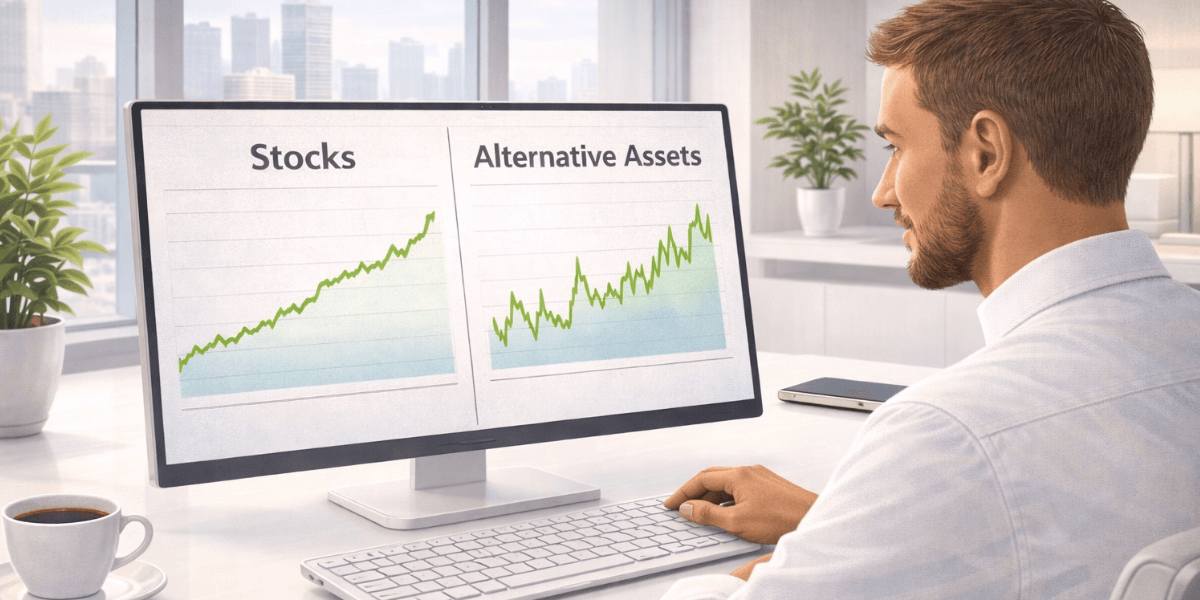
A senior-level analysis comparing stocks and alternative assets from a conservative investing perspective, explaining capital durability, tr...

A senior-level analysis explaining why stocks are fundamentally easier to analyze than other assets, focusing on cash flows, accounting stru...

A senior-level risk analysis comparing stocks and speculative assets, explaining how permanent capital risk, time horizons, and recovery dyn...