Overview of the Bahrain Stock Exchange (Bahrain Bourse)
A comprehensive overview of the Bahrain Stock Exchange (Bahrain Bourse), analyzing its market structure, regulation, liquidity characteristi...
Placing a stock trade is often perceived as an action-driven decision: identify a company, choose a price, and execute. This perception is misleading. In reality, the quality of a stock trade is largely determined before the order ever reaches the market. Preparation is not a preliminary step; it is the core of the investment process.
This distinction becomes particularly relevant for investors operating from internationally connected financial environments. Access to U.S. and global equity markets is efficient and immediate, but this accessibility can obscure the structural realities that govern how trades actually behave. Differences in trading hours, liquidity cycles, currency exposure, and settlement processes introduce variables that cannot be ignored. Investors who fail to prepare often mistake these structural effects for market volatility or poor timing.
Many early investing mistakes are not the result of poor stock selection. They stem from insufficient readiness. Trading without fully understanding account mechanics, order behavior, or risk exposure introduces avoidable friction. These issues rarely appear dramatic at first, but they compound quietly over time. A slightly worse execution price, repeated across multiple trades, can materially affect long-term outcomes.
Preparation also establishes behavioral discipline. Investors who approach trades without a defined framework are more likely to react emotionally to price movements, news headlines, or short-term volatility. By contrast, investors who prepare deliberately enter trades with clear expectations. They understand what they are trying to achieve, what risks they are accepting, and which outcomes are within normal bounds.
For investors trading across time zones, preparation takes on additional importance. Market sessions do not align with local routines, and liquidity conditions fluctuate throughout the day. Placing trades without awareness of these dynamics can lead to wider spreads, partial fills, or unexpected price movement. These outcomes are not execution failures; they are predictable consequences of insufficient planning.
This article focuses on what must be in place before any stock trade is executed. It is intentionally centered on equities and long-term ownership rather than short-term tactics. The objective is to shift attention away from prediction and toward readiness. When investors understand what they need before placing a trade, execution becomes a confirmation of intent rather than a source of uncertainty.
Preparation does not eliminate risk, nor does it guarantee favorable outcomes. Markets remain uncertain by nature. What preparation does provide is control over the variables that are within the investor’s influence. Over time, this control separates consistent investors from reactive ones.
Before placing any stock trade, your brokerage account must be fully ready. This goes beyond simply having an account approved. Investors should confirm which stock exchanges are accessible, which order types are enabled, and whether there are any restrictions based on account type or jurisdiction.
For investors trading international markets, account configuration matters. Some accounts may allow trading during certain sessions but not others, or may require additional permissions for specific exchanges. Understanding these limits before trading prevents execution surprises.
Funding is another critical component. Available cash, settlement timing, and currency denomination all influence what trades can be placed. Funds transferred into an account may not be immediately available for trading, and foreign currency conversion can affect effective buying power.
Account readiness is not administrative detail. It is the foundation that determines whether a trade can be executed as planned.
Stock markets operate on fixed schedules that may not align with local business hours. Investors trading U.S. or European equities from a different time zone must understand when markets are open, when liquidity is highest, and when volatility tends to increase.
Placing trades during illiquid periods can result in wider spreads and less predictable execution. This is not a market failure; it is a structural reality. Understanding trading hours allows investors to choose moments when participation is broad and pricing is more efficient.
Awareness of market calendars is also important. Holidays, shortened sessions, and major economic releases can all affect trading conditions. Preparation includes knowing not just what to trade, but when to trade.
No stock trade should be placed without a clear reason. This applies equally to buying and selling. Investors should understand what the company does, how it generates revenue, and why the trade aligns with their broader objectives.
This does not require exhaustive analysis for every trade, but it does require intentionality. Trading without a rationale often leads to inconsistent behavior and emotional decisions.
Clarifying whether a trade is meant to establish a long-term position, rebalance exposure, or reduce risk helps define appropriate execution and position size.
Before placing a trade, investors must decide how much capital to allocate. Position sizing is one of the most effective risk management tools available, yet it is often overlooked.
Allocating too much capital to a single trade increases emotional pressure and magnifies the impact of adverse outcomes. Allocating too little without intention can also undermine discipline.
Position size should reflect conviction, diversification goals, and overall portfolio balance. This decision should be made before execution, not during it.
Execution is shaped by order choice. Market orders prioritize speed, while limit orders prioritize price control. Each has appropriate use cases, and the choice should be made deliberately.
Investors should decide in advance how much price variation they are willing to accept and whether immediate execution is necessary. Planning execution reduces impulsive decisions during volatile moments.
Understanding how orders behave under different market conditions transforms execution from a gamble into a managed process.
Every trade carries risk. Before placing a trade, investors should understand what could go wrong and how that risk fits within their tolerance.
This includes considering potential drawdowns, liquidity risk, and broader market exposure. Risk planning is not about avoiding loss entirely, but about ensuring that losses remain manageable.
Clarity around downside scenarios helps investors remain disciplined after execution.
Preparation is not purely technical. Emotional readiness matters. Investors should assess whether they are acting calmly or reacting to pressure, news, or recent price movements.
Placing trades under emotional stress often leads to regret and inconsistent behavior. Waiting until decisions feel deliberate rather than urgent is part of preparation.
Discipline before execution supports discipline after execution.
Every stock trade reflects a combination of market conditions and investor decisions. While market conditions cannot be controlled, preparation can. Investors who consistently prepare before placing trades reduce uncertainty, limit avoidable mistakes, and improve execution quality over time. This advantage may not be immediately visible, but it compounds quietly across years of investing.
For investors with access to global equity markets, preparation is not a secondary consideration. Trading across jurisdictions introduces complexity that cannot be navigated through intuition alone. Time zone differences, liquidity variations, settlement timelines, and currency exposure all influence outcomes. Investors who ignore these factors often attribute unfavorable results to bad luck or market behavior when the real issue lies in insufficient readiness.
Preparation also reinforces discipline. When investors define position size, execution method, and risk tolerance before placing a trade, they reduce the likelihood of emotional decision-making afterward. This discipline is especially important during periods of volatility, when markets test conviction and patience. Investors who prepare well are less likely to abandon sound strategies under pressure.
Importantly, preparation does not slow investing down in a negative way. It slows decision-making deliberately, filtering out impulsive actions while preserving flexibility. Prepared investors can act decisively when conditions align because they are not making foundational decisions under time pressure.
Another often overlooked benefit of preparation is clarity. Knowing why a trade is being placed, how much capital is at risk, and how execution is expected to behave creates realistic expectations. This clarity reduces regret and second-guessing, even when outcomes are unfavorable. Losses are easier to accept when they occur within a framework that was understood in advance.
Over the long term, the difference between inconsistent and consistent investors rarely lies in intelligence or access to information. It lies in process. Preparation transforms investing from a series of isolated decisions into a repeatable system. This system does not aim to predict markets, but to respond to them rationally.
In equity investing, there is no substitute for readiness. The investors who endure are not those who trade most frequently or react fastest, but those who consistently place trades with intention, structure, and respect for market mechanics. Preparation is not a guarantee of success, but it is the most reliable advantage an investor can develop.
Not always. Funds may require settlement time, and trading permissions must be active. Always confirm account readiness.
Yes. Trading during liquid market hours generally improves execution quality.
No. Preparation matters for all trades, regardless of size.
Preparation should come first. Good stock selection cannot compensate for poor execution or risk management.
No. It reduces avoidable mistakes but cannot eliminate market risk.
Disclaimer: This content is for education only and is not investment advice.

A comprehensive overview of the Bahrain Stock Exchange (Bahrain Bourse), analyzing its market structure, regulation, liquidity characteristi...

An in-depth analysis of the Kuwait Stock Exchange (Boursa Kuwait), explaining its structure, regulation, market behavior, and strategic rele...

A senior-level analysis explaining when stocks make more sense than diversified asset trading, focusing on correlation risk, time horizons, ...
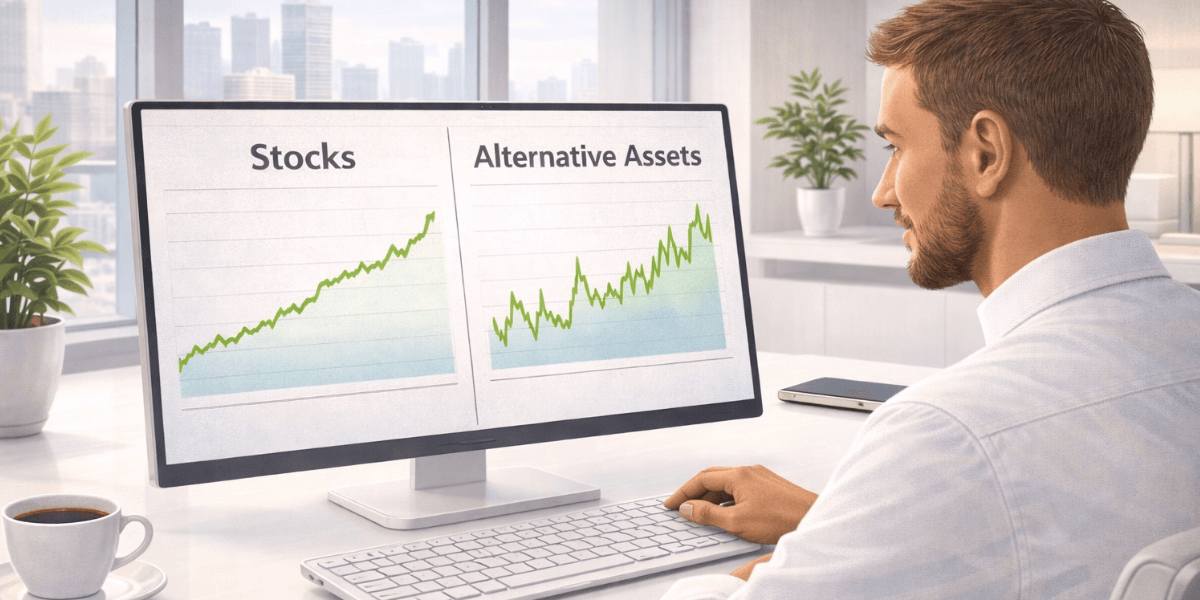
A senior-level analysis comparing stocks and alternative assets from a conservative investing perspective, explaining capital durability, tr...

A senior-level analysis explaining why stocks are fundamentally easier to analyze than other assets, focusing on cash flows, accounting stru...
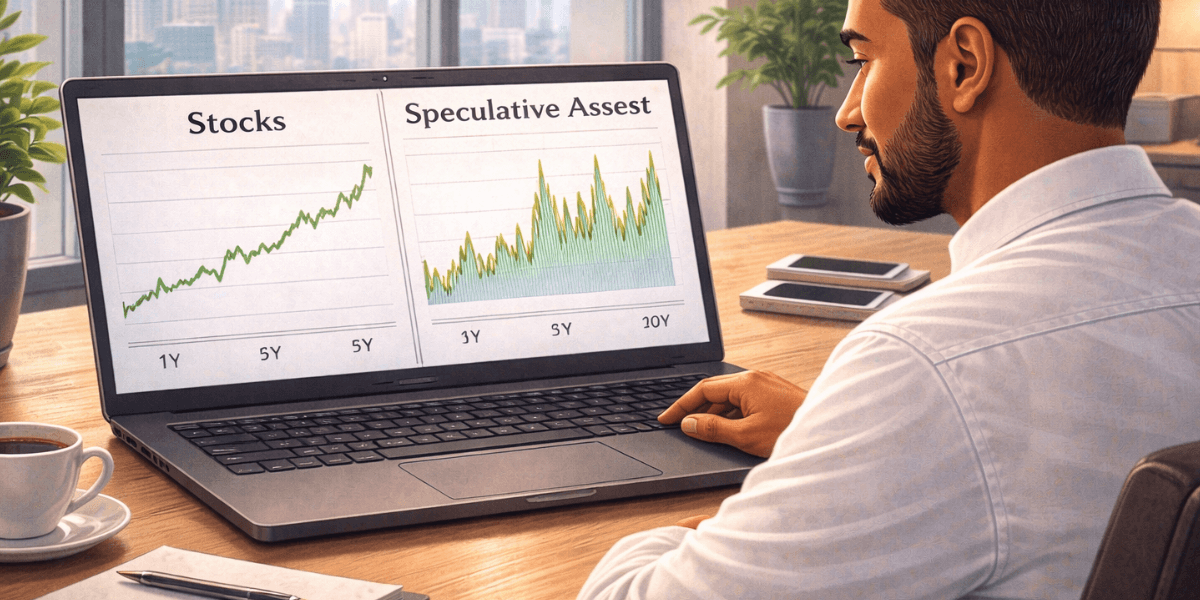
A senior-level risk analysis comparing stocks and speculative assets, explaining how permanent capital risk, time horizons, and recovery dyn...