Overview of the Bahrain Stock Exchange (Bahrain Bourse)
A comprehensive overview of the Bahrain Stock Exchange (Bahrain Bourse), analyzing its market structure, regulation, liquidity characteristi...
ETFs are the “default answer” for a reason: they are simple, diversified, and hard to mess up. In Dubai, Riyadh, or Doha, that simplicity is attractive—especially when your portfolio is split between local life expenses (AED/SAR/QAR), international exposure (often USD), and real-world constraints like broker access, funding methods, and personal Sharia preferences. But here is the part most people skip: an ETF is a product design, not a law of nature. Sometimes the ETF structure is exactly what you want. Sometimes it is a blunt instrument when you need a scalpel.
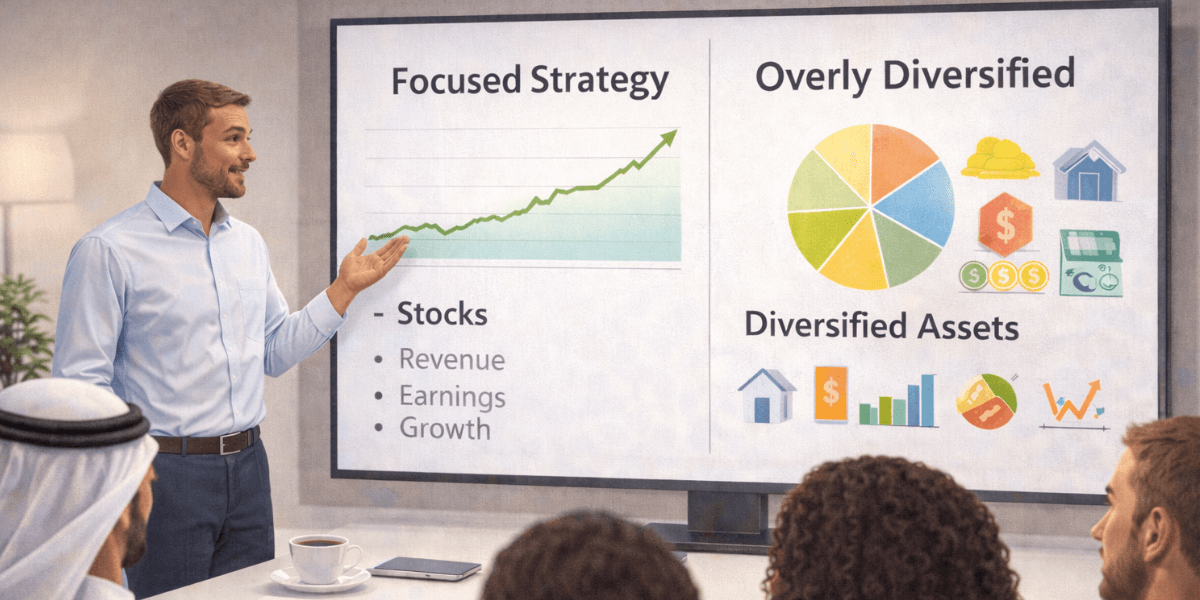
Owning individual stocks makes more sense when your edge is precision. Precision can mean targeting a specific business model (a dominant payment network, a logistics platform, an AI infrastructure supplier), controlling sector exposure (because you already have real estate exposure and do not want more banks), or building a dividend approach that matches your cash-flow goals. Precision can also mean control over what you do not want—companies with leverage-heavy balance sheets, businesses with questionable revenue quality, or segments that conflict with your values. An ETF gives you “some of everything.” That is often good. It is also often wasteful.
Another point: investors in the GCC frequently deal with “portfolio reality,” not textbook theory. Some people hold concentrated employer exposure, private business exposure, or property exposure. Some investors prefer a Sharia-compliant framework where the screening rules matter more than the label on the product. Others want to own the best businesses directly because they understand them, follow them, and can hold through volatility without panic-selling. If you are that person, an ETF can feel like paying a management fee to hold a bunch of names you do not even like.
None of this is a free lunch. Individual stocks demand more discipline, research, and risk management. They also expose you to single-company risk, narrative traps, and the temptation to overtrade. This guide is about identifying the scenarios where the trade-off is rational—where the control and potential upside of direct ownership outweigh the convenience of ETFs. If ETFs are the “automatic transmission” of investing, individual stocks are manual: more control, more responsibility, and yes, occasionally you stall at a traffic light. The goal is to stall less and drive with intent.
ETFs are built for broad exposure: a market, a sector, a theme, or a factor. That’s great until the theme becomes a diluted soup. A “tech ETF” can include mature mega-caps, hardware laggards, software winners, and companies that are only “tech” because someone slapped an app on a legacy business. If your thesis is about a specific profit engine—say, high-margin cloud infrastructure, premium consumer ecosystems, or semiconductors with pricing power—owning the few companies that truly match your thesis can be cleaner than buying an ETF that holds your targets plus a long list of passengers.
For GCC investors, precision also matters because many portfolios already have hidden concentrations. If your income is tied to energy, government-linked sectors, construction cycles, or regional liquidity conditions, you may want international equity exposure that behaves differently. A broad ETF might still lean into correlated macro risks. Direct stocks let you choose business models that diversify your real-life risk, not just your spreadsheet.
When precision is the goal, direct ownership becomes a strategy rather than a convenience. You are not buying “the market.” You are buying specific cash flows, competitive advantages, and management execution.
ETFs simplify diversification, but they also outsource portfolio design. With individual stocks, you control dividend timing, sector balance, and rebalancing decisions. That matters if you are building a portfolio for cash flow—common among investors who want income alongside capital growth, or who prefer to fund lifestyle goals without constantly selling units. If you buy a dividend-focused ETF, you are accepting the ETF’s yield profile and distribution behavior. If you own individual dividend payers, you can engineer a more intentional mix.
Control also matters when you want to manage volatility and drawdowns. Some investors prefer fewer, higher-quality holdings they understand deeply. They might allocate to resilient businesses, avoid heavily cyclical companies, and keep a buffer in cash or short-term instruments. ETFs can still be used for that, but direct ownership lets you “tighten the screws” where it matters.
For GCC-based investors, cash-flow planning can be especially relevant when income is received in AED/SAR/QAR but expenses include USD-linked items (travel, education, imported goods) or when goals are international (property abroad, kids studying overseas). Individual stocks let you choose dividend currency exposure and sector sensitivity more deliberately.
ETFs are built for people who do not want to be wrong about a single company. Individual stocks are for people who accept that being “less diversified” can be rational if conviction is earned and risk is managed. If you genuinely understand a business—its revenue drivers, costs, competitors, and the metrics that matter—you can hold through volatility with less emotional damage. The problem is that most people confuse familiarity with understanding. Knowing the brand is not the same as knowing the business.
When direct ownership makes sense is when your conviction is grounded: you can explain why the company wins, what could break the thesis, and what data you would monitor. If you cannot answer those questions, you are not investing—you are collecting logos.
This is where individual stocks can outperform ETFs: you concentrate into the few businesses with the best mix of quality, growth, and valuation, rather than owning a diluted average. But concentration magnifies mistakes too, so the “conviction advantage” only exists if you are methodical.
Many investors in the region care about Sharia alignment or at least want to avoid certain categories. ETFs can offer “Islamic” or “Sharia-compliant” options, but investors should understand that screening methodologies differ. Some exclude based on business activities; others apply financial ratio screens; some rebalance periodically, which can create gaps between “screened” and “current reality.”
Direct ownership gives you full transparency and control. If you prefer to avoid businesses with material interest-based revenue, heavy leverage, or prohibited activities, you can build your own list and keep it consistent. You can also be more conservative than an index screen if you want. This is not about moral superiority; it is about matching your portfolio to your framework so you do not second-guess yourself during market stress.
That said, implementing screens yourself requires discipline and consistent rules. If your rules change every time a stock becomes inconvenient, you will end up with a “Sharia-ish” portfolio that is really just a story you tell yourself.
Not all ETFs are created equal. Some are excellent tools. Others are marketing with a ticker symbol. A common issue is “theme decay”: a thematic ETF launches when a narrative is popular, attracts inflows near peak excitement, and then underperforms because the holdings are expensive or the theme was too broad. Another issue is hidden concentration. Many index ETFs end up heavily weighted toward a small number of mega-cap names. Investors buy the ETF for diversification and unknowingly get a concentrated bet anyway—just with less transparency in how they think about it.
Closet indexing is another problem: you pay a fee for an “active” ETF that behaves like an index, delivering index-like returns minus costs. In that scenario, owning the actual best companies directly can be more efficient—assuming you can manage risk. And for GCC investors who want to control currency and sector risk, direct ownership can be a way to reduce “unwanted passengers” in the portfolio.
The point is not “ETFs bad.” The point is that the ETF wrapper can hide decisions you did not consciously make. Direct stocks force you to own your choices.
Some investors do better with a focused, repeatable playbook rather than a broad allocation puzzle. Examples include dividend growth (owning companies that steadily increase payouts), quality compounders (high return on capital, stable margins), or value with catalysts (cheap businesses with clear reasons to re-rate). ETFs exist for all of these strategies, but they often mix different “flavors” within the same label. A dividend ETF can hold high yielders with weak balance sheets alongside stable dividend growers. A value ETF can hold statistically cheap companies that are cheap for a reason.
With individual stocks, you can make your strategy cleaner. You can define your criteria and choose only companies that meet them. This can reduce behavioral mistakes too: fewer holdings, clearer logic, and more attention per position. The trade-off is that you must actually do the work—and accept that sometimes “doing the work” means deciding not to buy anything when valuations are unattractive.
For investors in the GCC, a focused strategy can be especially useful when balancing international exposure with regional opportunities. You might keep local exposure for familiarity while building an international sleeve of high-quality businesses in USD. Individual stocks make that sleeve more intentional and easier to explain to yourself and your family (which is an underrated form of risk management).
ETFs are a smart default because they reduce complexity and lower the cost of being wrong about any single company. If your main goal is to participate in long-term equity growth with minimal effort, ETFs remain one of the best inventions in modern investing. But “default” is not the same as “optimal.” Owning individual stocks makes more sense when you need control, precision, and a portfolio that reflects your real constraints and convictions—especially common for investors operating from Dubai, Saudi Arabia, or Qatar, where currency realities, broker access, and personal investing frameworks can meaningfully shape decisions.
The strongest case for individual stocks is not ego or excitement. It is efficiency. If you only want exposure to a small set of businesses you genuinely understand, an ETF can be an expensive compromise: you pay fees and accept unwanted holdings just to reach the names you actually care about. Direct ownership lets you decide exactly what you own, how much you allocate, and why. It also lets you avoid “theme decay,” hidden ETF concentration, and passive exposure to companies you would never choose if you saw them on a blank sheet of paper.
Still, direct ownership is not a reward; it is a responsibility. Single-stock risk is real. The market can punish even great companies for long periods, and narratives can seduce investors into buying fragile businesses with attractive stories. The solution is not more complexity—it is stronger process. That means position sizing, diversification across a small number of truly different business models, written rules for selling, and a refusal to confuse confidence with certainty. In practical terms, many investors find a hybrid approach works best: use ETFs for broad exposure you do not want to micromanage, and use individual stocks for the areas where your thesis is specific and your conviction is earned.
So the decision is simple, even if it is not easy: choose individual stocks when you can explain the business, the valuation, the risks, and the conditions under which you would admit you are wrong. Choose ETFs when you want broad participation without the mental overhead. And whichever route you choose, remember the quiet truth that saves portfolios: the best strategy is the one you can follow consistently when markets get loud. Everything else is just a very expensive form of entertainment.
It depends on your goal and your process. ETFs are generally smarter for broad, long-term exposure with low effort. Individual stocks can be smarter when you need precise exposure, want to apply strict screening, or have high conviction in a small set of businesses you truly understand. The key is risk management: individual stocks can outperform, but they also punish sloppy position sizing and emotional decision-making.
There is no magic number, but many long-term investors aim for a focused set of holdings that still reduces single-company blow-up risk—often somewhere between 10 and 25 stocks, depending on sector overlap and business-model similarity. If your stocks are all in the same sector or driven by the same macro factors, you are less diversified than the count suggests. Diversification is about different sources of earnings, not just more tickers.
The biggest risk is single-company failure or long-term underperformance due to competitive decline, poor capital allocation, regulatory shocks, or disrupted business models. The second biggest risk is behavioral: investors panic-sell during drawdowns, chase hype, or overtrade. A written thesis, position limits, and a simple monitoring checklist help reduce these risks more than any “hot tip” ever will.
Yes, often. While Sharia-screened ETFs exist, direct ownership can offer tighter control over what you include and exclude, and it makes the screening logic more transparent. The trade-off is that you must define consistent screening rules and monitor changes over time. If you care about alignment, clarity is an asset—because it reduces second-guessing when markets turn volatile.
Disclaimer: This content is for education only and is not investment advice.

A comprehensive overview of the Bahrain Stock Exchange (Bahrain Bourse), analyzing its market structure, regulation, liquidity characteristi...

An in-depth analysis of the Kuwait Stock Exchange (Boursa Kuwait), explaining its structure, regulation, market behavior, and strategic rele...
A senior-level analysis explaining when stocks make more sense than diversified asset trading, focusing on correlation risk, time horizons, ...

A senior-level analysis comparing stocks and alternative assets from a conservative investing perspective, explaining capital durability, tr...

A senior-level analysis explaining why stocks are fundamentally easier to analyze than other assets, focusing on cash flows, accounting stru...

A senior-level risk analysis comparing stocks and speculative assets, explaining how permanent capital risk, time horizons, and recovery dyn...