Overview of the Bahrain Stock Exchange (Bahrain Bourse)
A comprehensive overview of the Bahrain Stock Exchange (Bahrain Bourse), analyzing its market structure, regulation, liquidity characteristi...
Modern financial markets are saturated with news. Every day, investors are exposed to an endless stream of headlines, alerts, expert opinions, breaking news banners, and market commentary. This constant flow creates the impression that markets are driven minute by minute by new information. In reality, most financial news has little to no lasting impact on stock prices.
The problem is not that news is false. The problem is that most news is irrelevant to long-term value. It describes events that are already known, already expected, or too minor to alter a company’s cash flows, risk profile, or valuation. Yet because this information is packaged urgently and delivered continuously, it captures attention and creates the illusion of importance.
For investors operating from GCC countries, this dynamic is particularly dangerous. Global equity markets—especially U.S. markets—move quickly and often outside local hours. Reacting to every headline from a distance leads to late decisions, poor execution, and emotional stress. Understanding why most financial news does not matter is therefore essential for disciplined participation in global stock markets.
This article explains why the majority of financial news is noise, how markets filter information, and how GCC-based investors should learn to distinguish between news that changes value and news that merely fills time.
Stock prices are forward-looking by nature. They reflect collective expectations about future earnings, growth, risk, and discount rates. By the time news becomes public, markets have usually already formed an opinion about its likely outcome.
Most financial news reports on events that have already occurred: earnings releases, economic data prints, political statements, or company announcements. These events rarely arrive in a vacuum. Analysts forecast them, institutions position ahead of them, and narratives develop long before the headline appears.
As a result, much of what appears as “new” information is simply confirmation of what the market already believed. Confirmation rarely changes prices in a meaningful way.
What moves stock prices is not events themselves, but changes in expectations. A company missing earnings does not automatically cause a price drop. A stock falls only if earnings are worse than what the market expected.
Most financial news reports events without measuring expectation gaps. Headlines focus on what happened, not on how that outcome compares to what was already priced in.
This is why investors who trade based on headlines are often confused by market reactions. The news feels important, but prices barely move—or move in the opposite direction.
For a stock’s long-term value to change, something must alter expected cash flows, growth durability, or risk structure. The vast majority of financial news fails this test.
Daily market commentary, executive interviews, analyst notes, short-term macro data, and speculative forecasts rarely change the long-term economics of a business. They may influence sentiment briefly, but sentiment alone does not sustain price movement over time.
Investors who understand this learn to ignore information that does not affect long-term business fundamentals.
Economic data releases dominate financial media. Inflation prints, employment numbers, and central bank commentary generate intense coverage.
While macro conditions matter at a broad level, most short-term macro news does not materially alter the outlook for individual companies. Businesses adapt, hedge, reprice, and adjust operations continuously.
Markets often react sharply to macro headlines in the short term, only to reverse once the information is absorbed and contextualized.
Financial news organizations compete for attention. Their business model depends on clicks, views, and time spent consuming content.
This incentive structure favors urgency, drama, and constant updates. Headlines are framed to provoke emotion rather than to communicate probability or relevance.
For investors, this creates a mismatch. What captures attention is often what matters least for long-term returns.
Company news often appears significant but is incremental in nature. Product launches, partnerships, management commentary, and minor acquisitions are rarely transformative.
Markets evaluate whether such news meaningfully alters competitive positioning or cash flow potential. Most of the time, it does not.
Prices may react briefly, but lasting revaluation requires structural change.
Analyst upgrades and downgrades receive disproportionate attention. In reality, they often lag price movement rather than lead it.
Analysts respond to changing prices, sentiment, and data. Their reports frequently formalize what the market has already recognized.
For investors, analyst opinions are more useful as sentiment indicators than as actionable signals.
Excessive news flow can increase short-term volatility by triggering emotional reactions and algorithmic trading.
However, volatility driven by noise rarely translates into long-term value creation or destruction. It creates movement without meaning.
Investors who confuse volatility with opportunity often overtrade and underperform.
Investors in the GCC operate with structural disadvantages in reacting to global news: time zone gaps, professional commitments, and limited access to real-time execution.
Attempting to respond to every headline from afar is not only impractical, it is harmful. Understanding that most news does not matter allows investors to focus on preparation rather than reaction.
This perspective transforms distance from a weakness into a behavioral advantage.
While most financial news is noise, some information does matter. Structural changes that affect long-term cash flows, competitive dynamics, regulation, or capital allocation deserve attention.
These events are rare and often unfold gradually rather than through dramatic headlines.
The challenge is not finding news, but filtering it.
Disciplined investors treat news as context, not instruction. They ask whether information changes long-term assumptions.
If it does not, they ignore it. If it does, they update their analysis deliberately.
This discipline protects against emotional decision-making.
Most financial news does not matter for stocks because it fails the only test that truly counts: it does not meaningfully change long-term expectations about cash flows, risk, or valuation. Headlines describe events, commentary amplifies emotion, and constant updates create urgency, but very little of this information alters the economic trajectory of a business. Markets move when assumptions change, not when stories are repeated.
Understanding this reshapes how investors should behave. Instead of asking whether news sounds important, disciplined investors ask whether it forces a reassessment of long-term fundamentals. If it does not, the correct response is often no response at all. Ignoring irrelevant information is not laziness; it is an intentional act of risk control. Every unnecessary reaction increases the chance of poor timing, emotional decisions, and long-term underperformance.
For investors operating from GCC countries, this discipline is especially valuable. Structural distance from global markets makes headline-driven behavior particularly dangerous. News often breaks when local markets are closed, prices adjust before action is possible, and emotional reactions arrive too late. By internalizing that most financial news is noise, GCC-based investors remove themselves from a game they are structurally disadvantaged to play.
Selective attention also improves clarity. When most news is filtered out, the information that remains stands out more clearly. Structural changes, shifts in competitive dynamics, major regulatory developments, and material capital allocation decisions become easier to identify because they are no longer buried under constant commentary. This focus improves analysis quality and strengthens conviction.
Ultimately, successful stock investing is not about consuming more information, but about consuming better information. In markets flooded with headlines, the ability to ignore most of what is presented is a rare and powerful skill. For long-term investors seeking durable participation in global equity markets, especially from the GCC, understanding why most financial news does not matter is not a defensive tactic. It is a strategic advantage that compounds over time.
No. They should ignore news that does not change long-term fundamentals.
Because short-term positioning and emotion can cause temporary moves.
Yes, but traders also benefit from understanding noise versus signal.
No. It usually prevents unnecessary mistakes.
Disclaimer: This content is for education only and is not investment advice.

A comprehensive overview of the Bahrain Stock Exchange (Bahrain Bourse), analyzing its market structure, regulation, liquidity characteristi...

An in-depth analysis of the Kuwait Stock Exchange (Boursa Kuwait), explaining its structure, regulation, market behavior, and strategic rele...
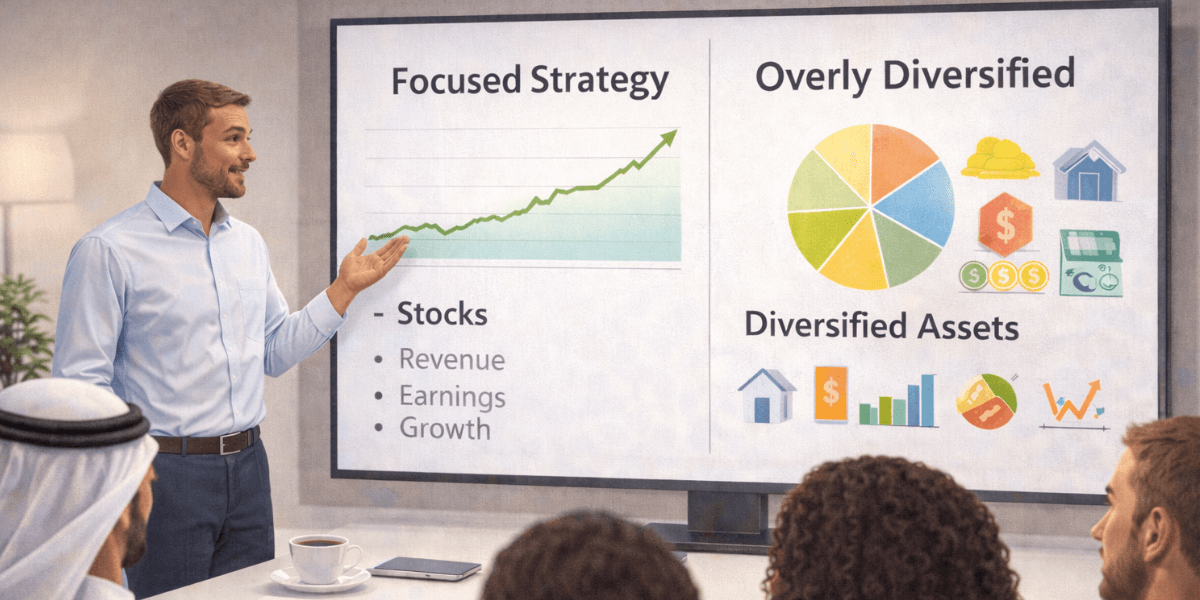
A senior-level analysis explaining when stocks make more sense than diversified asset trading, focusing on correlation risk, time horizons, ...
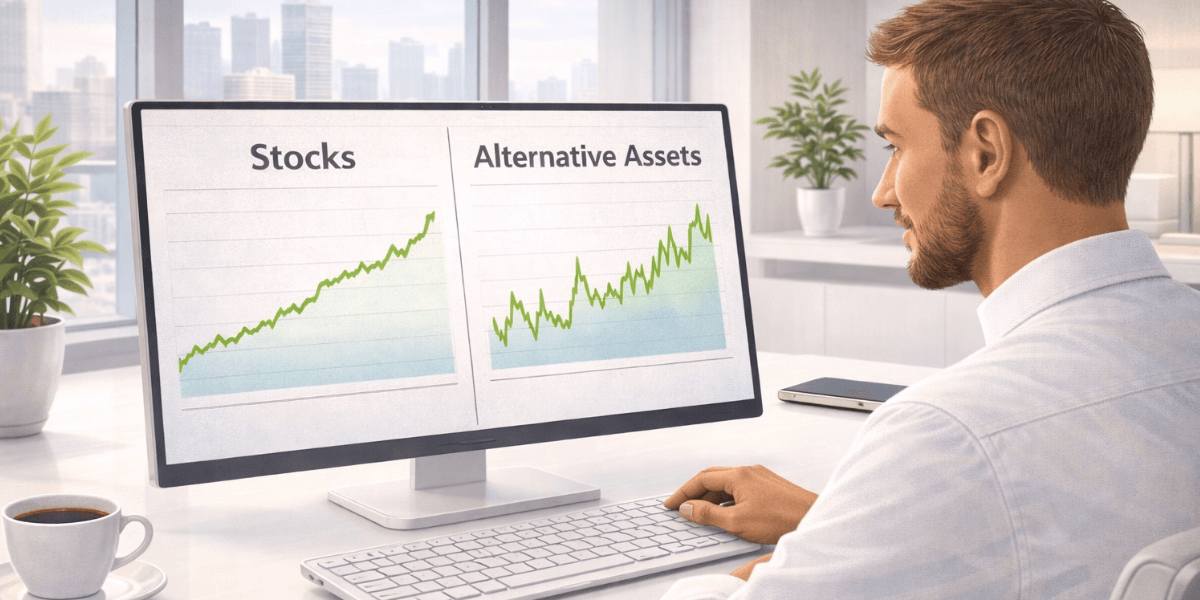
A senior-level analysis comparing stocks and alternative assets from a conservative investing perspective, explaining capital durability, tr...

A senior-level analysis explaining why stocks are fundamentally easier to analyze than other assets, focusing on cash flows, accounting stru...

A senior-level risk analysis comparing stocks and speculative assets, explaining how permanent capital risk, time horizons, and recovery dyn...