Overview of the Bahrain Stock Exchange (Bahrain Bourse)
A comprehensive overview of the Bahrain Stock Exchange (Bahrain Bourse), analyzing its market structure, regulation, liquidity characteristi...
Overexposure is one of the most common and least acknowledged causes of long-term investment failure. It rarely announces itself as a mistake. Instead, it disguises itself as confidence, conviction, or strategic focus. Investors convince themselves that concentrating capital in a small number of stocks reflects deep understanding or superior insight. In reality, overexposure transforms uncertainty into fragility and turns normal market fluctuations into existential threats.
Most investors do not consciously decide to become overexposed. Overexposure typically develops gradually. A position performs well, confidence grows, additional capital is added, and what began as a reasonable allocation slowly becomes dominant within the portfolio. At that point, the portfolio’s fate becomes tightly linked to a narrow set of outcomes. When conditions remain favorable, the risk remains invisible. When conditions change, the damage is sudden and severe.
For investors in the GCC, overexposure carries additional risks that are often underestimated. Many GCC-based investors allocate capital primarily to U.S. equities while maintaining portfolios denominated in USD, AED, or SAR. This creates layered exposure to foreign markets, policy decisions, currency dynamics, and global liquidity cycles. Overexposure to a single stock, sector, or theme magnifies all of these risks simultaneously.
Overexposure is dangerous not because investors are wrong more often, but because it removes margin for error. Markets are uncertain by nature. Even the strongest businesses experience unexpected disruptions. Regulation changes, competitive landscapes evolve, interest rates shift, and geopolitical events intervene. Overexposed portfolios cannot absorb these shocks without suffering disproportionate damage.
Long-term investing is not about maximizing returns during favorable conditions. It is about surviving unfavorable ones. Overexposure undermines survival by concentrating risk into too few outcomes. This article explains why overexposure is dangerous at a structural level, how it affects volatility, drawdowns, behavior, and compounding, and why GCC investors operating globally must be especially disciplined in avoiding it.
All investing involves uncertainty. No amount of research can eliminate it. Financial statements reflect the past, forecasts rely on assumptions, and market dynamics change continuously. The difference between manageable risk and existential risk lies not in uncertainty itself, but in how much capital is exposed to a single uncertain outcome.
When a portfolio is overexposed, uncertainty is no longer distributed. It is concentrated. A single negative development can overwhelm the entire portfolio, regardless of how strong other holdings may be. This concentration transforms normal business risk into portfolio-level fragility.
Overexposure is particularly dangerous because adverse events rarely unfold in isolation. Earnings disappointments often coincide with multiple compression, sector-wide revaluations, or broader macro shifts. When too much capital is tied to one position, these layered effects compound losses.
For GCC investors exposed to global markets, existential risk is amplified by distance. Changes in foreign regulation, accounting standards, or political conditions may not be immediately visible, reducing reaction time precisely when exposure is highest.
Volatility is often misunderstood as a problem in itself. In reality, volatility only becomes destructive when it interacts with excessive exposure. A volatile stock held at a reasonable size can be tolerated. The same stock held at an oversized allocation can dominate portfolio performance and psychological well-being.
Overexposed portfolios experience amplified swings that exceed the investor’s emotional and financial tolerance. These swings increase stress, reduce objectivity, and force reactive decisions. Investors begin managing emotions rather than risk.
For GCC investors, volatility is often intensified by time-zone effects. U.S. earnings announcements, Federal Reserve decisions, or geopolitical developments frequently occur outside local trading hours. Overexposure increases the likelihood of waking up to large, unmanageable portfolio gaps.
In this context, volatility is not merely uncomfortable. It becomes a mechanism through which capital is destroyed.
Drawdowns are inevitable in investing. What matters is their depth and recoverability. Overexposure dramatically increases the probability of deep drawdowns that require extraordinary returns to recover.
The mathematics of recovery are unforgiving. As losses deepen, the return required to break even increases disproportionately. An overexposed portfolio that suffers a severe drawdown may remain impaired for years, even if the original thesis eventually proves correct.
Long-term investors often underestimate how long recovery can take. Overexposure extends recovery timelines by reducing flexibility and increasing emotional pressure, making it harder to stay invested during subsequent volatility.
For investors building wealth over decades, time lost to recovery is often more damaging than the initial loss itself.
Overexposure is often justified by compelling narratives. Investors convince themselves that they understand a business exceptionally well, that competitive advantages are durable, or that long-term trends guarantee success. While narratives are useful, they are not guarantees.
Strong narratives reduce perceived risk without reducing actual risk. This disconnect encourages excessive exposure. When reality deviates from narrative, the adjustment is abrupt and painful.
History is filled with examples of dominant companies whose narratives failed to protect investors from prolonged underperformance. Overexposure converts narrative risk into portfolio damage.
Overexposure is not limited to single stocks. It can also occur through thematic concentration. Investors may believe they are diversified while holding multiple stocks exposed to the same economic drivers.
During normal conditions, correlations appear low. During stress, correlations increase. Overexposed portfolios experience simultaneous losses across holdings that were assumed to be independent.
For GCC investors allocating globally, thematic overexposure can occur through concentration in U.S. technology, growth stocks, or rate-sensitive sectors. When macro conditions shift, these exposures converge.
Overexposure fundamentally alters investor behavior. Large positions increase emotional attachment, confirmation bias, and resistance to negative information. Investors become invested not just financially, but psychologically.
This behavioral distortion reduces adaptability. Investors delay exiting deteriorating positions, rationalize losses, and double down at inappropriate times. Overexposure transforms normal cognitive biases into portfolio-threatening behaviors.
Smaller, balanced exposure preserves psychological flexibility. It allows investors to update views without ego or fear dominating decisions.
Compounding depends on avoiding large losses. Overexposure disrupts compounding by increasing the probability of severe drawdowns that permanently reduce the capital base.
A portfolio that avoids catastrophic losses compounds more effectively over time, even if individual returns appear modest. Overexposure sacrifices this advantage in pursuit of concentrated upside.
For long-term investors, protecting the compounding engine is more important than maximizing short-term gains.
Global investing introduces additional uncertainties: currency fluctuations, policy divergence, regulatory risk, and geopolitical instability. Overexposure amplifies the impact of these uncertainties.
For GCC investors, conservative exposure is not a sign of caution; it is a rational response to operating across multiple jurisdictions and economic systems.
Portfolios dominated by a small number of positions lose flexibility. Capital becomes locked into existing exposures, reducing the ability to adapt to new opportunities or changing conditions.
This rigidity increases opportunity cost and reduces the portfolio’s ability to evolve alongside markets.
Overexposure is dangerous because it concentrates uncertainty, magnifies volatility, deepens drawdowns, distorts behavior, and undermines compounding. It transforms manageable risk into existential threat.
For GCC investors operating in global markets, avoiding overexposure is especially critical. Distance, currency exposure, and policy uncertainty increase the cost of concentration errors.
Long-term investing success is not defined by bold bets. It is defined by resilience. Portfolios that survive uncertainty outperform those that chase concentrated upside.
Ultimately, investors do not fail because they were wrong. They fail because they were wrong with too much capital exposed. Overexposure removes the margin for error that long-term investing requires.
Understanding and avoiding overexposure is therefore not a tactical adjustment. It is a structural discipline that separates sustainable investing from speculative fragility.
No. Conviction reflects belief; overexposure reflects risk concentration. High conviction does not eliminate uncertainty.
No. Diversification without attention to correlation and position size can still result in effective overexposure.
Because global investing introduces additional layers of currency, policy, and geopolitical risk.
Avoiding overexposure may limit extreme upside, but it significantly increases the probability of long-term survival and compounding.
Disclaimer: This content is for education only and is not investment advice.

A comprehensive overview of the Bahrain Stock Exchange (Bahrain Bourse), analyzing its market structure, regulation, liquidity characteristi...

An in-depth analysis of the Kuwait Stock Exchange (Boursa Kuwait), explaining its structure, regulation, market behavior, and strategic rele...
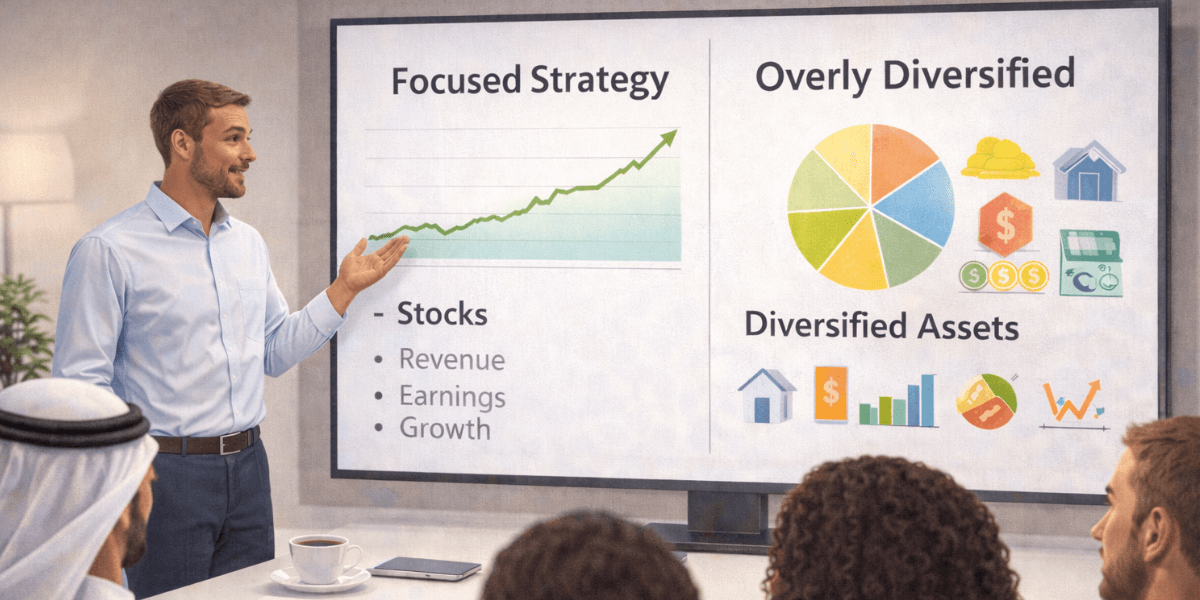
A senior-level analysis explaining when stocks make more sense than diversified asset trading, focusing on correlation risk, time horizons, ...
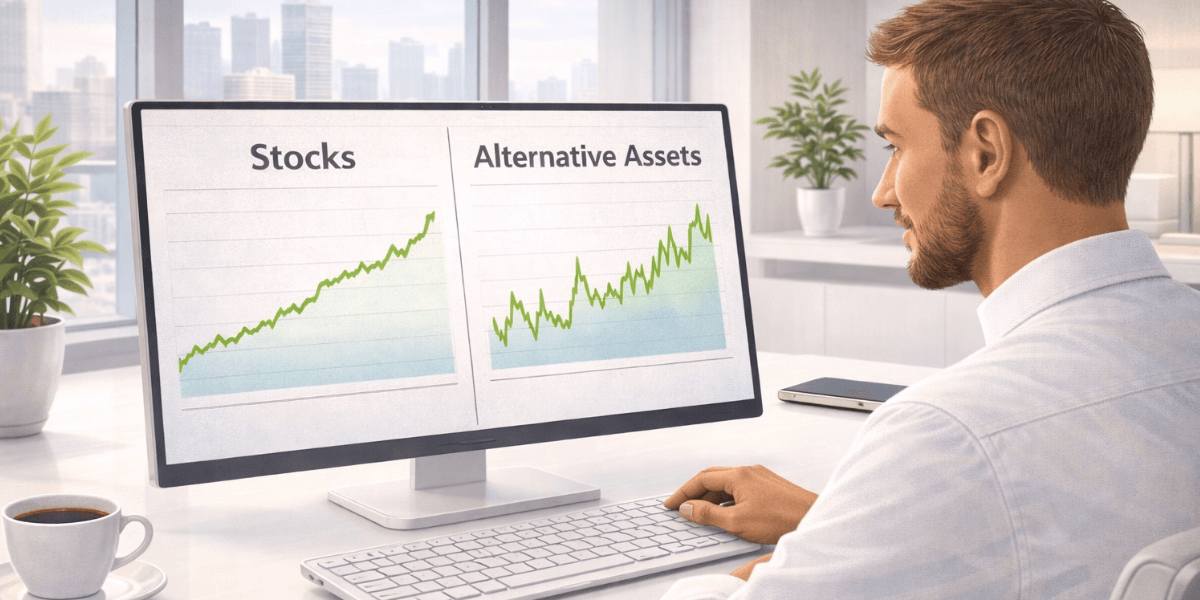
A senior-level analysis comparing stocks and alternative assets from a conservative investing perspective, explaining capital durability, tr...

A senior-level analysis explaining why stocks are fundamentally easier to analyze than other assets, focusing on cash flows, accounting stru...
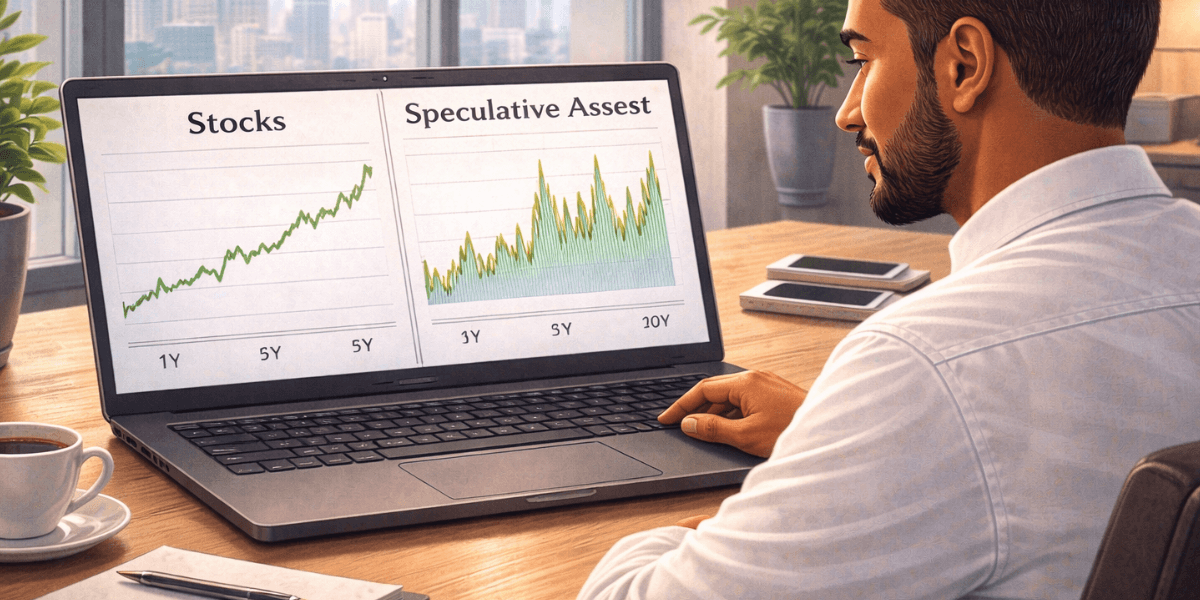
A senior-level risk analysis comparing stocks and speculative assets, explaining how permanent capital risk, time horizons, and recovery dyn...