Overview of the Bahrain Stock Exchange (Bahrain Bourse)
A comprehensive overview of the Bahrain Stock Exchange (Bahrain Bourse), analyzing its market structure, regulation, liquidity characteristi...
Long-term growth is one of the most misunderstood concepts in investing. Many investors claim they are “long-term” while structuring portfolios that quietly work against that very objective. They chase stability, fear volatility, overweight assets that feel safe, and then wonder years later why their capital barely outpaced inflation. The issue is rarely effort or intelligence. It is structural misunderstanding. Long-term growth is not a personality trait; it is a property of certain assets. Stocks happen to be the asset class designed for it.
Stocks are not merely instruments that rise and fall on screens. They represent ownership in productive systems. These systems employ people, allocate capital, innovate, compete, fail, adapt, and occasionally dominate entire industries. Over time, they absorb economic growth and translate it into earnings. Those earnings are reinvested, distributed, or both. This process is slow, uneven, and emotionally demanding—but it is relentless. That relentlessness is what makes stocks uniquely powerful over long horizons.
Other asset classes serve important roles. Bonds stabilize. Gold preserves. Commodities hedge shocks. Cash provides optionality. Real estate offers income and leverage. None of these, however, combine scalability, reinvestment, and global reach the way equities do. Long-term growth requires more than price appreciation; it requires a mechanism that continuously converts human progress into financial value. Stocks are that mechanism.
This article explains why stocks are better for long-term growth not through slogans or historical cherry-picking, but through structure. We will explore how equities generate returns, why time works in their favor, how inflation interacts with business ownership, and why volatility is not a flaw but a prerequisite. The aim is clarity. When investors understand why stocks grow, they stop fighting the process and start aligning with it.
Economic growth does not automatically benefit all assets. Productivity gains, technological advances, and efficiency improvements must be captured somewhere. Stocks are the primary conduit through which this capture occurs. When businesses produce more with less, expand markets, or create new demand, that value flows to owners. Shareholders sit at the end of this chain.
This is why equity markets rise over decades even though individual companies fail. Capital is continuously reallocated from weaker firms to stronger ones. Indexes evolve. New leaders emerge. Old models disappear. The stock market is not static; it is a living reflection of economic evolution. Long-term growth comes not from predicting winners, but from participating in the system that produces them.
Other assets may benefit indirectly from growth, but they do not internalize it. Bonds receive fixed payments. Gold observes growth from the sidelines. Commodities supply growth inputs but do not compound it. Stocks absorb growth and turn it into expanding claims on cash flows.
Compounding is often described mathematically, but its real power lies in its operational reality. Businesses earn profits. Those profits are reinvested into new projects, acquisitions, technology, or efficiency improvements. Each successful reinvestment increases the future earnings base. Over time, this creates a snowball effect that no static asset can replicate.
Even modest growth rates become transformative given enough time. A company growing earnings at 6–8% annually does not merely double over a decade; it reshapes its economic footprint. Dividends add another layer, returning capital to investors who can reinvest it into additional shares. Buybacks quietly increase ownership stakes without requiring new capital.
This compounding engine explains why equities dominate long-term return charts. It is not because markets are always optimistic, but because reinvestment never stops. Assets without reinvestment cannot compete over multi-decade horizons.
One of the great paradoxes of investing is that stocks feel riskier the longer you plan to hold them, even though the opposite is true. In the short term, equity outcomes are uncertain. Prices react to news, sentiment, and liquidity. Over longer periods, those fluctuations become irrelevant relative to accumulated earnings growth.
Time acts as a filter. Temporary shocks fade. Recessions end. New growth cycles begin. What remains is the trajectory of cash flows. This is why the probability of negative real returns in equities declines as the holding period increases. The same cannot be said for assets whose returns are fixed or whose value depends on timing.
Long-term growth requires embracing this dynamic rather than fearing it. Investors who demand certainty from growth assets misunderstand their nature. Stocks reward patience precisely because they test it.
Inflation is often treated as a universal threat, but its impact depends on position. Fixed claims suffer. Ownership adapts. Stocks represent ownership. When prices rise, revenues rise in nominal terms. Costs rise too, but businesses with pricing power adjust. Margins compress temporarily, then stabilize.
This adaptive quality is critical. Over long periods, equities have demonstrated an ability to preserve and grow real purchasing power. Not perfectly, not smoothly—but consistently. Inflation harms cash and bonds structurally. It challenges stocks tactically.
This distinction explains why equities remain central to long-term portfolios even in inflationary eras. They are not immune, but they are resilient.
Volatility is often framed as a defect. In reality, it is the price paid for uncertain future cash flows. If growth were guaranteed, returns would be low. Volatility exists because outcomes are distributed across possibilities.
Stocks concentrate volatility upfront. Investors experience discomfort before growth materializes. Other assets distribute discomfort quietly through low returns or purchasing power erosion. One feels worse; the other costs more.
Understanding this trade-off reframes volatility as a feature. It separates investors willing to endure uncertainty from those who subsidize them by selling early.
Stocks scale in a way few assets can. Businesses expand across borders, serve global markets, and benefit from demographic and technological shifts worldwide. An investor holding diversified equities is not betting on a single country, currency, or industry.
This scalability increases predictability at the portfolio level. Individual failures matter less. Systemic progress matters more. Growth becomes a statistical outcome rather than a speculative bet.
Other assets are constrained. Real estate is local. Commodities are finite. Bonds are capped. Stocks scale with human ambition.
The greatest threat to long-term growth is not volatility, crashes, or recessions. It is underexposure to compounding. Investors who overweight low-growth assets for comfort often discover too late that safety without growth is failure in slow motion.
Opportunity cost compounds too. Every year spent avoiding equities is a year of forgone reinvestment. The cost is invisible until it is irreversible.
Long-term growth requires accepting visible discomfort to avoid invisible loss.
Stocks are better for long-term growth because they are structurally aligned with how wealth is created in modern economies. They represent ownership in systems that grow, adapt, and reinvest. Their returns are powered by earnings, amplified by compounding, and supported by global economic progress.
This advantage does not come without cost. Volatility, drawdowns, and psychological stress are part of the package. But these are not flaws; they are the mechanism through which long-term rewards are distributed. Investors who cannot tolerate volatility outsource growth to those who can.
Other assets play valuable roles. Stability, preservation, income, and hedging matter. But growth is a specific job, and stocks are designed to do it. Treating equities as just another option among many misses their unique function.
Long-term success in investing is less about prediction and more about alignment. When objectives require growth, portfolios must rely on assets built for growth. History, structure, and mathematics converge on the same conclusion: for investors with time on their side, stocks are not merely suitable for long-term growth—they are indispensable.
Because they represent ownership in businesses that generate earnings, reinvest profits, and compound value over time.
Volatility is uncomfortable but not inherently dangerous over long horizons. The greater risk is insufficient growth.
No. Diversification within equities reduces risk without eliminating compounding.
Typically 10–20 years or more, where earnings growth overwhelms short-term price fluctuations.
Disclaimer: This content is for education only and is not investment advice.

A comprehensive overview of the Bahrain Stock Exchange (Bahrain Bourse), analyzing its market structure, regulation, liquidity characteristi...

An in-depth analysis of the Kuwait Stock Exchange (Boursa Kuwait), explaining its structure, regulation, market behavior, and strategic rele...
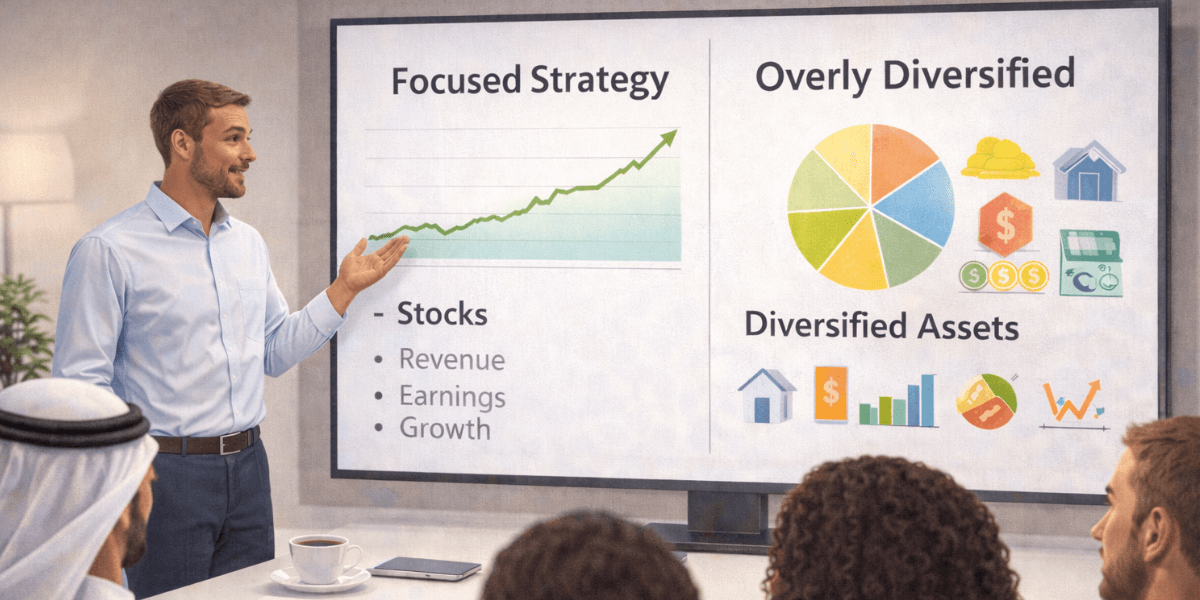
A senior-level analysis explaining when stocks make more sense than diversified asset trading, focusing on correlation risk, time horizons, ...
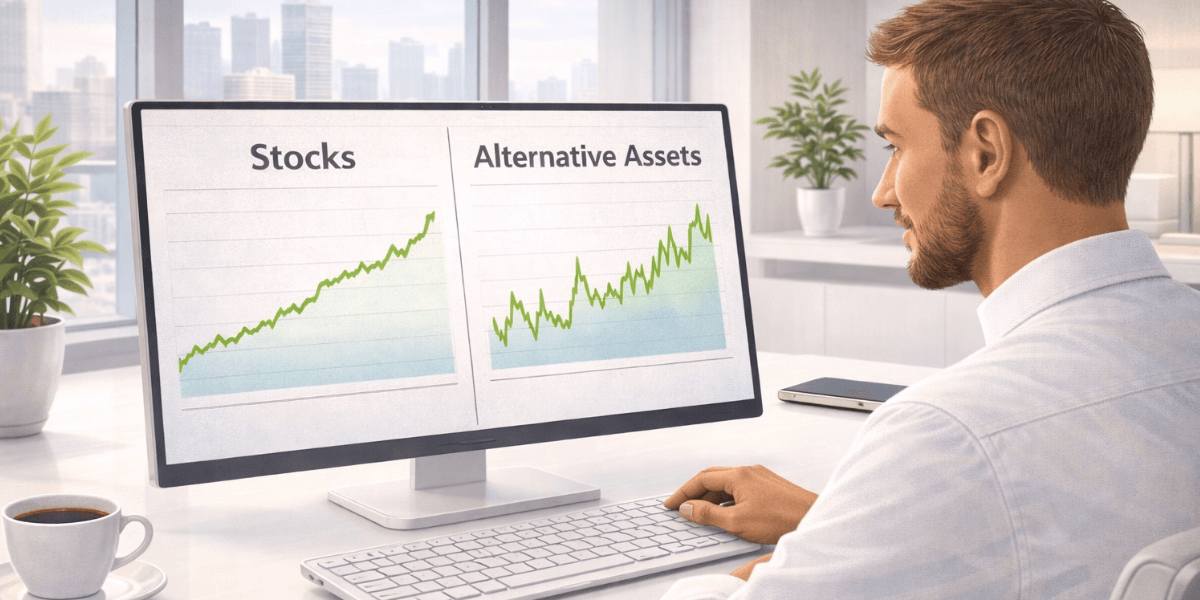
A senior-level analysis comparing stocks and alternative assets from a conservative investing perspective, explaining capital durability, tr...

A senior-level analysis explaining why stocks are fundamentally easier to analyze than other assets, focusing on cash flows, accounting stru...

A senior-level risk analysis comparing stocks and speculative assets, explaining how permanent capital risk, time horizons, and recovery dyn...